
The landmark space technology cooperation between India and the United States is poised for another milestone with the scheduled launch of a state-of-the-art Earth observation satellite on July 30, 2025. Valued at around $1.2 billion, this satellite stands to be the first joint mission of NASA and the Indian Space Research Organization (ISRO), marking a major leap in bilateral space cooperation.
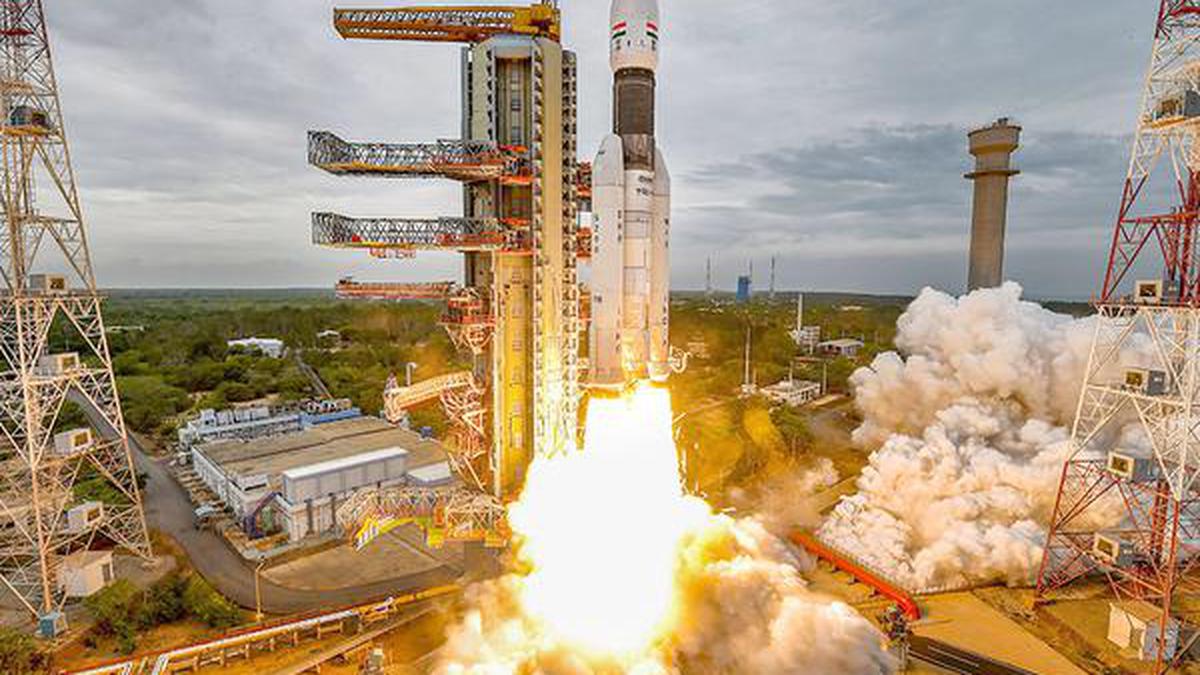
The first cooperation Earth observation satellite by the two space agencies will launch on Isro’s GSLV-F16 at 5:40pm from the Satish Dhawan Space Centre in Sriharikota.
After more than a decade of partnership between Isro and NASA, the NASA Isro Synthetic Aperture Radar (NISAR), which will research the Earth’s ecosystems and natural hazards, will be launched on July 30, the Indian space agency announced on Monday.
The first cooperative Earth observation satellite launched by the two space agencies will take off on Isro’s GSLV-F16 at 5:40pm from the Satish Dhawan Space Centre in Sriharikota and be placed in a 743km sun-synchronous orbit.
According to NASA, NISAR’s budget is $1.2 billion, with an approximately 50-50 partnership with Isro. It will be the first satellite mission to use two separate radar frequencies to assess changes in the Earth’s surface less than a centimeter.
The cutting-edge satellite shall provide enhanced Earth observation capabilities, with unprecedented spatial and spectral resolution. By obtaining data via sophisticated instruments jointly developed by NASA and ISRO scientists, it is envisaged that the satellite shall provide data on land use, environmental changes and disaster management. High-precision sensors on board the satellite are poised to provide detailed imagery to assist climate research, urban planning and natural resource management.
Development of the spacecraft is going to make use of a variety of state-of-the-art technologies, employing advanced hyperspectral imaging systems, synthetic aperture radar and thermal sensors, with contributions from both space agencies. The workout reflects a strategic partnership in research and exploration, relying on ISRO’s delivery systems and NASA’s technological prowess. The mission is expected to set a new benchmark in satellite-based Earth observation to facilitate data-sharing between the two countries and contribute to global environmental monitoring.
Launch and Vehicle Specification
From Satish Dhawan Space Centre in Sriharikota, the satellite is set to launch aboard the Indian Geosynchronous Satellite Launch Vehicle Mark III (GSLV Mk III). The heavy-lift launch vehicle, known for its reliable performance and ability to carry significant payloads, will place the satellite into a sun-synchronous orbit at a time when it would optimize observational data quality.
The information generated from the satellite will enhance scientific excellence on climate variability, early warning systems for natural disasters and sustainable agricultural practices. The mission will enable policymakers and environmentalists for regional and global environment monitoring by tracking deforestation, water resources and urban spread. Researchers believe that the outcomes from the satellite will assist in making better decisions on advancing climate resilience and disaster risk.
The joint mission signifies the dawn of a new era in international space collaboration, with NASA and ISRO eyeing further partnerships on Earth science and planetary exploration. Successful implementation of this satellite will form the basis for further technology transfer, capacity-building programs and joint research initiatives nurturing the comparative advantages of both countries within the space domain.