
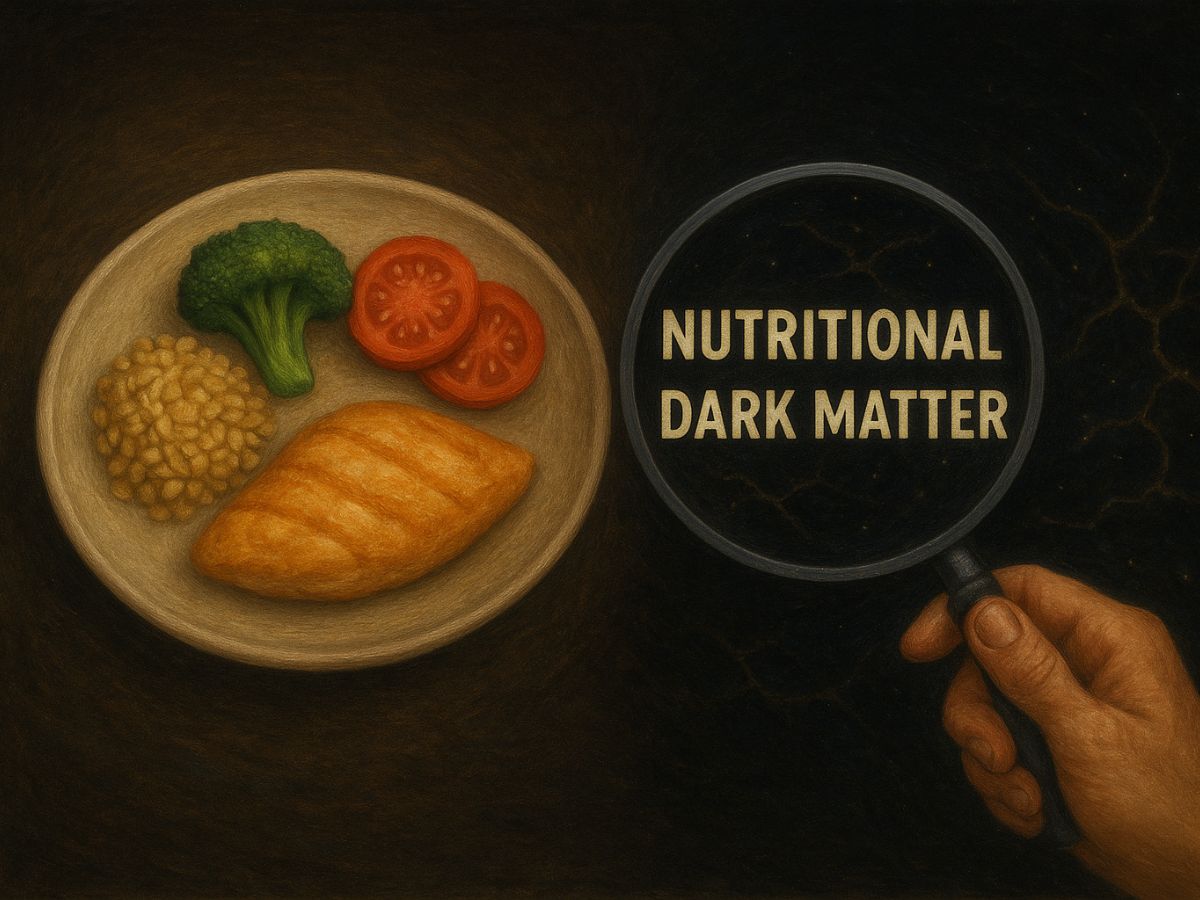
For years, nutrition has been framed around calories, protein, fat, and vitamins, yet obesity and diet-related illnesses keep rising worldwide. Why? Because, much like the universe, the true composition of our diet is mostly a mystery. Researchers now think that the huge, uncharted territory of more than 26,000 unique biochemical compounds, now known as “nutritional dark matter”- holds the key to understanding how food affects health, rather than the 150 well-known nutrients.
This concept draws a direct parallel to astronomy. Just as dark matter makes up 27% of the universe and exerts a powerful gravitational force without being seen, nutritional dark matter constitutes the overwhelming majority of chemicals we consume daily, whose effects on our bodies remain almost entirely unknown.
Why Has Traditional Nutrition Science Failed Us?
The simplified “food as fuel” model has dominated public health messaging for generations. The focus has been on mitigating known villains like salt, sugar, and saturated fat.
However, this approach ignores the incredible complexity of food. About one in five adult deaths worldwide are caused by inadequate nutrition, making it a major cause of death. In Europe, dietary factors are responsible for nearly half of all cardiovascular deaths. This crisis suggests that something critical is missing from our understanding. The answer lies in the thousands of compounds that have been, until now, invisible to science.
What Exactly is “Nutritional Dark Matter”?
Nutritional dark matter refers to the immense number of molecules in food that researchers have not yet mapped or studied. We consume them every day, but we have little idea what they do. Some may be potent allies that encourage health, while others may silently increase the risk of disease. The fundamental challenge of modern nutrition is to find out which compounds do what.
How is Science Beginning to Unravel This Mystery?
The answer is emerging through a new field called foodomics. This approach integrates:
- Genomics (the role of genes)
- Proteomics (proteins)
- Metabolomics (cell activity)
- Nutrigenomics (the interaction of genes and diet)
Foodomics is already providing answers. For example, the Mediterranean diet is known to reduce heart disease risk. One reason is a molecule called TMAO, produced by gut bacteria from compounds in red meat, which increases cardiovascular risk. However, substances in garlic can block its production. This is a single example of the complex, unseen battles waged by nutritional dark matter in our bodies.
What Role Do Our Gut Microbes Play?
The microbes in our gut transform dietary compounds into new molecules with direct effects on our well-being. Through gut microbes, ellagic acid in berries and nuts becomes urolithins, compounds that safeguard our cellular powerhouses.
This process shows that food is a complex web of interacting chemicals. Furthermore, diet can even switch genes on or off through epigenetics. Children of mothers who survived the Dutch Hunger Winter famine during World War II provide a clear historical example; their food influenced their genes, resulting in altered gene activity and increased disease rates later in life.
Also Read: Baffling New Patterns on Saturn Defy Explanation, Hint at Deep Atmospheric Secrets?
How Are We Mapping This Hidden Food Universe?
Ambitious projects like the Foodome Project are leading the charge to catalogue this hidden chemical universe. The aim is to create an atlas that connects food ingredients to human proteins, gut bacteria, and disease processes, having already identified more than 130,000 molecules.
The hope is that by understanding nutritional dark matter, we can finally answer perplexing questions: Why do diets work for some but not others? Why can a food prevent disease in one context and promote it in another? The answers could lead to personalized nutrition, new drugs, and a fundamental transformation of how we view the food on our plates.
Disclaimer: TDG aggregates and synthesizes inputs from multiple sources. We do not independently verify the accuracy of claims, allegations, or data from external contributors or agencies.