
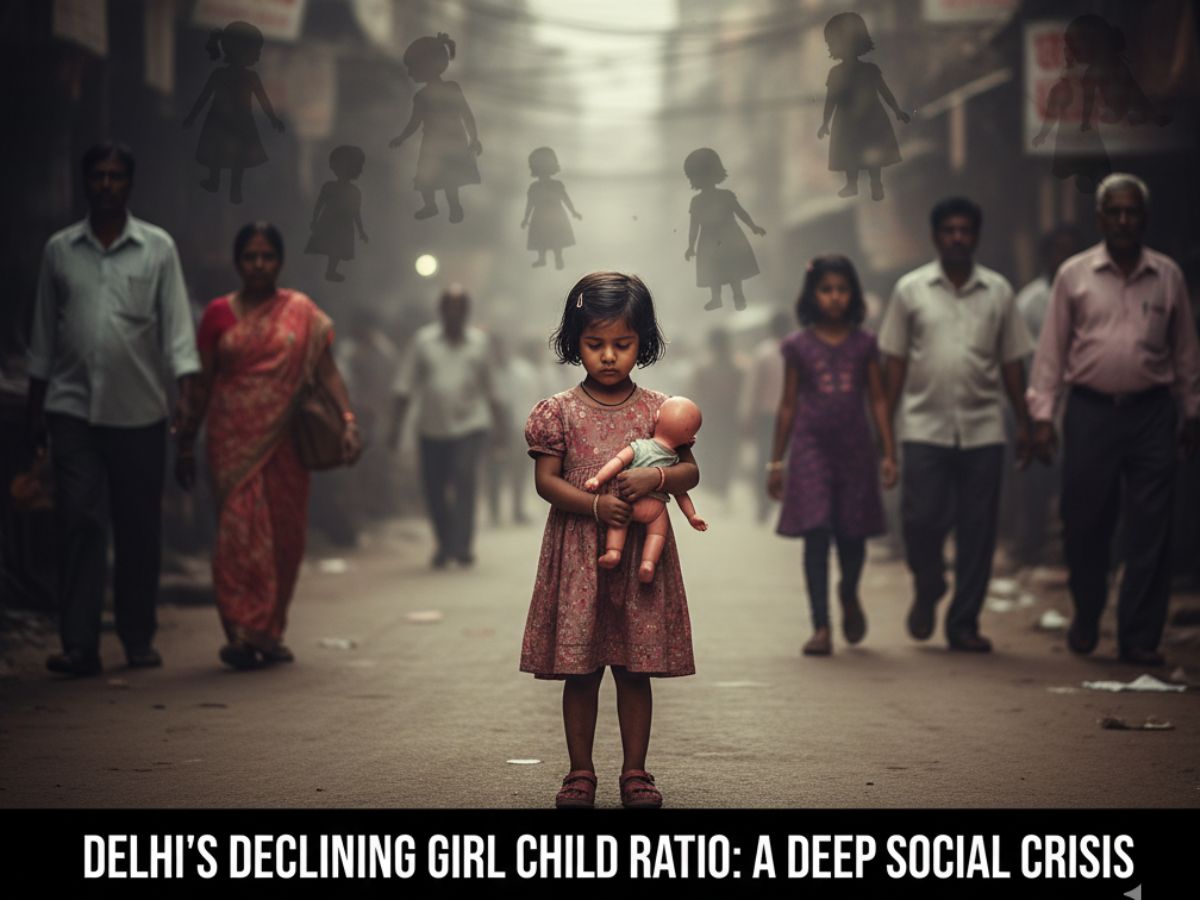
Delhi’s sex ratio at birth has decreased for the fourth year in a row, falling to 920 females for 1000 boys, according to new data released by the city’s government. This is a troubling and ongoing trend. Experts have expressed grave concerns about the future social fabric of the nation’s capital, with some questioning whether Delhi is headed toward becoming a “city of men.” This figure, which comes from the most recent Annual Report on Registration of Births and Deaths, indicates a growing societal preference for sons.
What Exactly Does a Sex Ratio of 920 Mean?
The sex ratio at birth is a critical social indicator of gender equality. A ratio of 1,000 signifies an equal number of boys and girls being born. When the sex ratio drops below 1,000, it means boys outnumber girls. Normally, experts expect the figure to be around 952, but Delhi’s number is just 920. That’s 80 fewer girls for every 1,000 boys. This is alarming because between 2012 and 2020, things were getting better—the ratio rose from 886 to 933. But after COVID-19, the trend flipped, showing that the old bias for sons may have been made worse by financial hardships.
Why is a Declining Sex Ratio a Serious Problem?
The short-term effect is clear gender bias, showing a society that undervalues girls. But experts warn the long-term effects could be worse. Demographers, including Srinivas Goli from the International Institute for Population Sciences, caution about a “male marriage squeeze.” This occurs when a significant surplus of men in the marriageable age group leads to a shortage of brides. In places like Haryana and Punjab, the lack of women has led to “importing” brides from other regions or even abroad. Sadly, these women often face abuse, less independence, and sometimes are forced into marriages with multiple brothers. A heavily imbalanced sex ratio can upset the whole social structure.
Also Read: Iran’s President Denies Nuclear Weapons Ambition Ahead of Critical Deadline
Isn’t Higher Literacy Supposed to Fix This Problem?
Many people think that education automatically brings gender equality. In India, however, the data says otherwise. KS James, a former JNU professor, points out that surveys show sex ratios at birth are often better among the poor and less educated than among wealthier families. It seems that wealthier and more educated families sometimes make choices that favor sons, especially when keeping family size small. This indicates that literacy alone cannot dismantle deep-seated patriarchal norms.
Which States are Getting it Right and How?
In contrast to Delhi, Kerala and Mizoram have kept good sex ratios over the years. In Kerala, the 2011 Census shows 1,084 women for every 1,000 men, so there are more women than men. Professor Goli attributes this success to their historical matriarchal traditions and significantly lower levels of gender discrimination. In these societies, daughters hold high social value.
What Can Be Done to Reverse This Trend?
Experts argue that urgent governmental intervention is required to avert a demographic disaster. They recommend a two-pronged approach. The first step is to strictly control new technologies that make sex-selective abortions possible, even those coming from abroad. More importantly, the government should highlight the importance of girls by offering incentives. Several states already give fixed deposits, scholarships, and other support to families with daughters. Doing the same in Delhi could make families see girls as a blessing rather than a burden.
Also Read: Ladakh Protest: Centre Points Finger at Activist Sonam Wangchuk for Sabotaging Talks
Is This Just Delhi’s Problem?
Unfortunately, this is a pan-Indian issue. Research indicates that the sex ratio at birth has worsened across various social, religious, and economic groups in many states, including Bihar, Jharkhand, and Uttar Pradesh. A 2021 research paper co-authored by Professor Goli notes an “alarming trend of preferring the masculine over the feminine” nationwide. Delhi’s declining numbers are a stark microcosm of a larger, deeply concerning national trend towards the ‘masculinisation’ of society.