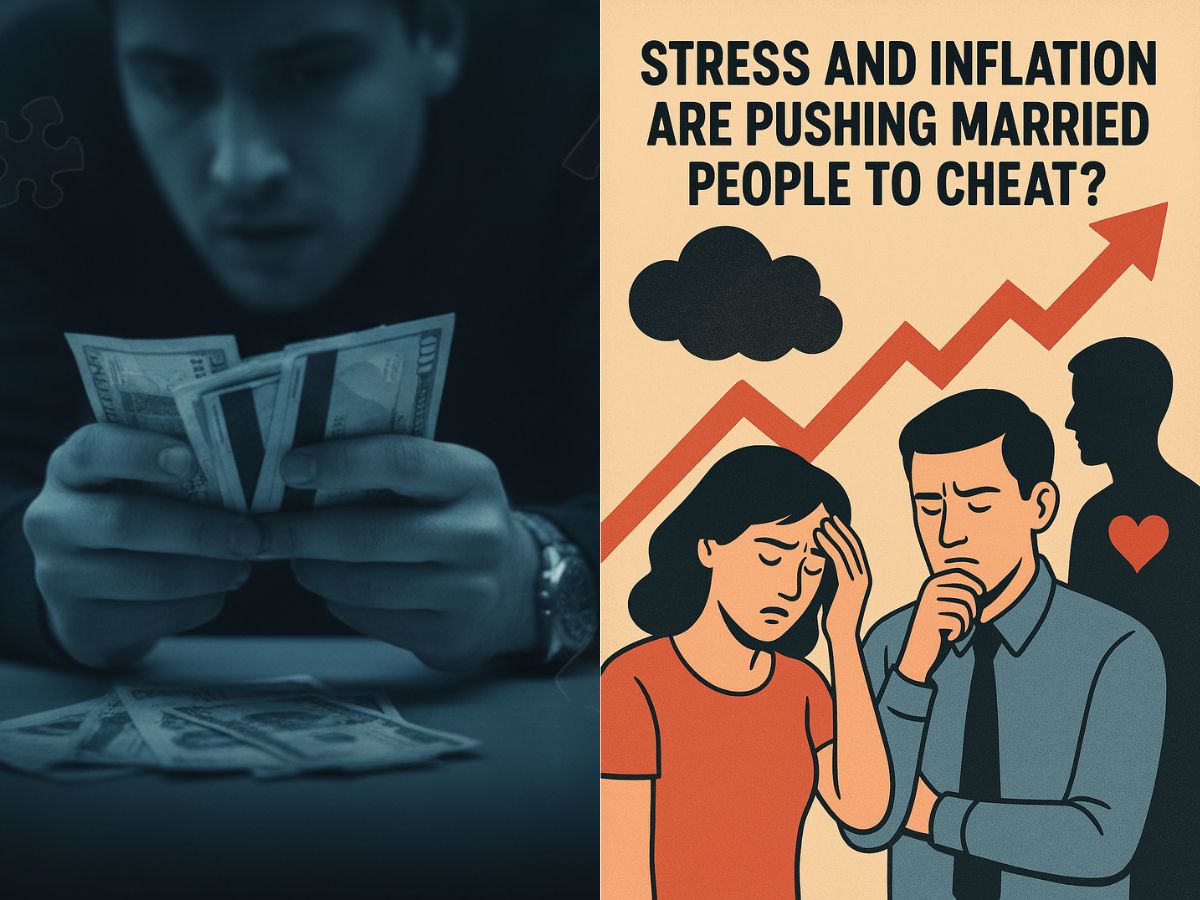
In a revealing look at modern relationships, a new survey from Ashley Madison, a dating platform for married individuals, suggests that global stress and economic pressures are becoming significant drivers for infidelity. The data suggests that some people turn outside their marriages not just for thrill, but to cope with anxiety and find some relief.
The global survey, which polled 2,404 of its members in July 2025, found that nearly half (49%) of respondents actively seek new relationships during periods of high stress. This pattern demonstrates the intricate interplay between personal decisions and outside influences, showing that for some people, having an affair is more about coping with difficult situations than it is about a
What is the Primary Driver Behind This Trend?
The most commonly mentioned factor is simple: stress. According to the report, more and more people are turning to romantic relationships outside of themselves as a way to cope with the stresses of everyday life. This is particularly true for women, who outpace men in this behavior.
Fifty percent of female respondents admitted to seeking an affair for excitement or as an escape from stress, compared to 43% of men. This suggests that the emotional burden of stressful times may be influencing women to seek validation and relief outside their primary relationships more frequently than their male counterparts.
Also Read: Power Up Your Morning: A Vegetarian Breakfast with 30g of Protein, No Meat, No Supplements
How Does the Economy Influence Relationship Choices?
Inflation was found to be a significant contributing factor, in addition to overall stress. According to the research, financial pressure is a stronger incentive for straying than unemployment, political unpredictability, or recession.
Remarkably, 27% of men and 33% of women stated that their approach to relationships is directly impacted by inflation. This finding challenges the notion that couples only “stick together” through financial hardship. Instead, for a substantial minority, the strain of rising costs appears to push them toward seeking connection and distraction elsewhere, even as a majority reported trying to stick to their primary relationship.
What Kind of Relationships Are People Seeking?
In these stressful and expensive times, the survey suggests a preference for less demanding connections. Casual dating is seen as a primary mechanism for managing anxiety.
When asked, 21% of respondents viewed casual relationships as a way to handle anxiety, compared to 19% who preferred the commitment of a serious relationship. This suggests a need for the warmth, diversion, and validation that come with human connection, but without the additional stress that a highly committed relationship can bring during already trying circumstances.
Also Read: Kantara Fame Rishab Shetty Responds to Language Row Amid Boycott Storm
Is This a Widespread Social Shift?
The survey data implies that this behavior is not happening in a vacuum. A overwhelming 87% of respondents reported observing people in their own social circles either dating, pursuing new relationships, or taking existing relationships to the next level.
This suggests a broader cultural moment where individuals are actively seeking connection as a bulwark against global challenges. According to the survey’s findings, having a partner, even a casual one, gives people the willpower to persevere through challenging circumstances, demonstrating the importance of human connection.