
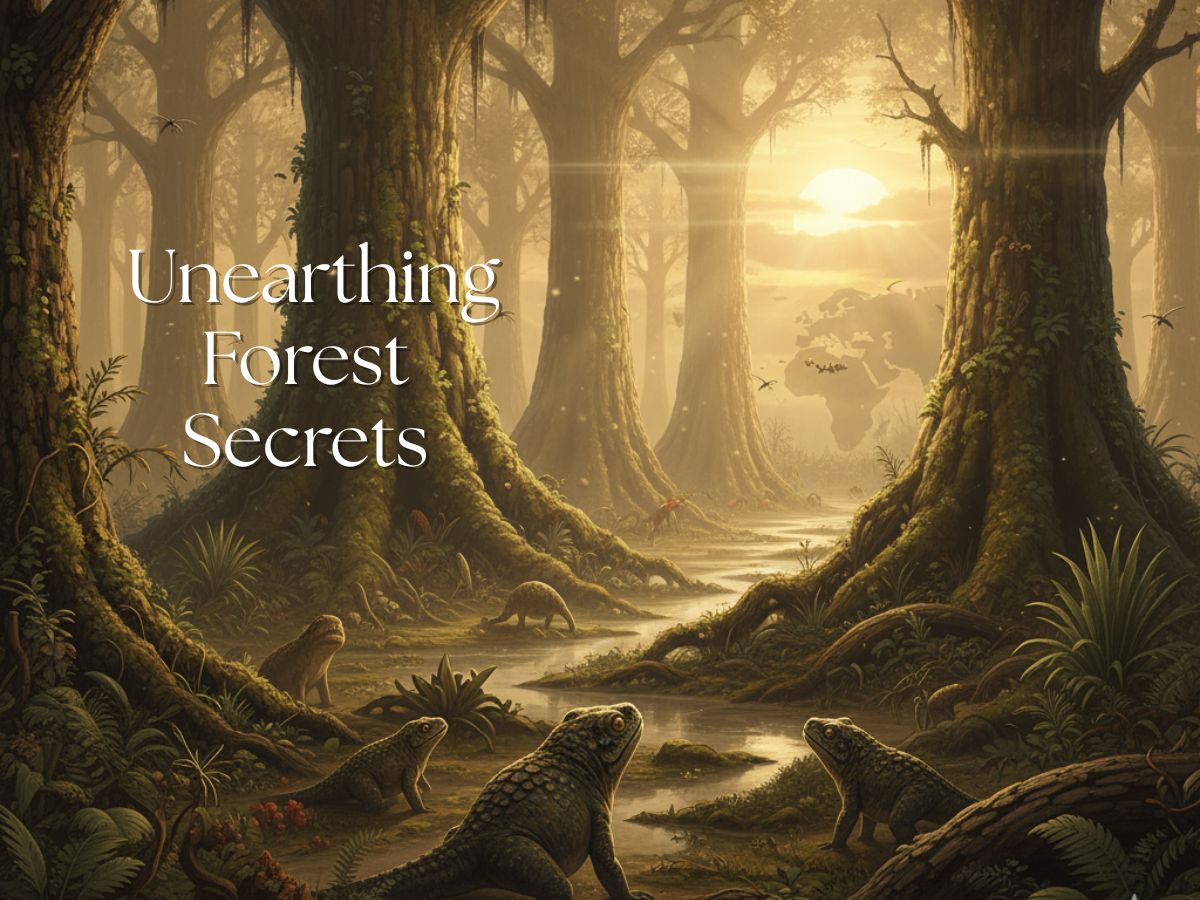
Scientists are uncovering the profound secrets of the world’s oldest forests, revealing how they shaped life on land and transformed Earth’s very atmosphere. One such forest, hidden in an abandoned quarry in upstate New York, is providing a stunning window into this ancient past. Found in 2009 and officially declared in 2019, the Cairo Fossil Forest contains the petrified remnants of the first trees with substantial trunks and leaves, providing concrete evidence of a planetary revolution.
What is Cairo Fossil Forest
The Cairo Fossil Forest is a unique paleontological site located near Cairo, New York. It contains incredibly well-preserved fossils from the Devonian period, a time often called the “Age of Fishes.” The fossilized roots, which make up a huge network 36 feet across, are the most remarkable discoveries. The roots, nearly six inches across, point to robust plant growth. They mark physical evidence of when Earth’s basic greenery started transforming into organized forests.
Who Were the Archaeopteris Trees?
It is thought that the old trees in the Cairo forest are members of the extinct Archaeopteris genus. These trees are described by researchers as an important link in evolutionary history in their study, which was published in the journal Science. “The trees likely belong to Archaeopteris, an extinct group of trees with fern-like leaves that is related to modern trees,” the study authors wrote. According to their analysis, “Archaeopteris trees grew more than 66 feet (20 m) tall toward the end of the Devonian period.” This means they were not small, primitive shrubs, but formed the world’s first true forests.
How Did These Ancient Trees Change the Planet?
These early woodlands had a huge influence. According to scientists, these trees had a significant impact on the atmosphere through two main processes:
Carbon Sequestration: “The first Archaeopteris trees contributed significantly to carbon sequestration, absorbing CO2 and reshaping atmospheric conditions,” the researchers noted. Carbon dioxide (CO2) was also “sealed away from the air by their roots, changing the composition of the planet’s atmosphere.”
Chemical Weathering: The deep root systems enhanced “chemical weathering, breaking rocks into smaller fragments and facilitating the formation of carbonate ions.” By exposing the rock to air, this process produced carbonate ions from CO2. These ions eventually found their way into the oceans, where they helped build limestone, which stored carbon for all time.
Also Read: Putin Declares Ukraine War Avoidable, Lays Blame Directly on U.S. Leadership
Why is the Cairo Forest So Significant?
The Cairo Fossil Forest has fundamentally altered the scientific timeline. It revealed that the oldest known Archaeopteris trees were present on the planet 385 million years ago. This pushes back the known existence of these complex trees by at least 20 million years. While older plant fossils from 390 million years ago have been found in southwest England, the Cairo site represents the oldest known forest of the advanced Archaeopteris trees, marking the true dawn of the forested world we know today.
Disclaimer: This article is for information purposes only. It is based on the inputs from scientific study published in the journal Science and reports from the research team involved in the discovery.