
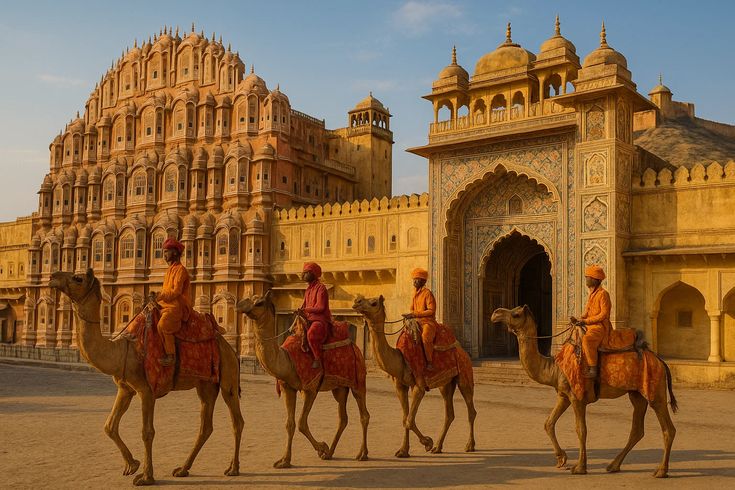
JAIPUR: Studying the Rajput clans of Rajasthan provides valuable insights into the historical, social, and cultural fabric of the region, helping us understand not only the past but also contemporary society. The Rajputs were organized into distinct lineages—Suryavanshi, Chandravanshi, and Agnivanshi—which branched into numerous clans and sub-clans, each with unique customs, traditions, and systems of governance. By examining these lineages and their hierarchical structures, we can better understand how leadership, administration, and social order were maintained in pre-modern India.
The study of Rajput clans reveals the importance of lineage, loyalty, and social organization. Hierarchical structures, from the Vansha (lineage) down to the nak (smallest family unit), illustrate how communities maintained cohesion and identity over centuries. These systems also influenced local governance, military organization, and land management, providing a model for understanding the evolution of political authority in Rajasthan. Knowledge of historical clans helps contextualize how contemporary social and political networks have developed, particularly in regions where feudal legacies continue to influence local leadership and land ownership.
Studying the Rajput clans is also culturally enriching. The connection between clans and their protective family goddesses (Kuldevi), their patronage of forts, temples, and art, and their enduring codes of honor and valor help preserve Rajasthan’s rich heritage. This knowledge fosters pride in local history, promotes cultural tourism, and informs heritage conservation strategies. Understanding these traditions also encourages appreciation of the region’s diverse identities, bridging the gap between past and present.
From a modern perspective, learning about Rajput clans provides lessons in governance, resilience, and community organization. It highlights the ways societies adapt to challenges, manage resources, and balance tradition with innovation. For students, historians, policymakers, and citizens, this knowledge is crucial in preserving cultural identity while addressing contemporary issues, including social cohesion, local governance, and heritage conservation.
In essence, studying Rajasthan’s Rajput clans helps us understand the foundations of regional society, informs current social and political structures, and preserves cultural heritage for future generations. By connecting history with the present, we gain perspective on how past practices shape contemporary life and decision-making.