
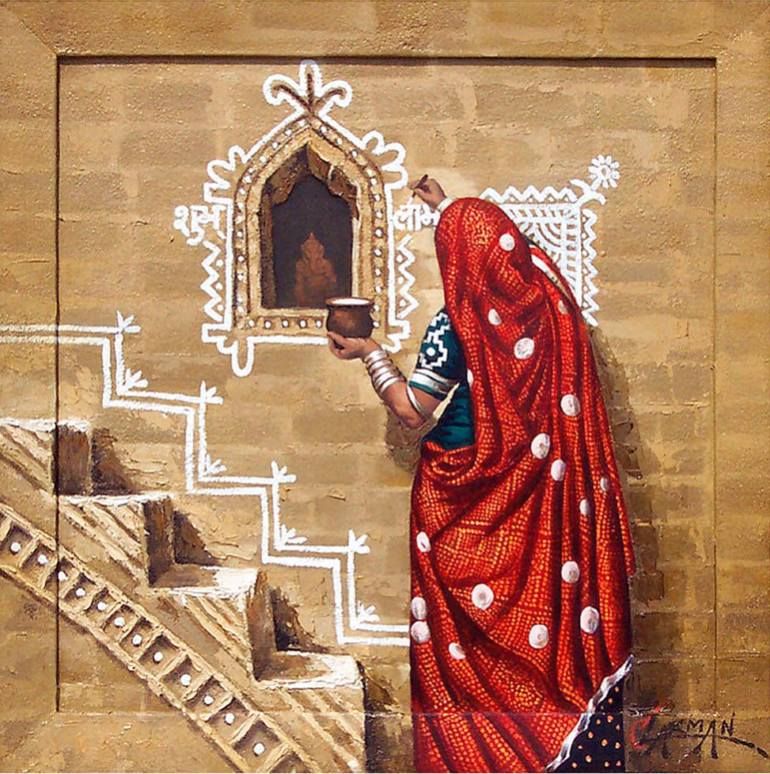
JAIPUR: Mandana art, one of Rajasthan’s most enchanting traditional art forms, transforms plain walls and floors into stories of devotion, celebration, and cultural heritage. Originating in the Shekhawati region and rural areas across the state, this ancient practice is primarily carried out by women, who use simple tools and natural pigments to create intricate patterns. Every design, whether geometric, floral, or symbolic, reflects the spiritual beliefs, aspirations, and daily life of the communities, while also honoring Rajasthan’s royal legacy. Mandana is not just decoration—it is a living tradition, a canvas where art, ritual, and history converge, preserving the timeless charm of the desert state.
ORIGINS OF MANDANA: WALLS THAT WHISPER STORIES
Mandana art has its roots in the Shekhawati region, as well as in the tribal and rural areas of Rajasthan. Traditionally, women painted Mandana designs on mud walls and floors of homes, particularly before festivals, weddings, or auspicious occasions. These designs were believed to invite divine blessings, protect the household from evil spirits, and symbolize fertility and prosperity. Using chalk, rice paste, or limestone powder, artists would create geometric patterns, floral motifs, and intricate depictions of animals, gods, and daily life.
SYMBOLS AND SIGNIFICANCE: TALES HIDDEN IN EVERY LINE
Every Mandana design carries a story. Circular motifs, often representing the sun or the moon, signify eternity, while peacocks symbolize beauty and grace, and elephants embody strength and royalty. Scenes of daily life, hunting expeditions, or royal processions showcase the aspirations of communities and their reverence for nature and tradition. Mandana art is not only decorative but also ritualistic, often drawn on walls surrounding courtyards, doors, and plinths to mark celebrations or life milestones.
TECHNIQUE AND STYLE: SIMPLICITY MEETS MAJESTY
Mandana art is characterized by its bold lines and symmetrical patterns, reflecting both simplicity and sophistication. Traditionally done in red, white, and black, the artists often use natural pigments and handmade brushes or fingers to create the intricate designs. The use of mud walls as a canvas gives Mandana art a unique texture, blending seamlessly with Rajasthan’s arid landscape and reflecting the royal ethos of harmonizing beauty with everyday life.
MANDANA AND ROYAL PATRONAGE
Historically, Mandana art was not only a folk expression but also enjoyed royal attention. Kings and nobles encouraged these artistic traditions, recognizing their cultural and spiritual value. Royal households often invited skilled women artists to decorate havelis, palaces, and temples during festivals. Over time, Mandana became a symbol of Rajasthan’s cultural identity, bridging the gap between royal opulence and the simplicity of village life.
REVIVAL AND MODERN ADAPTATIONS
In recent years, Mandana art has experienced a revival, thanks to cultural preservation efforts and increased interest from tourists and art collectors. Contemporary artists now use Mandana motifs on canvas, textiles, pottery, and home décor items, making this royal tradition accessible worldwide. Workshops and exhibitions across Rajasthan celebrate Mandana art, allowing new generations to learn and appreciate the delicate craft while honoring its royal lineage.
THE ENDURING LEGACY
Mandana art is more than paint on walls; it is a living tradition, connecting the past with the present. Each line, circle, and motif is a tribute to Rajasthan’s rich cultural heritage, the creativity of its women, and the timeless appeal of royal aesthetics. As visitors walk through Shekhawati’s havelis or the courtyards of desert villages, they witness not just art but a story—one that speaks of devotion, celebration, and the eternal charm of Rajasthan’s royal past. In every stroke of Mandana, one can feel the whispers of history, the blessings of ancestors, and the vibrant heartbeat of Rajasthan, where art and royalty intertwine in eternal harmony.