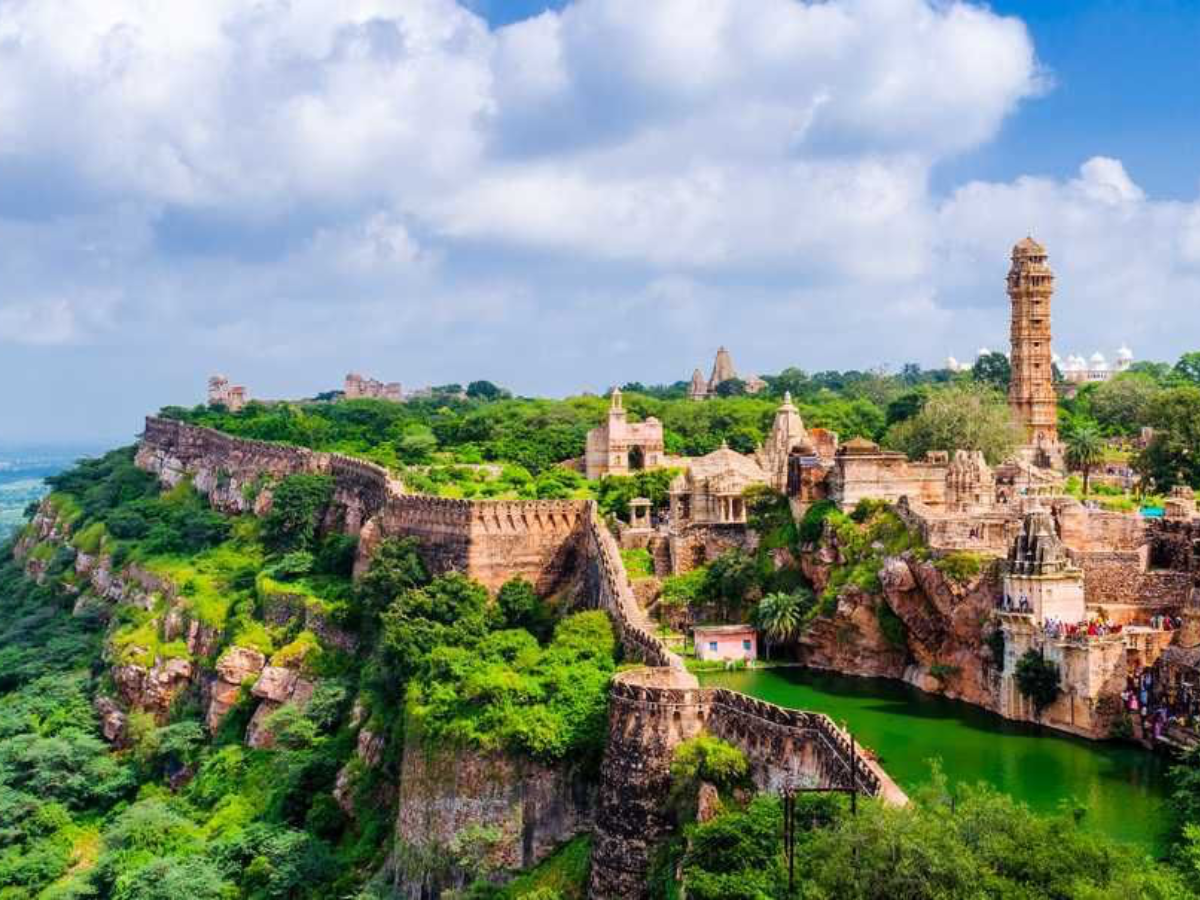
JAIPUR: It was here that the flower of Rajput chivalry blossomed, and the fort’s immense walls, ruined palaces, and sacred temples echo tales of heroism, sacrifice, and innumerable sieges — stories that have now almost taken the shape of legend. Chittorgarh was one of the most fiercely contested seats of power in India, a symbol of Rajput valor and unyielding pride.
FOUNDING OF MEWAR AND THE RISE OF THE SISODIAS
Bappa Rawal, the legendary founder of the Sisodia dynasty, received Chittor in the mid-eighth century as part of the last Solanki princess’s dowry. The fort crowns a seven-mile-long hill and spans 700 acres (280 hectares), encompassing fortifications, temples, towers, and palaces. From the eighth to the 16th century, Bappa Rawal’s descendants ruled the kingdom of Mewar, which stretched from Gujarat to Ajmer. Despite its formidable defenses, Chittor faced invasions and was sacked three times in eight centuries, yet its story of bravery remained undiminished.
The Tale of Rani Padmini and Sultan Alauddin Khilji: One of the most legendary episodes in Chittor’s history is the 1303 siege by Delhi Sultan Alauddin Khilji. Entranced by tales of Rani Padmini’s unparalleled beauty and wit, Khilji demanded to see her. He agreed to an unarmed visit to the fort, where he glimpsed her reflection in a lotus pool. However, he was ambushed at the fort’s outer gate. In response, Rani Padmini devised a daring plan: dozens of curtained palanquins carried Rajput warriors who rescued Rana Rattan Singh in a bloody clash, resulting in the death of 7,000 Rajput soldiers. Despite their valor, the sultan renewed his attack, leaving Chittor’s men with no choice but to fight to the death while the women committed jauhar, a mass self-sacrifice to protect honor.
SUBSEQUENT SIEGES AND THE RAJPUT CODE OF HONOR
Chittorgarh endured another significant attack in 1535, when Sultan Bahadur Shah of Gujarat besieged the fort. Each siege tested the Rajput code of honor, the unwavering commitment to “dharma for honor,” and the unbreakable spirit of its defenders. Chittorgarh was not merely a fort; it was an ideology—a manifestation of Rajput pride, moral courage, and the philosophy of self-sacrifice.
Architectural Grandeur: Gates, Stairs, and Towers Chittorgarh fort is as much a story in stone as it is a military fortification. Walking through its seven monumental gates—each taller and narrower than the last—is to walk through layers of history, meaning, and philosophical depth. The climb to the fort’s elevated mass is symbolic, a journey reflecting strength, perseverance, and human resilience. Among its architectural marvels, the Vijay Stambh, or Tower of Victory, stands out as a vertical testament to faith and triumph. Commissioned in the 15th century by Rana Kumbha, the nine-story tower is adorned with carvings of gods, warriors, and divine beings, celebrating victories won through virtue. Climbing its narrow stairwells, one experiences light filtering through latticed windows, a shifting interplay between darkness and illumination—a metaphor for life itself.
A LIVING LEGACY OF VALOR AND CULTURE
Chittorgarh fort remains a living monument to Rajput ethos, where architecture and history intertwine to narrate stories of courage, moral rectitude, and artistic brilliance. Every wall, tower, and passage carries the memory of warriors, queens, and artisans who lived and died defending honor. The fort is not merely a relic of the past but a symbol of the enduring spirit of Rajasthan, inspiring generations with lessons of valor, sacrifice, and cultural pride. More Than a Fort, a Philosophy: To visit Chittorgarh is to step into a world where history is etched in every stone and heroism echoes across centuries. It is a place where human spirit, ethical duty, and artistic expression converge, creating a legacy that transcends time. Chittorgarh fort stands not only as a military stronghold but also as a philosophical and cultural beacon—a definition of Rajput pride, resilience, and dharma.