JAIPUR: Rajasthan, the land of deserts, forts, and vibrant culture, is renowned for its rich folk traditions. Among these, the Panihari songs and Ghoomar dance stand out as enduring symbols of the state’s cultural heritage. Both are deeply intertwined with the daily life, festivals, and social customs of Rajasthan, reflecting the emotions, values, and artistic expressions of its people.
PANIHARI SONGS: SONGS OF LIFE AND LABOR
Panihari songs are traditionally sung by women while performing daily chores, especially fetching water from wells or rivers. In Rajasthan’s arid desert regions, water is a precious resource, and the act of drawing water is both physically demanding and socially significant. Panihari songs give voice to the women’s feelings, expressing love, longing, separation, and hope.
These songs often depict stories of romance, devotion, and social life, making everyday labor a musical and emotional experience. The lyrics can be playful, melancholic, or devotional, and are typically accompanied by simple instruments such as dholak, khartal, and manjira. Panihari songs also reflect local geography and seasonal changes, with melodies and verses evolving according to occasions such as festivals, marriages, or harvests. Through these songs, women pass down oral traditions, folk wisdom, and community values, ensuring cultural continuity.
GHOOMAR DANCE: A CELEBRATION OF GRACE
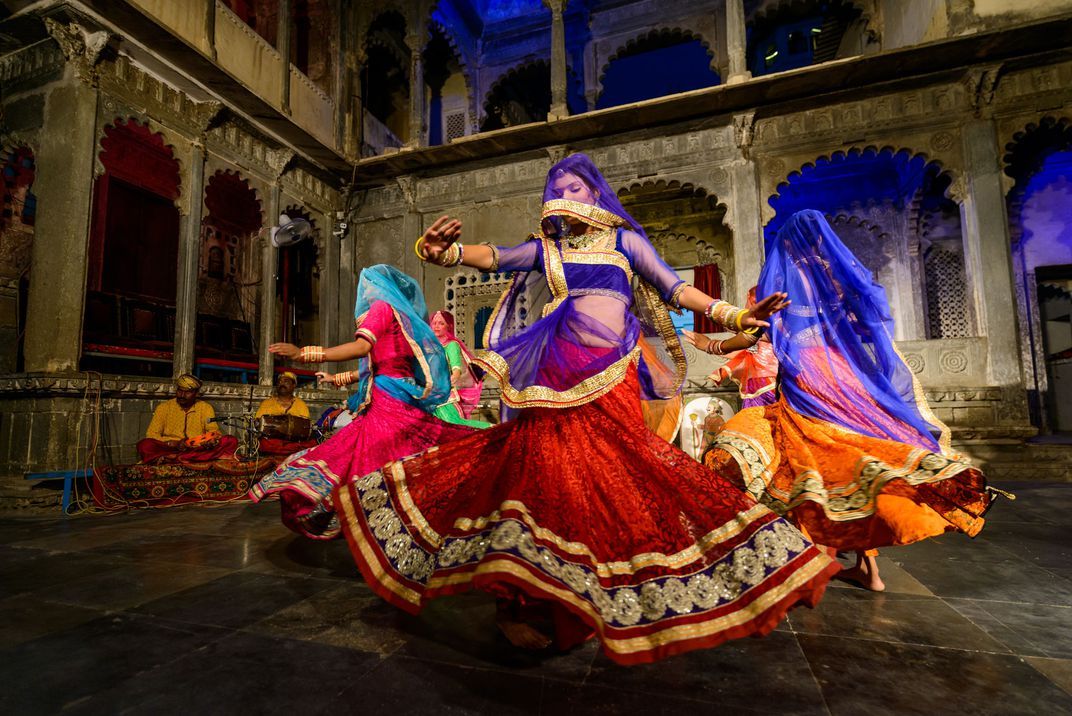
Ghoomar is one of Rajasthan’s most famous folk dances, traditionally performed by women during festivals, weddings, and special occasions. Originating in the Bhil and Rajput communities, Ghoomar showcases graceful twirling movements, colorful flowing skirts (ghagras), and rhythmic clapping. The dance is often accompanied by songs that narrate legends, heroic tales, or romantic stories, creating a lively and immersive cultural experience.
The word Ghoomar comes from the Hindi verb ghoomna, meaning “to spin,” which perfectly captures the dance’s circular, rotating movements. Women performing Ghoomar move in synchronized circles, spinning with elegance, while their jewelry and vibrant attire enhance the visual spectacle. Traditionally, Ghoomar is performed by groups of women, emphasizing community bonding and collective celebration. The songs associated with Ghoomar often include call-and-response patterns, allowing participation from both performers and audience members.
CULTURAL SIGNIFICANCE AND MODERN RECOGNITION
Both Panihari songs and Ghoomar dance are more than entertainment—they are cultural expressions that preserve Rajasthan’s history, values, and social identity. Panihari songs highlight women’s resilience and creativity in the face of daily challenges, while Ghoomar embodies festivity, elegance, and communal harmony. Today, these traditions have gained national and international recognition, being performed at cultural festivals, folk exhibitions, and even cinematic adaptations, making them symbols of Rajasthan’s vibrant heritage.
Panihari songs and Ghoomar dance continue to thrive as living traditions, connecting the past with the present. While Panihari captures the emotional depth and daily life of Rajasthan’s women, Ghoomar celebrates collective joy, elegance, and cultural pride. Together they reflect the spirit, artistry, and resilience of the desert state, ensuring that Rajasthan’s folk culture remains timeless and inspiring.