
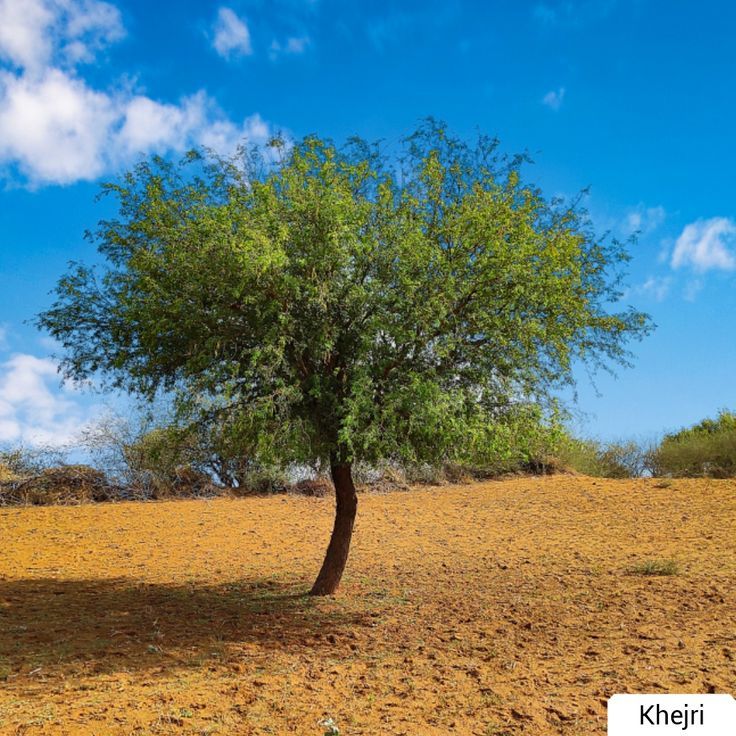
JAIPUR: In Rajasthan and parts of northern India, the Khejri tree (Acacia cineraria) is more than a hardy tree; it is a living witness to generations of human life. Often found at village centers, crossroads, or near sacred spots, these trees have silently observed the evolution of communities, becoming integral to social and cultural life. Their deep roots are entwined with both the soil and local legends, embodying the collective memory of the regions they inhabit. The Khejri tree is a vital, drought-resistant species often called the “King of the Desert” and is designated as the State Tree of Rajasthan. While often confused with or discussed alongside Khair in regional context, the Khejri is a cornerstone of the Thar Desert, providing crucial food, fodder, and shade.
Known as the “lifeline of the Thar,” it is revered for its ability to survive in arid conditions and support local livelihoods.
SPIRITUAL AND CULTURAL SIGNIFICANCE
Khejri trees hold immense spiritual value. Villagers often offer prayers beneath their sprawling branches, believing them to possess protective powers. Festivals, rituals, and communal gatherings are frequently held under their shade, linking nature with tradition. These practices not only preserve heritage but also teach younger generations the importance of respecting and coexisting with the environment. Regarded as the “Kalpavriksha” (tree of life) in Rajasthan, it provides nutritious fodder (leaves) for livestock and fruits used by humans.
ECONOMIC AND ECOLOGICAL IMPORTANCE
Beyond symbolism, Khejri trees provide material benefits. Their seeds yield catechu, used in Ayurvedic medicine, tanning, and dyeing. The wood serves as fuel, durable timber, and fencing material. Their flowers attract pollinators, supporting honey production and maintaining biodiversity. In essence, Khejri trees foster a balanced relationship between communities and nature.
HERITAGE TREES AND HISTORICAL CONNECTIONS
Many ancient Khejri trees are officially recognized as heritage trees. In Jaipur, a 250-year-old Khejri in a haveli courtyard is linked to royal gatherings and local folklore. In Bundi and Kota, these trees mark historic battle sites, meditation spots of saints, and community meeting areas. Each tree acts as a natural monument, bridging the present with the past.
PRESERVING THE LIVING LEGACY
Urbanization, deforestation, and modern agricultural practices threaten Khejri trees. Efforts by local administrations, environmental groups, and historians aim to protect them through cataloging, sapling plantations, and community awareness. Schools now include lessons on their ecological and cultural importance, emphasizing that heritage extends beyond forts and palaces to the living world around us.
STORIES OF RESILIENCE
Each gnarled trunk tells tales of centuries of survival and coexistence with humans. These trees teach patience, resilience, and reverence, reminding us that preserving them protects not only flora but also knowledge, tradition, and identity. Under their shade, history lives on, quietly narrating the enduring bond between people and nature.