
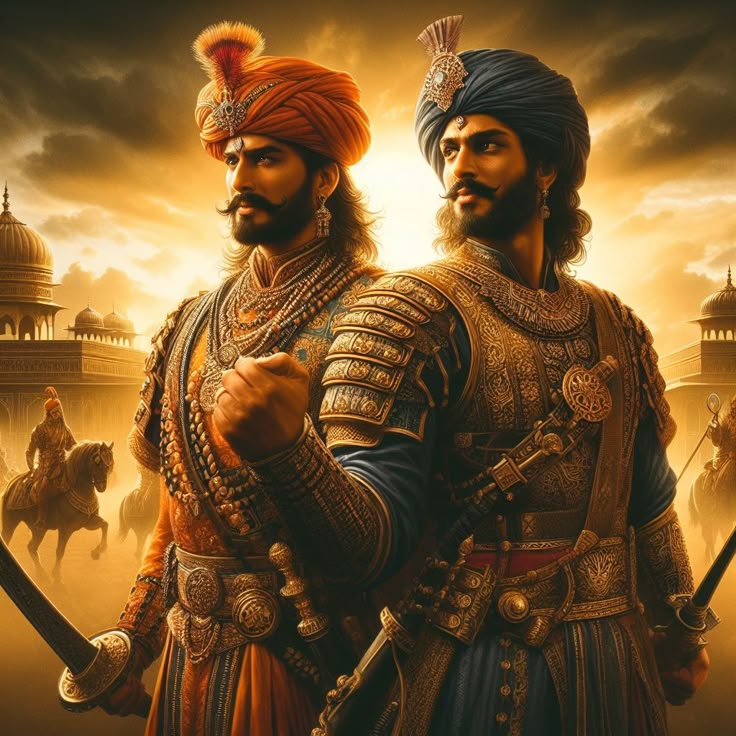
JAIPUR: Rajasthan, known as the land of warriors and forts, has a rich martial tradition that spans centuries. The kings and Rajput warriors of this arid region not only defended their territories but also left a legacy of exquisite craftsmanship through their weapons and armours. Armours were not merely protective gear; they symbolized status, power, and valor. Crafted with precision and adorned with intricate artistry, these armours reflect the region’s unique blend of martial and cultural heritage.
TYPES OF ARMOUR
Rajput kings and warriors used a variety of armour depending on their role and the battlefield conditions. Chainmail (Zirih Bakhtar) was widely used, consisting of interlinked steel rings offering flexibility and protection against swords and arrows. Plate armour protected vital areas such as the chest, back, and shoulders, often complemented with steel gauntlets and greaves for the limbs. Helmets (Topis or Khuds) were elaborately decorated with feathers, crests, and engravings, not only providing protection but also signifying rank and valor. Some armours were reinforced with leather and padded fabrics for added comfort during long battles.
ARTISTRY AND CRAFTSMANSHIP
Rajasthani armour was often as much an art form as a defensive tool. Skilled blacksmiths, known as lohar, and artisans crafted armours with etched patterns, gold and silver inlays, and inscriptions. The Mehrangarh Fort Museum in Jodhpur and the City Palace Museum in Jaipur showcase examples of armours featuring delicate floral motifs, religious symbols, and intricate damascening. Each armour was customized to the wearer’s physique and rank, reflecting personal taste as well as battlefield utility.
CEREMONIAL AND BATTLE ARMOURS
While some armours were purely functional for warfare, others served ceremonial purposes. Royal processions, festivals, and martial tournaments often featured kings in ornate armours that highlighted both their military prowess and regal prestige. Battle armours were heavier and designed to withstand weapons such as swords, lances, arrows, and early firearms. Some armours even incorporated chainmail skirts and shoulder guards to maximize protection while maintaining mobility.
INFLUENCE OF MUGHAL AND EUROPEAN TECHNIQUES
Rajasthani armour evolved over centuries, influenced by Mughal, Ottoman, and European designs. Rajput artisans adapted European forging techniques, Mughal etching styles, and Persian chainmail patterns to suit local combat requirements. This fusion of styles made Rajasthani armour not only highly functional but visually striking, representing a blend of cultures through martial art.
PRESERVATION AND LEGACY
Many of these armours survive today in museums, forts, and private collections. The armours serve as tangible reminders of Rajasthan’s warrior ethos, illustrating the courage, resilience, and artistry of Rajput kings. Beyond museums, they inspire modern designers and historians, highlighting the enduring legacy of martial traditions in the desert kingdom.
A SYMBOL OF COURAGE
The armours of Rajasthan were more than protective gear; they were symbols of honor, power, and identity. Each chain, plate, and engraving tells a story of bravery, royal prestige, and artisanal excellence. Preserving these relics ensures that the valor and craftsmanship of Rajasthan’s kings continue to inspire rising generations, keeping alive the spirit of the warrior state.