JAIPUR: The Holkar dynasty was a prominent Hindu Maratha royal house that played a key role in the history of Central India. Originating from the village of Holgaon on the Nira River, the dynasty rose to prominence under the Maratha Empire and later became a princely state under British protection. The Holkars are remembered for their administrative acumen, military skill, and enduring contributions to art, culture, and public welfare.
FOUNDING OF THE HOLKAR STATE
The Holkar dynasty was founded by Malhar Rao Holkar (1694–1766), a peasant by birth who rose through merit to become a Subedar and commander under Peshwa Baji Rao I. In 1732, the Peshwa granted him the territory of Indore, officially establishing the Holkar state. Malhar Rao’s leadership and military campaigns helped consolidate Maratha control in the Malwa region, laying the foundation for a powerful dynasty that would endure for over two centuries.
PROMINENT RULERS AND THEIR REIGNS
The Holkars produced several notable leaders who shaped the region’s history:
-
Malhar Rao Holkar I (1731–1766): Founder of the dynasty, known for his military strategy and loyalty to the Maratha Empire.
-
Male Rao Holkar II (1766–1767): His short reign was marked by internal challenges.
-
Ahilyabai Holkar (1767–1795): The most celebrated ruler, renowned for her justice, efficiency, and cultural contributions.
-
Tukoji Rao Holkar I (1795–1797) & Yashwant Rao Holkar I (1807–1811): Key figures in defending the state and navigating political upheavals.
-
Tukoji Rao Holkar II (1844–1886): Notable for supporting the British during the 1857 rebellion.
AHILYABAI HOLKAR: A MODEL OF GOVERNANCE
Following the death of Malhar Rao, Ahilyabai Holkar assumed leadership with the Peshwa’s approval. Born in 1725 in Chauri village, Aurangabad, she married Khanderao Holkar in 1733, who died in the Battle of Kumbher in 1754. As a ruler, she exhibited divine qualities admired by the people of Malwa, who revered her almost as a goddess. She skillfully managed political challenges, including the Chandrawat Rajput revolt, with the assistance of her general, Tukoji Rao. She also maintained friendly relations with Mahadji Scindia, avoiding unnecessary conflicts.
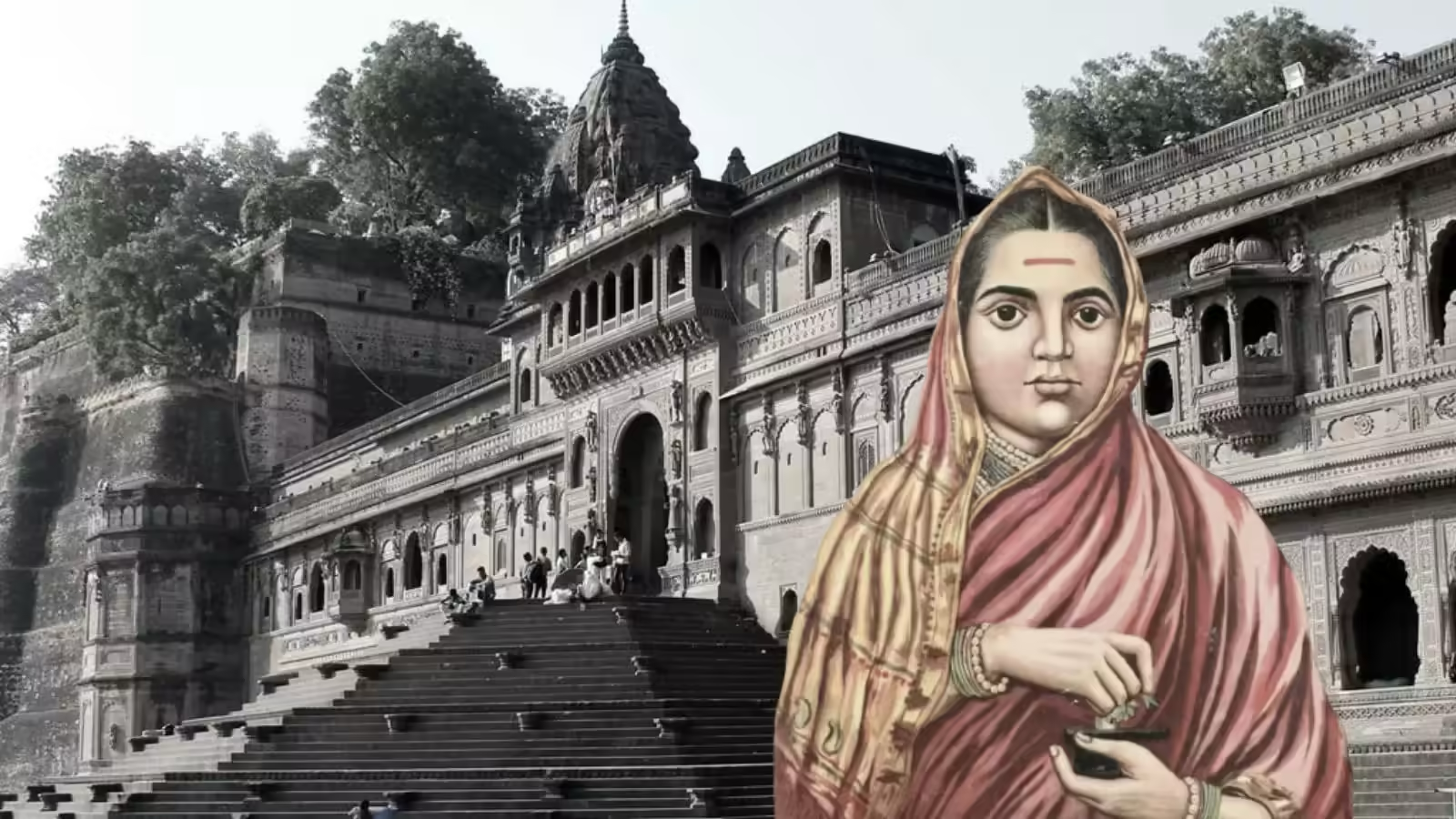
Ahilyabai Holkar (1767–1795) is remembered as one of India’s most just, efficient, and revered rulers. She shifted the capital to Maheshwar, built the Ahilya Fort, and transformed the town into a thriving cultural center. A devout Shiva worshipper, she rebuilt and renovated temples across India, including Somnath, Vishwanath, Badrinath, and Kedarnath, and commissioned ghats, stepwells, lakes, and dharamshalas for public welfare. She promoted local handicrafts, especially the weaving of Maheshwari saris, supporting artisans and the economy. Ahilyabai’s rule combined compassion, administrative skill, and religious devotion, inspiring generations of leaders and women. Her memory endures in Malwa through festivals, culture, and historical admiration.
CONTRIBUTIONS TO PUBLIC WELFARE AND CULTURE
Ahilyabai Holkar’s reign is remembered for extensive public welfare initiatives and cultural patronage:
-
She shifted the capital to Maheshwar, constructing the Ahilya Fort and developing the town as a center of administration and culture.
-
She commissioned numerous temples, ghats, stepwells, lakes, and dharamshalas across Central and North India, including significant sites like Somnath, Vishwanath, Badrinath, and Kedarnath.
-
Ahilyabai promoted local handicrafts, particularly the weaving of Maheshwar saris, supporting artisans and local economy.
-
Her devotion to Shiva and commitment to religious architecture established her as a pious and progressive ruler.
LEGACY OF THE HOLKAR DYNASTY
The Holkars continued to influence Indore and surrounding regions even after becoming a British protectorate following the Treaty of Mandsaur in 1818. They were patrons of arts and architecture, exemplified by the Rajwada Palace in Indore, and later rulers embraced luxury and refinement. The dynasty’s rule formally ended when Indore acceded to India in 1948. Today, the Holkar legacy is celebrated, particularly during Holi in Indore, preserving the memory of a dynasty that combined valor, administration, and cultural enrichment.