
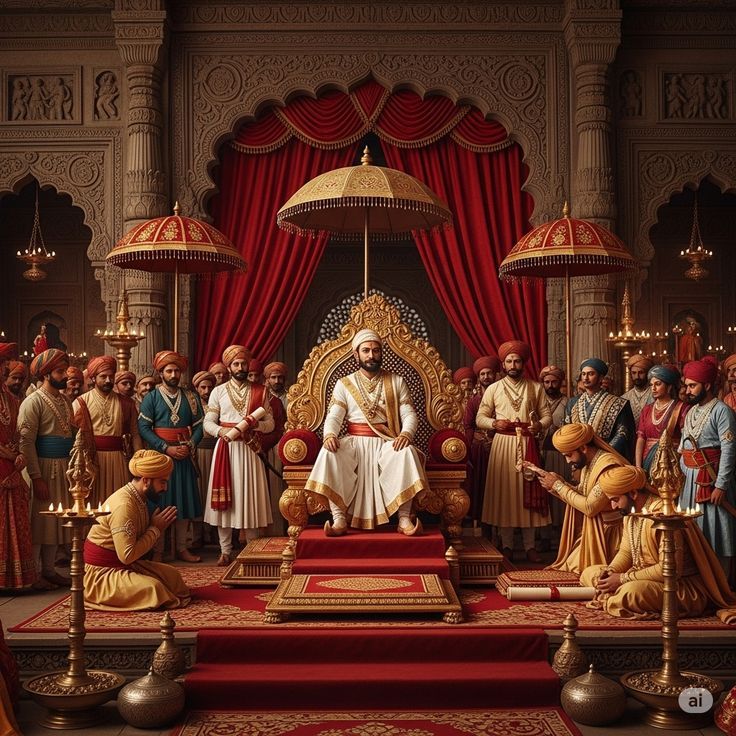
JAIPUR: Before Rajasthan became a unified state, the administration of justice in the princely states of Rajputana—comprising over 22 states and chiefships—was deeply rooted in feudal traditions. The Maharaja, as the supreme authority, was the ultimate fountain of justice, and local systems reflected centuries-old customs, caste norms, and the influence of powerful landholders. This chronicle explores how justice was dispensed across Rajputana before its integration into modern Rajasthan.
THE MAHARAJA: THE SUPREME ARBITER OF JUSTICE
At the apex of judicial authority stood the Maharaja, whose word was final in all matters of law. Citizens, nobles, and officials alike sought redress from the Darbar, the royal court, where appeals were heard directly by the ruler. The Maharaja had the power to uphold, reverse, or modify any decision, making him the ultimate symbol of justice in the princely hierarchy. In many ways, the Maharaja embodied both governance and jurisprudence, blending political authority with judicial discretion.
CENTRAL COURTS: HUZUR ADALATS IN MAJOR STATES
While the Maharaja presided over ultimate appeals, larger states like Jaipur, Jodhpur, Bikaner, and Udaipur maintained central courts—often called Huzur Adalats—at the capitals. These courts were generally headed by a Diwan or Chief Judge appointed by the ruler. They handled significant civil and criminal matters and acted as intermediaries between the royal authority and the district-level administration. The Huzur Adalat system gradually introduced more formalized procedures and, in the 20th century, began incorporating codified civil and penal laws alongside customary traditions.
DISTRICT AND VILLAGE JUSTICE
Below the central courts, district or pargana-level justice was administered by Hakims or Faujdars, officials entrusted with handling both revenue and criminal cases. They acted as the ruler’s representatives, maintaining law and order and ensuring that royal decrees were enforced locally. At the grassroots, village panchayats—councils of elders—resolved disputes over land, caste matters, and minor offenses. These panchayats applied local customary laws, reflecting the social and cultural fabric of their communities.
THE THIKANA SYSTEM: FEUDAL ESTATES AND AUTONOMOUS JUSTICE
A distinctive feature of Rajputana was the Thikana system. Powerful Jagirdars, or estate holders, exercised considerable autonomy over their territories. Many maintained their own police forces and minor courts, dispensing justice for small civil and criminal disputes. Serious offenses, however, were generally referred to the state Darbar. This decentralized system allowed local elites significant judicial control, often creating disparities between nobles and commoners.
LAW, CUSTOM, AND PRIVILEGE
Justice in Rajputana was rooted in local customs and caste rules rather than modern codes. Larger states gradually integrated formal legal structures, blending Hindu jurisprudence with Mughal administrative practices, such as the Kotwal system for town policing. Nevertheless, the “privileged system” persisted, granting different standards of punishment to the elite and commoners—a point frequently criticized by reformers and colonial authorities alike.
BRITISH INFLUENCE AND JUDICIAL MODERNIZATION
Following treaties with the British in 1818, princely rulers came under British paramountcy, prompting gradual judicial reforms. Pressure to modernize led to the establishment of structured courts, reduced arbitrary judgments, and the appointment of trained legal officials. By the early 20th century, states such as Jaipur, Jodhpur, Bikaner, and Udaipur had begun forming their own High Courts, introducing a more organized and professional judicial framework.
INTEGRATION AND THE BIRTH OF RAJASTHAN HIGH COURT
At the time of integration, five separate High Courts functioned across the region—Jaipur, Jodhpur, Bikaner, Udaipur, and Alwar. On August 29, 1949, the Rajasthan High Court was inaugurated in Jodhpur, unifying the judicial system under a single, modern authority. This marked the end of the feudal justice era and the beginning of a standardized legal system that continues to serve the state today.
FROM ROYAL DECREES TO MODERN JUSTICE
The history of justice in Rajputana offers a fascinating glimpse into the interplay of power, tradition, and law. From the Maharaja’s Darbar to village panchayats and autonomous Thikanas, justice was deeply intertwined with social hierarchy and local custom. Over time, British influence and state reforms gradually transformed these centuries-old practices, culminating in the creation of the unified Rajasthan High Court—a symbol of modern, equitable justice in the desert kingdom.