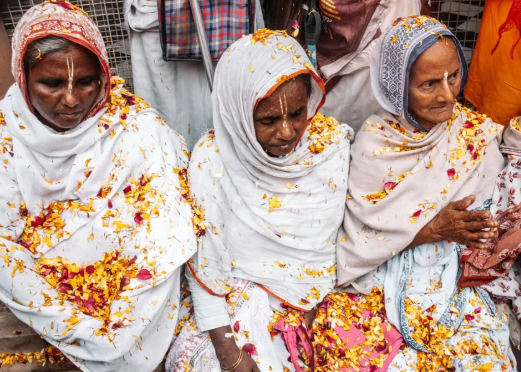
On 23 June each year, the world turns its attention to a humanitarian crisis that has remained largely unspoken for centuries: the discrimination, poverty, and social exclusion endured by widows. The United Nations’ decision in 2010 to formally adopt 23 June as International Widows Day was not simply a symbolic gesture. It was a recognition that millions of widows—particularly in South Asia, Africa, and Latin America—continue to face systemic injustice because their husbands have died.
This global observance has deep Indian roots. It was born from a personal tragedy in Punjab and transformed into an international movement through the tireless advocacy of the Loomba Foundation, founded by Lord Raj Loomba CBE in memory of his mother, Shrimati Pushpa Wati Loomba, who became a widow on 23 June 1954. Her suffering, like that of countless widows across India, became the catalyst for a global campaign that ultimately reached the United Nations General Assembly.
This year marks the 16th UN International Widows Day, and the Loomba Foundation will observe it with two significant events: one at the British Council in New Delhi, and another at the House of Lords in London. These parallel gatherings reflect the global scale of the issue and the international leadership India has shown in bringing widowhood out of the shadows.
THE HIDDEN CRISIS THE WORLD IGNORED
Widowhood has long been treated as a private tragedy rather than a public policy concern. Yet the numbers reveal a global emergency. Today, there are an estimated 300 million widows worldwide, and more than 500 million children dependent on them. Many live in extreme poverty. Millions face harmful traditional practices, property dispossession, sexual exploitation, and social ostracism.
In India, widows have historically been subjected to some of the harshest forms of discrimination. Although practices like sati were abolished long ago, the social stigma attached to widowhood persists in many communities. Widows are often excluded from family rituals, denied inheritance, and blamed for their husbands’ deaths. In parts of Africa, widows may be forced into degrading “cleansing” rituals or coerced into marriage with a male relative.
Despite the scale of the problem, widowhood remained largely absent from global development agendas until the early 2000s. There were no international conventions, no dedicated policies, and no global statistics. Widows were, in effect, invisible.
A PERSONAL STORY THAT SPARKED A GLOBAL MOVEMENT
The origins of International Widows Day lie in a deeply personal experience. When Lord Raj Loomba’s father died in 1954, his mother—only 37 years old—was forced into a life shaped by social restrictions and silent suffering. His grandmother, who herself was a widow, ordered his mother to remove her bindi and jewellery and wear only white clothes. Raj Loomba witnessed first-hand how society transformed overnight in its treatment of a woman who had done nothing wrong but lose her husband.
But one incident, decades later, would sear this injustice into his memory and shape the course of his life’s work.
THE WEDDING INCIDENT THAT CHANGED EVERYTHING
At his own wedding, the priest insisted that his mother, because she was a widow, should not participate in certain sacred rituals. She was asked to step aside at the very moment when a mother’s presence is most cherished. The humiliation was quiet but devastating. Raj watched as the woman who had sacrificed everything to raise her seven children with dignity was denied the right to bless her son on his wedding day.
That moment became a turning point. It crystallised the painful truth: widowhood in India was not just a personal loss—it was a social sentence. The injustice inflicted on his mother ignited in him a lifelong determination to challenge the stigma and uplift the status of widows across India and the world.
This conviction eventually led to the creation of the Shrimati Pushpa Wati Loomba Memorial Foundation in 1997, established by Lord Raj Loomba and his wife, Lady Veena Loomba, to honour his mother’s courage and sacrifice.
WHY THE UN CHOSE 23 JUNE
The Loomba Foundation launched International Widows Day on 23 June 2005—the anniversary of Lord Loomba’s mother’s widowhood. The date was chosen deliberately: it symbolised not only personal loss but the beginning of a lifelong struggle faced by millions of widows.
Over the next five years, the Foundation mobilised global support. It engaged parliamentarians, civil society leaders, and UN agencies. It organised events in more than 40 countries, published groundbreaking research, and built a coalition of voices demanding recognition for widows.
This sustained advocacy culminated in a historic moment. On 21 December 2010, the United Nations General Assembly unanimously adopted 23 June as International Widows Day, acknowledging widowhood as a global development and human rights priority. India played a pivotal role in championing the resolution and highlighting the urgency of addressing the injustices faced by widows worldwide.
The UN’s adoption of the day was a watershed moment. For the first time, the international community recognised that empowering widows is essential to achieving gender equality, reducing poverty, and strengthening families and communities.
WHY INTERNATIONAL WIDOWS DAY STILL MATTERS
Sixteen years after its adoption, International Widows Day remains as relevant as ever. Widowhood intersects with some of the world’s most pressing challenges:
• Conflict and displacement have created millions of new widows in regions such as Syria, Ukraine, Sudan, and Afghanistan.
• HIV/AIDS has left widows across sub-Saharan Africa vulnerable to stigma and property grabbing.
• Pandemics and natural disasters disproportionately affect women who depend on informal labour and lack social protection.
• Cultural norms continue to restrict widows’ rights to remarry, inherit property, or participate in community life.
The UN has repeatedly emphasised that widows must be included in national policies on social protection, education, healthcare, and economic empowerment. Without targeted interventions, widows and their children risk being trapped in intergenerational poverty.
INDIA AND THE UK MARK THE 16TH UN INTERNATIONAL WIDOWS DAY
This year, the Loomba Foundation will observe the 16th UN International Widows Day with two major events:
British Council, New Delhi – 23 June 2026
India remains central to the global widowhood movement. The New Delhi event will bring together policymakers, NGOs, philanthropists, and community leaders to discuss the challenges faced by widows in India and the innovative solutions emerging from grassroots organisations. The focus will be on economic empowerment, skills training, and social reintegration.
House of Lords, London – 23 June 2026
On the same day, the Foundation will host a parallel conference at the House of Lords, focusing on widows in Africa. The theme—“Widows in Africa: Perspectives on Justice, Dignity, and Economic Power”—reflects the urgent need to address the legal and cultural barriers that continue to marginalise widows across the continent.
These simultaneous events underscore the global nature of the issue and the leadership role the Loomba Foundation continues to play in shaping international policy and public awareness.
A CALL TO ACTION
International Widows Day is not merely a commemoration. It is a call to governments, civil society, and citizens to confront a long-ignored injustice. The UN’s decision to establish 23 June as International Widows Day was a recognition that widowhood is not a private tragedy but a public responsibility.
India, where the movement began, has a special role to play. By strengthening legal protections, expanding social welfare programmes, and challenging harmful cultural norms, India can lead the world in ensuring that widows live with dignity, security, and opportunity.
As the Loomba Foundation marks the 16th UN International Widows Day in New Delhi and London, the message is clear: widows must no longer remain invisible. Their rights are human rights. Their empowerment strengthens families, communities, and nations. And their voices—long silenced—must now be heard.
The writer is a distinguished non-resident philanthropist, recipient of the United Nations Association of New York’s Lifetime Achievement Award, the Forbes India Philanthropy Award, Asian of the Year Award, and an Honorary Fellowship by The University of Northampton. His global research study on widows led to the UN designating June 23 as International Widows Day.