There was a time when language in India was seen largely as a matter of identity, sentiment and culture. It still is all of that. But in today’s India, language is becoming something more. It is becoming infrastructure. It is becoming access. It is becoming opportunity. And if the country gets this moment right, language could well become the next great chapter in India’s digital story.
India has never been a one-language civilisation. It has always spoken in many voices at once. According to Census 2011, the country’s linguistic landscape includes 22 Scheduled languages and 99 Non-Scheduled languages, besides thousands of mother tongues and tribal languages. For decades, this extraordinary diversity was celebrated in speeches but often ignored in systems. Citizens adjusted. Students adjusted. Communities adjusted. The state, the market and technology rarely did.
That is what makes the current shift so important. Quietly but significantly, India is beginning to build language into the architecture of its digital future. The attached policy note makes it clear that the government is institutionalising AI for culture and languages through platforms such as BHASHINI, Anuvadini, Gyan Bharatam and Adi Vaani. This is not simply about preserving heritage in museums or archives. It is about making language, knowledge and culture usable in the real world, at scale, through technology.
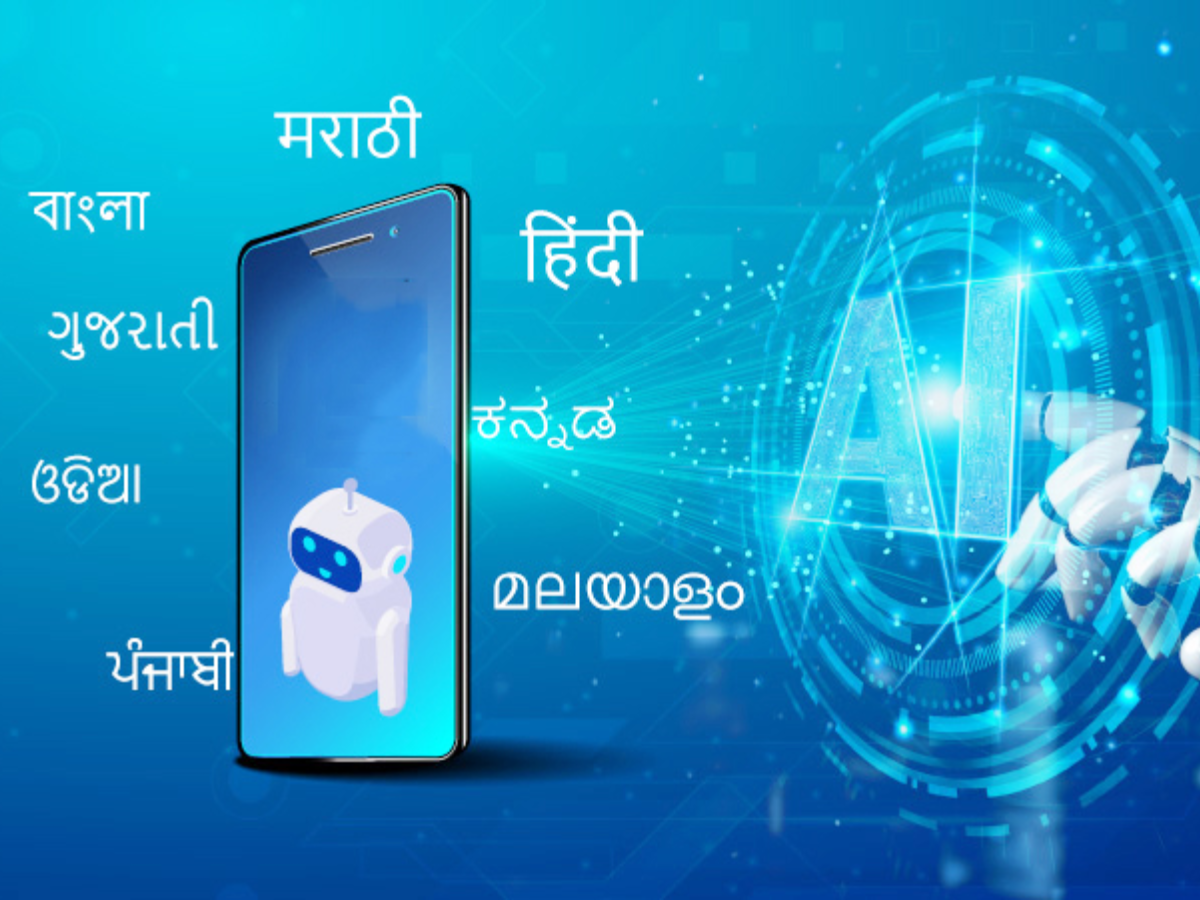
The story becomes sharper when one looks at BHASHINI. Launched in 2022 under the National Language Translation Mission, it was designed to respond to India’s linguistic diversity in the digital space. Its purpose is straightforward but powerful: Build language and voice capabilities directly into digital systems so that public platforms can work across the many languages India speaks. That means translation, speech to text, text to speech, transliteration and document understanding are no longer luxuries for a few users. They become foundational tools for millions.
And this is not a small pilot. BHASHINI already supports voice in 22 languages and text services in 36 languages. It hosts more than 380 AI models and datasets and has completed over 4 billion language inferences. Numbers like these matter because they signal something deeper. India is not merely experimenting with multilingual AI. It is trying to build it as digital public infrastructure.
The most powerful ideas often reveal themselves in real life. At Kashi Tamil Sangamam, the Prime Minister’s Hindi speech was translated in real time into Tamil using BHASHINI. At Maha Kumbh 2025, the Kumbh SahAyak chatbot used multilingual and voice-enabled support to help pilgrims navigate the event in 11 languages. These are not just technology demos. They are glimpses of what inclusive public communication can look like in a multilingual republic.
The implications go far beyond events. Think of the student in a small town who can understand technical material better in her own language. Think of the elderly citizen who cannot type comfortably in English but can speak fluently in his mother tongue. Think of the first-time a person can interact with a government or digital platform without being made to feel linguistically inadequate. That is not a minor convenience. That is democratic deepening.
This is where Anuvadini enters the picture with unusual significance. Developed by AICTE, it is designed to translate academic, technical and knowledge content into Indian languages. That may sound administrative, but it is in fact transformative. A country cannot become a true knowledge economy if advanced learning remains locked inside one linguistic gate. When textbooks, reference material and learning resources become available across Indian languages, talent expands. Confidence expands. Participation expands.
Then there is the civilisational dimension, and here the story becomes even more compelling. India is not just a nation of living languages. It is also a repository of enormous textual and oral memory. The Gyan Bharatam Mission has been conceived for the survey, documentation, digitisation and dissemination of India’s manuscript heritage and traditional knowledge systems, including a national digital repository. The mission has already documented over 44 lakh manuscripts in the Kriti Sampada repository and carries an approved outlay of ₹482.85 crore from 2024 to 2031 to scale digitisation and access.
This is a remarkable development because it changes the meaning of preservation itself. A manuscript locked away is preserved physically but absent socially. A manuscript that is digitised, searchable and discoverable enters public memory again. Through handwriting recognition, OCR, metadata extraction and intelligent cataloguing, AI is helping India move heritage from fragile shelves into shared access.
Gyan Setu adds another layer to this effort. By launching a national AI innovation challenge around manuscript preservation, decipherment, restoration and access, India is not merely archiving the past. It is inviting the innovation ecosystem to interpret, organise and unlock it. That is the kind of state capacity modern nations need, where culture is not treated as static inheritance but as active knowledge capital.
Perhaps the most moving part of this story lies in Adi Vaani, the AI platform for tribal languages. Languages do not disappear only when people stop speaking to them. They also disappear when systems stop listening to them. Adi Vaani is designed for preservation, promotion and revitalisation of tribal languages through real time translation, speech to text transcription, language learning modules and digitisation of folklore, oral histories and community narratives. Its beta phase has already covered languages such as Santali, Bhili, Mundari and Gondi, with expansion underway.
That matters immensely. Because the future of India cannot be built by flattening India. It must be built by hearing India fully.
There is also a practical economic lesson here that deserves more attention. The policy note underlines how AI can connect artisans, craftspeople and cultural workers to digital markets by improving visibility, participation and language inclusive access. This is where culture stops being treated as nostalgia and starts being recognised as livelihood. A weaver, a craftsperson, a local creator or a folk practitioner should not have to lose language to gain market access. In the best version of India’s AI journey, technology will not erase local identity. It will amplify it.
In my view, this is the real strategic opportunity before India. Around the world, the AI race is often framed in terms of model size, capital intensity and computational power. Those matter. But the countries that will truly lead in the next phase will be those that make AI meaningful to ordinary lives. India has a rare advantage here. It can show that AI need not be built only for efficiency. It can also be built for inclusion, for access and for cultural continuity.
The next digital revolution in India may not begin in code alone. It may begin in voice. In translation. In memory. In a child learning science in her own language. In an artisan telling his story to a wider market. In a tribal language entering the digital future instead of being left behind by it. When AI learns India’s languages, India does not simply modernise. It becomes more itself.
Dr Pradip Kumar Varma, Member of Parliament, Rajya Sabha Nagender Parashar, Director, Panashar Industries