
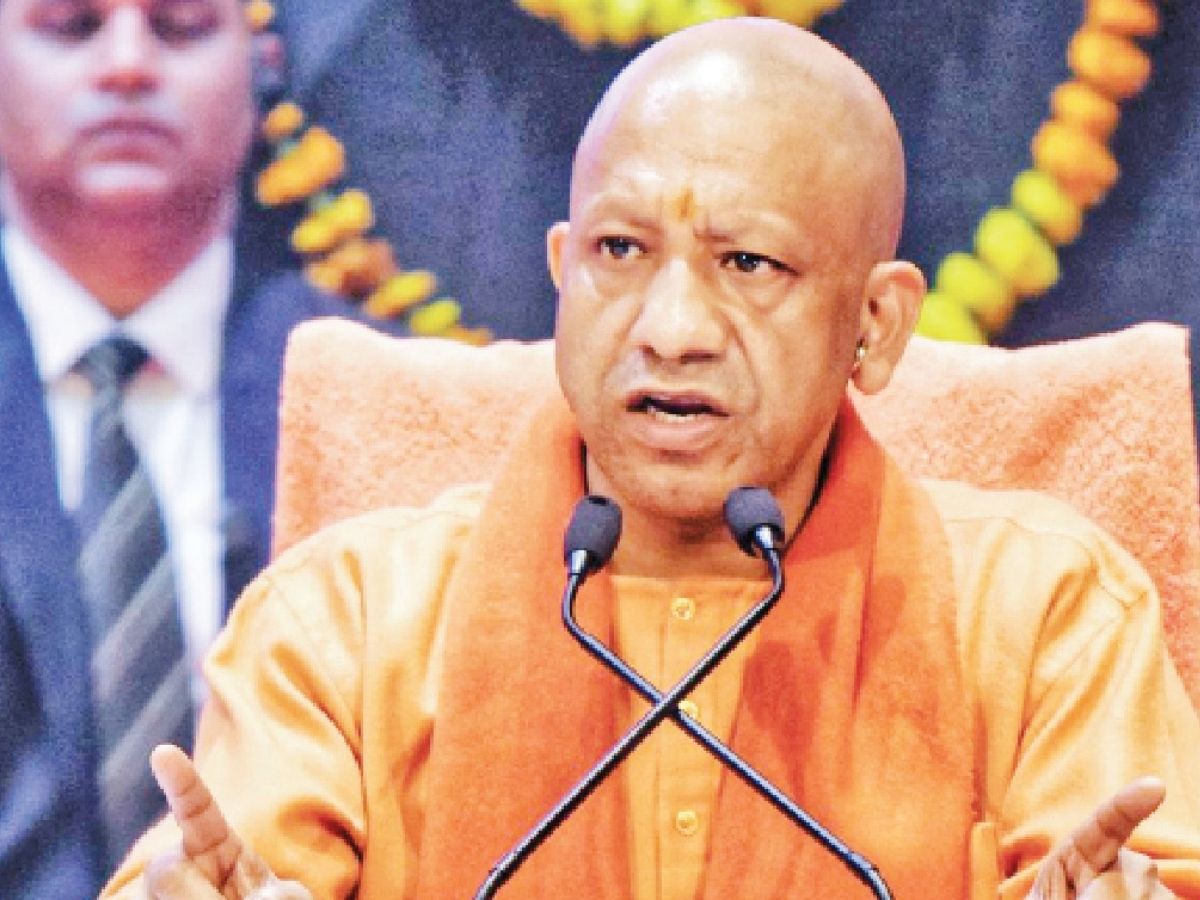
For decades, the narrative surrounding women in Uttar Pradesh was often mired in statistics concerning low literacy rates, safety concerns, and systemic neglect. However, a distinct shift is visible on the ground today. Under the leadership of Chief Minister Yogi Adityanath, the state government has moved beyond tokenism to implement a structural overhaul of women’s welfare. By integrating financial security with mobility and education, the administration is crafting a holistic model of empowerment that starts from the cradle and continues to graduation.
The most striking aspect of this transformation is the government’s lifecycle approach to supporting the girl child. The decision to provide financial support to girls from birth till graduation addresses the deep-rooted societal preference for the male child, which has historically led to high dropout rates and early marriages. Schemes like the Mukhyamantri Kanya Sumangala Yojana are not merely doles; they are strategic interventions. By providing financial assistance in installments linked to milestones—birth, vaccination, admission to Class 1, Class 6, Class 9, and finally graduation—the state has created a direct incentive for families to educate their daughters. This conditional cash transfer model ensures that the girl child is no longer viewed as a financial burden, but as an asset to the family’s future.
Complementing this financial bedrock is the government’s focus on mobility as a tool for empowerment. The Rani Laxmi Bai Scooty Scheme represents a nuanced understanding of the barriers facing young women in higher education. In a vast state like Uttar Pradesh, the lack of safe, reliable transportation is often the primary reason parents pull their daughters out of college. By providing free scooties to meritorious girl students—specifically those scoring over 75% in their intermediate exams—the government has handed them the keys to independence.
This initiative does two things simultaneously. First, it bridges the “last mile” connectivity gap between home and educational institutions. Second, it instills a sense of confidence and aspiration. When a young woman navigates her own vehicle, she claims her space in the public sphere—a domain from which she was previously discouraged. Reports suggest that the distribution of thousands of scooties has not only eased the commute for students but has also sent a powerful message that the state stands as a guarantor of their safety and ambition.
Furthermore, these efforts cannot be viewed in isolation. They are part of the broader Mission Shakti framework, which has been aggressively promoted across the state. This mission converges welfare schemes with stringent law enforcement measures, including the creation of women’s help desks at police stations and anti-Romeo squads. The synergy between safety and opportunity is evident; parents are more willing to invest in their daughters’ education and mobility when the state creates a perceived environment of security.
Critics often dismiss welfare schemes as populist measures, but in Uttar Pradesh, the data suggests a tangible shift in the social fabric. The linkage of financial aid to educational milestones has begun to normalize the presence of women in universities and technical institutes. The scooty scheme has turned the scooter into a symbol of academic achievement and personal freedom, replacing the traditional imagery of early betrothal.
There is also a significant economic dimension to this empowerment. By ensuring that girls complete their graduation, the state is effectively increasing the female workforce participation rate. An educated woman with the means to commute is an asset to the economy, not just the household. The government’s push for financial support until graduation acknowledges that empowerment cannot be achieved through school-level education alone; it requires the specialized skills and confidence that higher education provides.
Chief Minister Yogi Adityanath’s approach underscores a vital political philosophy: that women’s empowerment is not a singular event but a continuous process. It requires dismantling barriers at every stage of life. From the financial cushion provided at birth to the wheels provided for the journey to college, the Uttar Pradesh model is witnessing a generational shift.
While challenges remain in a state of this magnitude and complexity, the direction is undeniable. The sight of young women driving scooties to universities in towns that once struggled with female literacy is a testament to policy translating into practice. By investing in the girl child today, the state is securing a more equitable, educated, and prosperous tomorrow. The “double engine” government has clearly identified that the true engine of UP’s future growth is its women, and for the first time in a long while, they are being given the fuel they need to run.
Advaita Kala is an author based in New Delhi.