
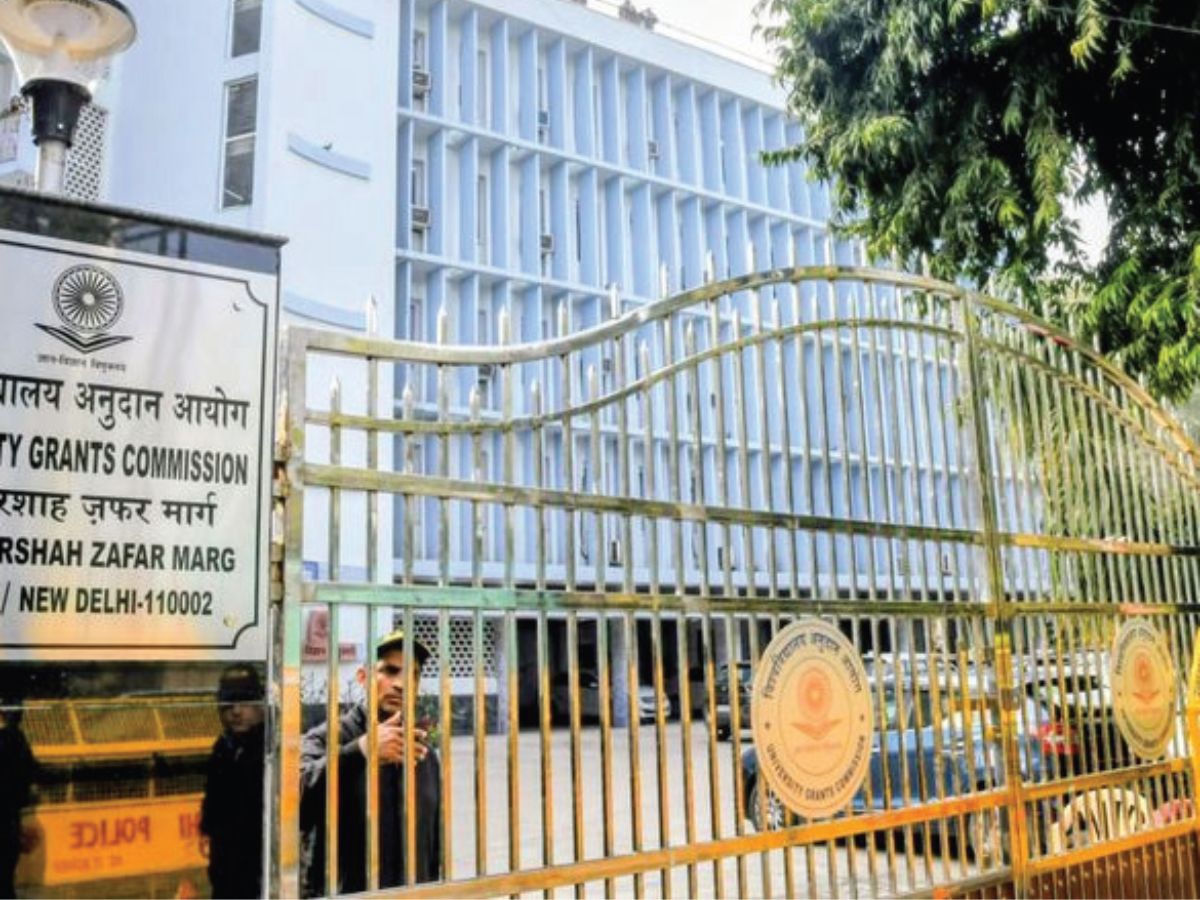
The UGC’s new equity regulations seek to institutionalise antidiscrimination mechanisms in higher education, but have triggered legal challenges over inclusion, fairness and due process.
Introduction
On January 13, the University Grants Commission notified the long-awaited University Grants Commission (Promotion of Equity in Higher Education Institutions) Regulations, 2026, aimed at addressing caste-based discrimination on college and university campuses. The Regulations were framed pursuant to a 2019 public interest litigation filed before the Supreme Court by Radhika Vemula and Abeda Salim Tadvi, mothers of Rohit Vemula and Payal Tadvi respectively, both of whom reportedly died by suicide after facing caste-based discrimination in their institutions.
In early 2025, the Supreme Court told the Union government that it sought to create a “very strong and robust mechanism” to tackle the caste discrimination in higher education. The Court permitted petitioners and stakeholders to submit suggestions on UGC’s draft regulations. After considering these inputs, the UGC notified the 2026 Regulations, superseding its earlier 2012 framework.
While framed with the stated objective of promoting equity, the Regulations have sparked opposition. Multiple petitions before the Supreme Court contend that they discriminate against “general category” persons, with specific challenges to Regulation 3(c) for allegedly adopting a non-neutral definition of caste-based discrimination.
What’s New: How the 2026 Regulations Differ from 2012
The UGC’s 2012 framework functioned largely as a set of guidelines, leaving a compliance to the institutional discretion with no uniform enforcement or penalties. In contrast, the 2026 Regulations create a binding and enforceable provision, mandating specific institutional bodies and procedures and specific regulations. Unlike 2012, the new Regulations require every HEI to establish Equal Opportunity Centres, Equity Committees, Equity Squads and 24-hour helplines, with clearly defined powers and responsibilities. The 2026 framework introduces fixed timelines for inquiry and action, mandatory reporting to the UGC, and an appeal mechanism before an Ombudsperson which was absent all absent earlier. Most significantly, the UGC is now empowered to impose stringent sanctions, including suspension of degree-granting powers and withdrawal of recognition, marking a decisive shift from advisory compliance to regulatory enforcement.
Some Highlights of these regulations
Against this backdrop, it is important to examine the key features of the University Grants Commission (Promotion of Equity in Higher Education Institutions) Regulations, 2026, which seek to establish an institutional framework for preventing discrimination and promoting inclusion across campuses.
Objective:
The stated objective of the Regulations is to eliminate discrimination on the grounds of religion, race, gender, place of birth, caste or disability, with particular emphasis on protecting members of Scheduled Castes, Scheduled Tribes, socially and educationally backward classes, economically weaker sections and persons with disabilities. The Regulations aim to promote full equity and inclusion among all stakeholders in higher education institutions (HEIs).
Scope and Applicability:
The Regulations apply to all higher education institutions in India, whether public or private. Their coverage extends to a wide range of stakeholders, including students, faculty members, non-teaching staff, members of governing bodies and institutional heads. Protection is accorded not only to enrolled students but also to individuals seeking admission, including those applying through formal, open and distance learning, and online modes. The Regulations expressly cover persons identifying as male, female or third gender.
Definitions of Discrimination:
Regulation 3(1)(c) defines “caste-based discrimination” as discrimination solely on the basis of caste or tribe against members of Scheduled Castes, Scheduled Tribes and Other Backward Classes. Separately, Regulation 3(1)(f) defines “discrimination” more broadly as any unfair, differential or biased treatment against a stakeholder on grounds of religion, race, caste, gender, place of birth or disability. This includes any distinction, exclusion, limitation or preference that impairs equality of treatment in education or violates human dignity.
Duties of Higher Education Institutions:
The Regulations impose a clear obligation on every HEI to prevent and eradicate discrimination by adopting appropriate preventive and protective measures. Institutions are expressly barred from condoning any form of discrimination, and the head of the HEI is vested with powers and responsibility to ensure strict compliance with the Regulations.
Equal Opportunity Centres:
Every HEI is required to establish an Equal Opportunity Centre to implement policies for disadvantaged groups, provide counselling, and enhance diversity on campus. These Centres are mandated to coordinate with civil society organisations, local administration, police authorities, legal services bodies, NGOs, parents and media. A senior faculty member with demonstrated commitment to the welfare of disadvantaged groups must be appointed as Coordinator. The Centres are tasked with maintaining an online complaints portal, protecting complainants from retaliation, and publishing bi-annual reports detailing demographic data, dropout rates, complaints received and their status.
Equity Committees:
To oversee the functioning of the Centres and inquire into complaints, each HEI must constitute an Equity Committee headed by the institutional head. The Committee includes senior faculty members, a non-teaching staff member, civil society representatives and student nominees, with mandatory representation of women, OBCs, SCs, STs and persons with disabilities. The Committee is required to meet at least twice a year to review actions taken.
Equity Squads, Ambassadors and Helpline:
The Regulations also mandate the formation of mobile Equity Squads to monitor vulnerable campus areas, along with Equity Ambassadors designated at departmental and unit levels. Additionally, every HEI must establish a 24-hour equity helpline, ensuring confidentiality for complainants who request it. Beyond these measures, HEIs are required to undertake sensitisation programmes, obtain antidiscrimination undertakings, engage professional counsellors and encourage reporting. The UGC will monitor compliance, with institutions required to submit annual reports to the Commission and relevant authorities.
Procedure to be followed when an incident is reported
The Regulations prescribe a structured mechanism for reporting and redressal of discrimination-related incidents. An incident may be reported through the online complaints portal, by email to the Coordinator of the Equal Opportunity Centre, or through the dedicated Equity Helpline. Information received via the helpline must be forwarded to police authorities if a prima facie offence under penal laws is disclosed. Upon receipt of a complaint, the Equity Committee is required to convene within 24 hours and initiate action. The Committee must submit its enquiry report to the head of the higher education institution within 15 working days, with a copy provided to the aggrieved person. Every Higher Education Institution must constitute an Equity Committee under its Equal Opportunity Centre to examine discrimination complaints, recommend action and ensure compliance. The Committee is chaired by the Head of the Institution and includes senior faculty, a non-teaching staff member, civil society representatives and student nominees, with mandatory representation of SC, ST, OBC communities, women and persons with disabilities. The head of the institution must act on the report within seven working days. Where criminal liability is indicated, police authorities are to be informed without delay. The Regulations further provide a right of appeal to an Ombudsperson for any person aggrieved by the findings of the enquiry.
Consequences of Non-Compliance
In cases of non-compliance with the Regulations, the UGC may constitute an enquiry committee to examine the violations. If non-compliance is established, the Commission can impose stringent penalties under Regulation 11 depending on the severity of the breach. These include debarment from UGC schemes, suspension of degree-granting privileges, prohibition on offering open and distance learning and online programmes, and removal of the institution from the list of recognised HEIs under Sections 2(f) and 12B of the UGC Act. The UGC may also impose additional punitive measures on a case-to-case basis.
The Controversy
The UGC (Promotion of Equity in Higher Education Institutions) Regulations, 2026 have triggered significant debate, with Regulation 3(c) emerging as a central point of contention. The provision defines caste-based discrimination as discrimination on the basis of caste or tribe only against members of the Scheduled Castes, Scheduled Tribes and Other Backward Classes. Critics argue that this definition excludes “general category” stakeholders from protection, even though they too may face caste-linked bias, rendering the framework non-inclusive and constitutionally problematic. Another contentious issue is the mandatory representation of SC, ST and OBC members on Equity Committees tasked with probing discrimination complaints. Opponents contend that such composition undermines the right to a fair and unbiased hearing, arguing that an anti-discrimination law must protect all individuals equally, irrespective of caste or category. Concerns have also been raised about the potential misuse of the Regulations. Critics point out that the framework does not prescribe safeguards or penalties for filing false complaints, raising fears of “reverse discrimination.” Drawing parallels with the Scheduled Castes and Scheduled Tribes (Prevention of Atrocities) Act they argue that instances of false prosecution, even if ultimately resulting in acquittal, can cause lasting reputational and personal harm. Additionally, some fear that the strict timelines prescribed for inquiry and the severe consequences for institutional non-compliance could compel HEIs to take hurried and ill-considered decisions. Supporters of the Regulations, however, defend the targeted approach, citing India’s entrenched history of caste-based exclusion. They argue that a neutral framework would fail to address structural inequalities and that stronger representation of reserved categories on inquiry panels is necessary to build trust, especially in light of past instances where complaints were ignored or dismissed. They also caution that penalising false complaints could deter genuine victims from reporting discrimination. With the Regulations having emerged from sustained judicial intervention following student suicides and now facing constitutional scrutiny before the Supreme Court, the manner in which the Court balances equity, fairness and due process will be closely watched.
Current status
A petition namely Rahul Diwan and others v. Union of India, Diary No. 5477/2026 challenging the constitutionality of the UGC (Promotion of Equity in Higher Education Institutions) Regulations, 2026 was mentioned before the Supreme Court for urgent listing. The plea contends that Regulation 3(c), which defines caste-based discrimination as applicable only to SC, ST and OBC communities, is exclusionary and discriminatory against persons from general categories. The Chief Justice of India acknowledged the concern and directed that procedural defects be cured for the matter to be listed.
Kamlesh Singh is a lawyer and author of Sabarimala Verdict: A Tussle between Constitution & Religion