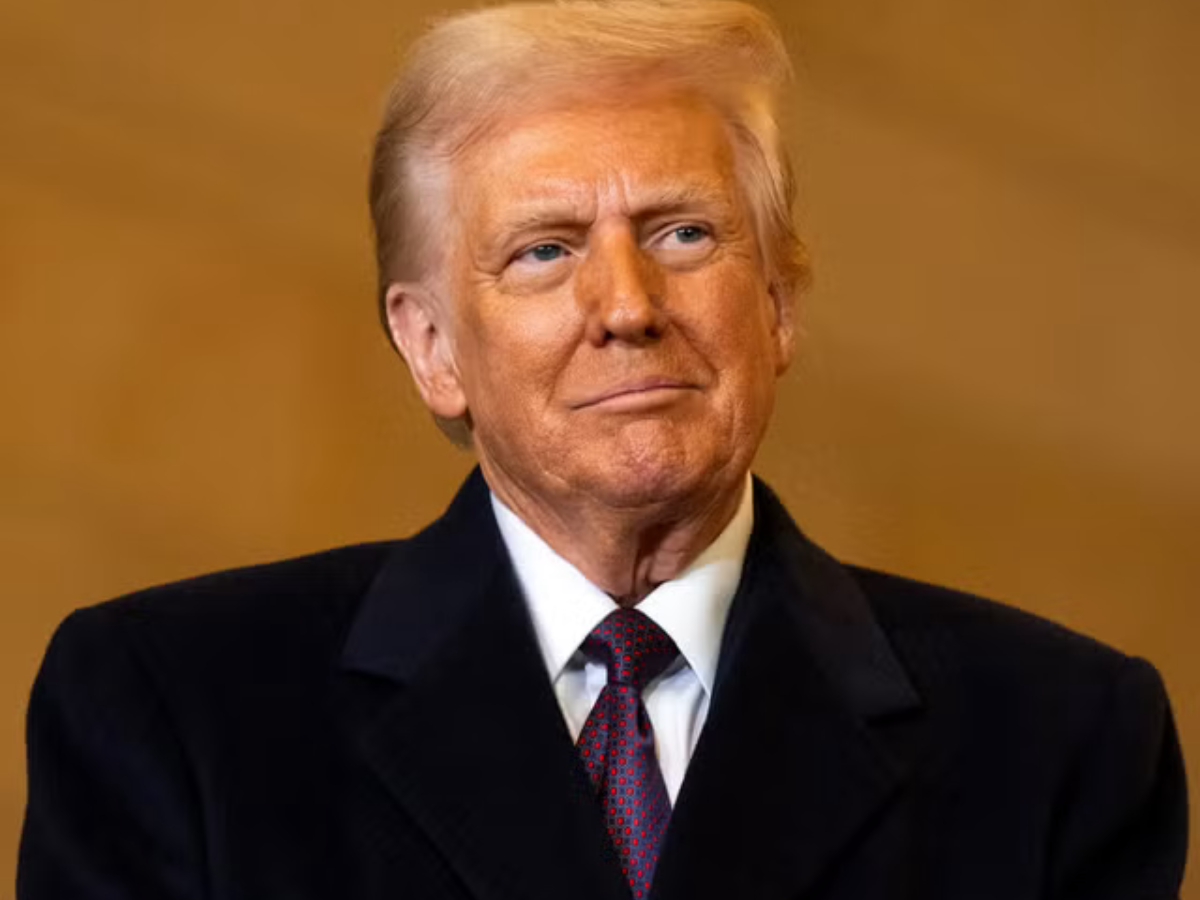
US President Donald Trump may believe that he and his administration are on a geopolitical roll. From the seizure of Nicolás Maduro last year to the recent US attack on Iran and the reported death of Iran’s Supreme Leader, Ayatollah Ali Khamenei — long known for his “Death to Israel and America” rhetoric — these developments may, in Washington’s view, signal decisive action against hostile regimes.
But do such actions necessarily make the world safer, including for India? Or do they risk pushing the international system towards lawless instability? What are the consequences for international law, long seen as a pillar of justice for the Global South?
The White House views these interventions — and possibly others to come — as the result of firm, unilateral decisions taken by the US Commander-in-Chief. President Trump appears to see such moves as carrying out responsibilities that the United Nations and existing international law frameworks have failed to discharge, particularly in addressing state sponsors of terrorism and Iran’s nuclear ambitions against Israel.
Implicit in this approach is the assertion that the US will lead in shaping a new world order — one significantly influenced by Trump’s worldview. Supporters argue that such assertiveness could stabilise volatile regions while also securing American interests, including energy supplies, strategic minerals and global trade routes.
However, several European leaders have expressed unease over what they see as Washington’s unilateralism in matters of war and security. UN Secretary-General António Guterres condemned what he described as the “use of force” by the US and Israel, and Iran’s retaliation, warning that such actions “undermine international peace and security”. European Commission President Ursula von der Leyen called for maximum restraint and full respect for international law. Spanish Prime Minister Pedro Sánchez warned that the strikes could heighten tensions and contribute to a more hostile international order. Finland’s President Alexander Stubb suggested that the US is operating largely outside traditional international law.
In the Global South, reactions have also been critical. Brazil condemned the strikes on Iran. Russia described the attacks as “unprovoked” and “preplanned”, calling them an act of aggression against a sovereign state and a violation of international law.
Others, however, have shown support. During a recent visit to India, Canadian Prime Minister Mark Carney indicated that Canada backed the US strikes and viewed it as Iran’s responsibility to prevent further escalation. Many Western and Gulf states adopted a more cautious tone, criticising Tehran’s retaliation while avoiding direct condemnation of Washington.
India has taken a carefully balanced stance. New Delhi has expressed concern over instability in Iran and the Gulf, particularly given the nearly 10 million-strong Indian diaspora in the region. It has emphasised the need to protect civilians and uphold the sovereignty and territorial integrity of all states.
Why did this escalation occur, including the earlier seizure of Maduro? One argument is that the United Nations faces structural and political limitations that often prevent it from stopping wars or effectively countering terrorism. In such a vacuum, stronger powers step in.
Nature abhors a vacuum — geopolitics does too. The absence of effective multilateral enforcement can lead to a more hegemonic environment, even a “law of the jungle”. Former EU foreign policy chief Josep Borrell once controversially described Europe as a “garden” surrounded by a “jungle” — remarks widely criticised as Eurocentric.
Europe often speaks of a rules-based order and restraint. Yet history shows its limitations, from the delayed response to the genocide in eastern Bosnia to challenges in dealing with authoritarian regimes and terrorism. Some argue that US intervention ultimately halted atrocities in the Balkans, albeit controversially.
The broader Middle East crisis has deep historical roots, including European antisemitism and the Holocaust, which intensified pressures in Palestine. India, by contrast, has historically provided a safe and thriving home for Jewish communities, without bearing responsibility for Europe’s past.
Yet the present spillover from these conflicts could significantly affect India and its neighbourhood. Critics contend that maintaining a weakened global order risks continued instability. Supporters of Trump argue that decisive action, if calibrated carefully, could deter nuclear proliferation and terrorism.
At a Davos panel discussion featuring US Ambassador to the UN Mike Waltz and EU foreign affairs chief Kaja Kallas, Waltz clarified that the US does not intend to sideline the UN entirely. However, he indicated that where vital US national security interests are at stake, Washington will act — unilaterally if necessary.
For India, this may be a reality it must navigate, provided American actions do not undermine core Indian interests. New Delhi has traditionally avoided strong-arm hegemonic tactics while remaining far from naive. It also supports reforms to make the UN more effective and representative.
The Trump administration’s posture has been likened to that of a “new sheriff” in a turbulent global town. While critics warn of overreach, supporters argue that inaction can be equally dangerous. Preventing Iran from acquiring nuclear weapons and curbing state-backed terrorism are widely seen as legitimate goals. The risk lies in overextension — destroying stability in an attempt to preserve it.
India, under Prime Minister Narendra Modi, is likely to maintain its calibrated approach: avoiding unnecessary escalation while engaging constructively with Washington and others. A balanced path — strengthening security, supporting international law, and advocating UN reform — may offer the most prudent way forward in a volatile world.
Whether this emerging order leads to greater peace or deeper fragmentation remains uncertain. For India, the priority will remain clear: safeguarding its development, its diaspora, and its strategic autonomy amid shifting global tides.
Peter Dash was an Associate at Harvard University’s Center for International Affairs, where he conducted research on world order and youth issues, and worked at the Harvard Law Library.