
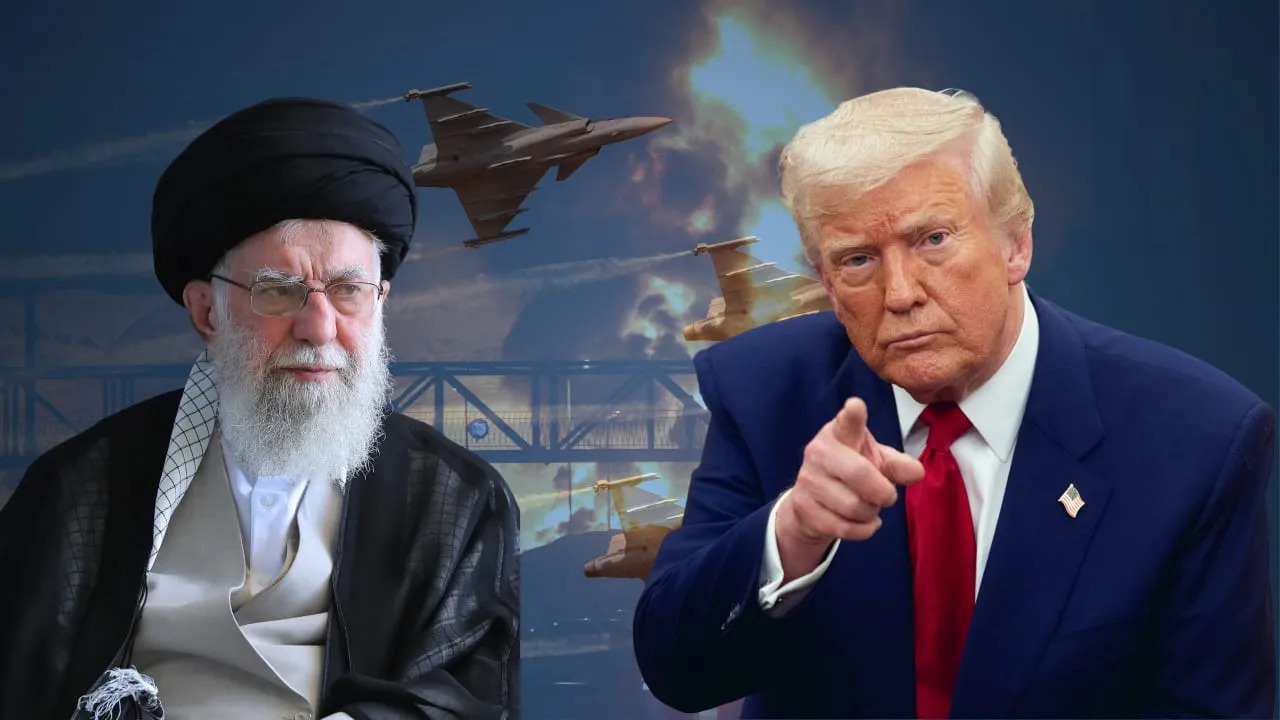
It needs attention that in any US war with Iran, the proverbial guns held by those potential combatants would be highly destructive, even some of mass size missiles more than just bullets. So, it would be hoped that both the US and Iran could find a negotiated agreement on Iran’s uranium enrichment activities, leading to them stand down from war. That is away from an emerging dangerous escalation, with US air and naval strike forces amassing towards the country.
The importance of avoiding any extensive US war with Iran, given its major potential deleterious impact on India is given attention here. And that such a grave war could even ignite World War III if China and Russia get drawn in. Not to over emphasize that in the fallout of such a conflict, India might find it harder to keep China outside of its boundaries as a worse-case scenario if all hell breaks loose in the region.
And just think what such a war could specifically have as an impact. At risk would be, 60 to 65 percent of India’s imported oil that goes through the Strait of Hormuz, a choke point bordered by Iran (Google AI). And for China the figure is 40 percent. On resulting higher energy costs rippling through to every Indian down to consumers, vendors to farmers and factory production and larger businesses and not to forget households could be badly impacted by such a US attack retaliated by Tehran closing down that strait. According to the Economic Times, “Captain D K Sharma (retd), a former Indian Navy spokesperson, who closely follows developments in the Gulf region, too said Iran’s threat to block the Strait of Hormuz could lead to significant disruptions in global oil trade.” Some experts even calculate a ballooning of oil prices upto a hundred dollars a barrel, from the same India media source.
At the base of the conflict between Washington and its allies with Iran is the latter’s nuclear programme. One that over years produced fairly highly enriched uranium, moving towards weapons grade for deadly atomic bombs. That programme may have been insufficiently abated, even with the June 2025 attacks on Iran by Israel and the US on identified uranium enrichment sites. These concerns about Tehran’s commitment to build a nuclear weapon remain high as expressed by US Vice President J D Vance in a recent interview with Fox News.
To remember, added to these concerns there has been bitterness through many decades around Iran’s hard-line theocratic revolution. One that threw out the Shah, Mohammad Reza Pahlavi and his government put in power by the likes of the CIA; not forgotten by many Iranians. And on the US side, a seemingly humiliated America over the hostages the Iranian Revolutionary Guard took from the US embassy, staff, shortly after the overthrow that some say caused US President Jimmy Carter to lose the US presidential election.
So is it much surprising altogether that the Tehran regime is on a top do list of nation regimes preferred to see “canceled”? This list has been well evidenced by former top US general Wesley Clark, ex-commanding head of NATO. But until Trump in his second term, attacks have been asymmetric not kinetic, with a lot rather focussed on pushing very tight sanctions on Iran. But Trump now sees Iran in its most weakened position, with his holding the best cards to use his analogy that American has held vis a vis the regime since its revolution. Remember, what happened when he had a similar attitude to Venezuela?
But Donald Trump, some-what unpredictable to various experts, will consistent to his foreign policy strategy outlined in a previous piece in this paper, may come up with a surprise. That is to neoconservative “hawks” and certain liberals looking for a US backing to oust the regime in Tehran by bombing it to complete pieces. Trump may not have such an extensive approach even this time around if Tehran does not agree to favorable deal to his liking? As seen with his short duration bombing attacks in June of 2025 that disappointed a number of so-called ‘Chicken Hawks’ on US Capitol Hill who wanted Iran essentially devastated?
Trump, indeed may present in the end a decent offer to the regime in Tehran which may have a hard time saying no to – eventually. Tehran knows that its future is dim without Trump being attracted to a deal that significantly cuts the level of uranium enrichment, but entices and seals with major economic, financial and resource extraction benefits to US interests. Hence, Tehran is proposing some such benefits that no previous US administrations were previously and seriously extended to by the theocracy.
Yet worry. As no matter what the US government and its partners did, even by the Obama administration to try to “tame” Tehran, nothing seemed to work well. That even involved that Obama White House “raining down” by airplane delivery billions of western currency in pallets into Tehran. Even his making a deal with Tehran on uranium enrichment, (later cancelled by Trump) the regime remained in place with its extreme orthodoxy. A regime that still promoted chants of “Death to America” and Israel and describing both as satanic. And still looking likely to try to make a nuclear weapon, one day. Clearly, not a very nice mix for Israel that remembers millions of Jews slaughtered in concentration camps or destroyed in pogroms by extremism, racist spouting authoritarian regimes or outright malicious totalitarian ones. Iran has sounded at times too much that it fits those bills-but less recently.
So, it will be hard for much of Washington and allies’ big lobby money to accept or encourage signature on any deal with Tehran? So, if Trump can through his negotiators do so, he will truly demonstrate his ability with the “Art of the Deal”, even reinforcing his Board of Peace initiative. And history should be well learned regarding Israel’s nuclear capability should Iran gain any upper hand with Israel in a new war. For according to the Times of Israel, “Report says Israel planned atomic detonation in Sinai if Six-Day War went wrong” in 1967. More reason, Iran should go for peace and the international community to support as such.
Besides, no deal, indeed could be harmful to the Indian economy not only on oil. But much of India’s world markets and consumers afar could reduce purchases from India, if oil prices consequently rise high from war in Iran unfolding on production. As well, given already the high tensions and polarization, the world does not need Iran on fire, lighting a powder keg in the oil rich Gulf. And by a domino effect, possibly choking off or greatly reducing foreign assistance by Gulf States that helps to stabilize or reduce risks of havoc and even terrorism in the region rightfully worrisome to India. In fact, if the Strait of Hormuz were to be closed for too long, internal pressures in Gulf States might not look pretty. As well, many Indians working abroad in that region might then have to return to India adding to unemployment pressures.
Finally, port investments by India in Iran to further Indian business, as a transport logistics liaison to Europe and Russia (indirectly) might be compromised in any mass war over Iran. According to AI Google regarding the hub: “Chabahar Port (Gulf of Oman)- India has invested over $500 million, with a 10-year contract signed in May 2024 to operate a terminal and a pledge of $370 million for further development. It is crucial for India to bypass Pakistan to access Afghanistan and Central Asia.” Though such agreements with Iran may be (further) spoiled if Iran goes no deal with Trump; resulting in war?
So, India should support a deal, quietly even through third channels and placing itself commercially and politically well for post any peace in Iran. Actually, through the Modi-led government by not generating unnecessary animosity, India already to an extent has done so. Even the Iranian situation could result in conditions improving India as an important stabilizing pole in the Indian Ocean basin overflipping its growing regional influence.
Not all is lost necessarily with US president Trump’s tactics on peace. But India under the Modi leadership will no doubt bring the US and its allies to consider some degree of caution. And think more of the impact on the Global South on any invasion or sustained bombardment of Iran. And even to think twice of snatching any of Iran’s leadership as it did with Nicolas Maduro in Venezuela.
But with Trump, expect the surprising. And that tactic may in the end push to get Iran to be more malleable to accepting US positions. Which is happening in Venezuela with the US energy industry meeting its new president by oil production facilities there, recently. Will the same happen in Iran one day? Let us hope so but with no destructive invasion – and for Indians’ sake and regional and economic stability, and peace worldwide.
Peter Dash studied the Middle East and world order at Harvard and teaches presently in Southeast Asia.