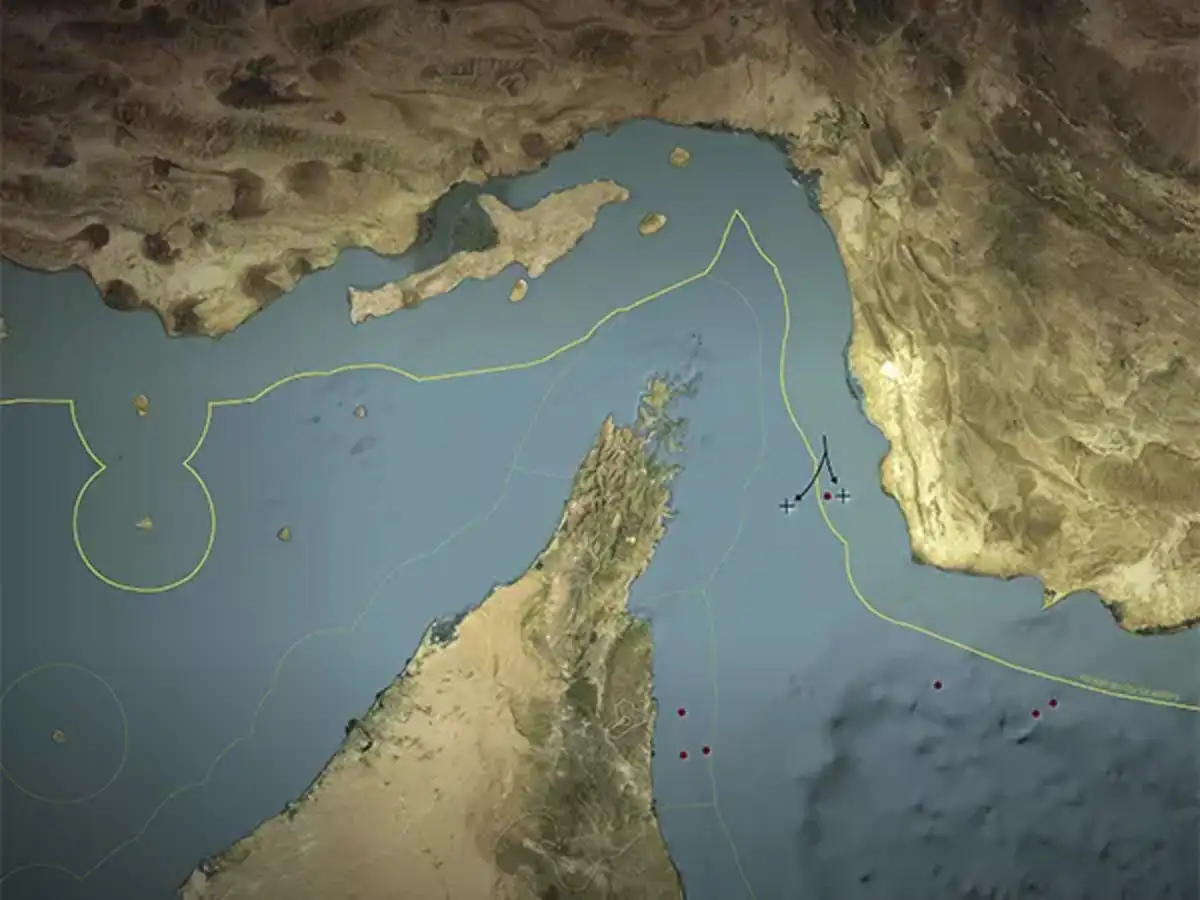
The Strait of Hormuz is a very important sea passage for world shipping; it connects the Persian Gulf to the Gulf of Oman (in the wider Indian Ocean). It is only about 33 km wide at its narrowest, but it handles approximately 21 million barrels per day (BPD) of oil transported by sea to Europe, Asia, and America; thus, it has huge strategic significance as a vital avenue for transferring much of the world’s oil supply. India is one of the largest consumers of energy and thus a major importer of crude oil from throughout the world, especially from countries located in the Middle East.
Additionally, many important countries, such as Saudi Arabia, Iraq, Kuwait, and the U.A.E., export large quantities of crude oil to India via the Strait of Hormuz, making it a critical lifeline for India’s energy needs. Iran has traditionally been one of India’s most significant energy partners due to its geographic proximity and favorable trade relations; however, both countries are facing challenges because of the current political climate in the region.
For a rapidly developing country like India, the Strait of Hormuz serves as a crucial energy lifeline. India is one of the largest energy consumers globally. With its growing population, expanding industries, and rising transportation demands, the country relies heavily on imported crude oil. Nearly 85 percent of India’s crude oil needs are met by imports from abroad, with many suppliers based in the Middle East. Iran has historically been an important energy partner for India due to its geographical closeness and favorable trade relations.
Oil from Iran and other Gulf countries like Saudi Arabia, Iraq, Kuwait, and the United Arab Emirates must pass through the Strait of Hormuz before it reaches international markets. This means the strait acts as a narrow gateway for millions of barrels of oil daily. For India, oil tankers carrying crude from these countries navigate this route before reaching Indian ports along the Arabian Sea. Any disruption in this pathway can directly impact India’s energy supply. Another reason the Strait of Hormuz is vital is that it is one of the world’s key “oil chokepoints.” This term refers to a narrow route that a large volume of trade must traverse. The strait’s narrowness and strategic sensitivity mean that political tensions or military conflicts in the area can threaten the free movement of ships.
Since Iran controls the northern coast, it has occasionally warned it could block the passage during geopolitical stress. Such threats show how vulnerable global energy supply chains can be. For India, a blockade or disruption in the Strait of Hormuz would have several consequences. First, shipments of oil would arrive late or be restricted. Second, a decrease in the global supply of crude oil would likely cause international prices to soar. Rising oil prices would strain India’s economy since fuel is crucial for transportation, power generation, and industrial production. Ultimately, consumers would face higher costs for petrol, diesel, and other energy products. Aware of these risks, India has been looking into new strategies to protect its energy security.
One approach involves diversifying energy sources. India has increased oil imports from countries outside the Gulf region, such as the United States and Russia, to reduce reliance on any single route or area. Another strategy includes developing strategic petroleum reserves, where crude oil is stored for emergencies during supply disruptions.
Moreover, India is investing in renewable energy sources like solar and wind power. By gradually decreasing dependence on imported fossil fuels, the country aims to shield itself from geopolitical uncertainties surrounding important routes like the Strait of Hormuz. In conclusion, the Strait of Hormuz is a key maritime corridor that greatly impacts India’s energy security. Its location makes it an essential route for oil shipments from the Persian Gulf to India. While the strait allows for the steady flow of energy resources, it also makes the global economy vulnerable to risks during conflicts. Therefore, India’s long-term plan focuses on strengthening energy partnerships, diversifying supply routes, and expanding renewable energy initiatives to ensure a stable and sustainable energy future.
The author has 45 books to his credit in English Literature