
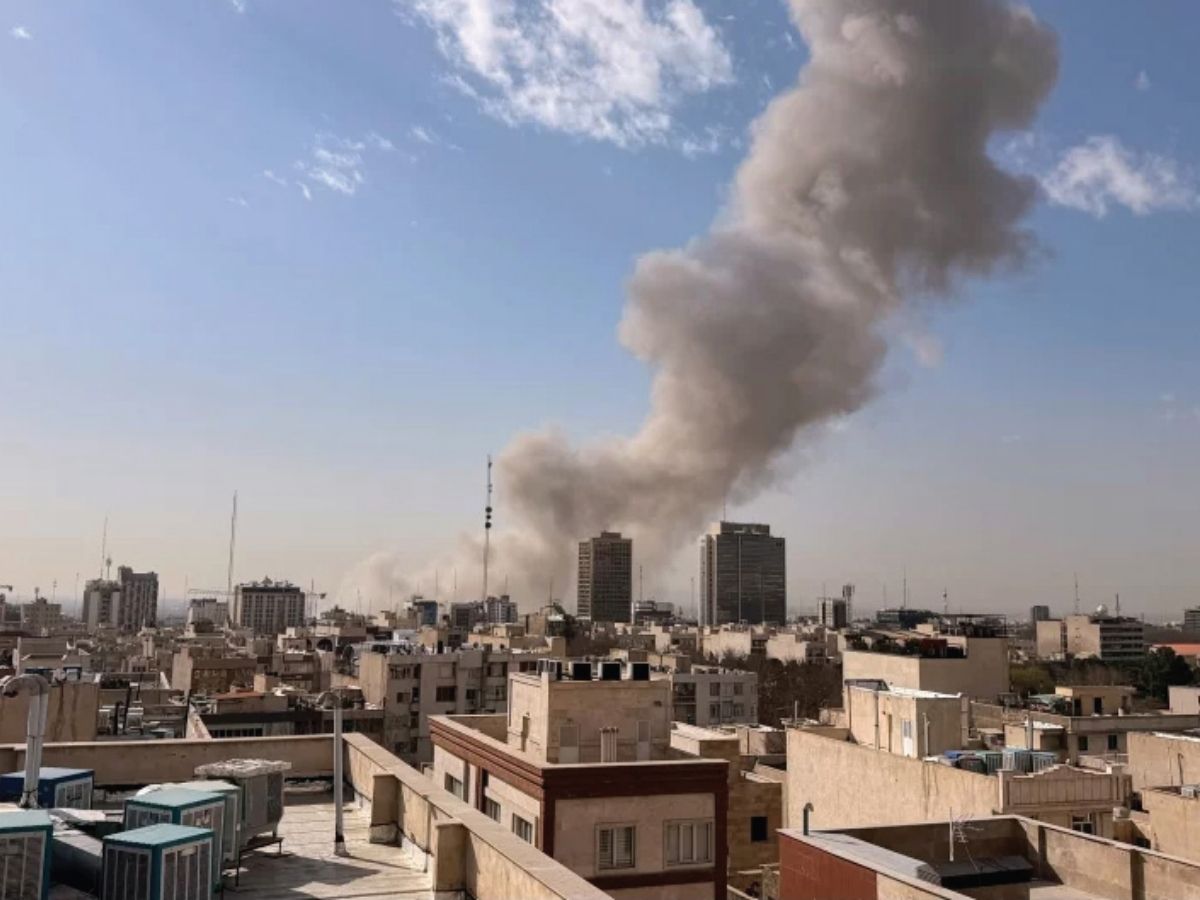
The Middle East lands, both the Levant and Mashriq, has undergone seismic change over the past two years. Days after the US and Israel first launched strikes against Iran, the extant volatile region enters yet another critical chapter. The scale of confrontation and the scope of conflict widens by the hour, multilaterally opening strategic fronts that spells cataclysmic terror for the global economy and leaves thousands of travellers stranded.
The Strategic Arsenal
To negate the perceived Fatality of Doom, American led retribution saw Washington assembling its largest maritime force and some of its most powerful weaponry in the Middle East in decades. The US force came “locked and loaded” and joined the Israelis in “Operation Epic Fury” for the personal ruination of the Ayatollah as well as with a pernicious destructive intent. The B-2 stealth bombers armed with the 2000-pound Mark-84 bombs, LUCAS (Low-Cost Uncrewed Combat Attack System) drones from the Task Force Scorpion Strike (TFSS) and the MQ-9 drones (Multi-role Remotely Piloted Aircraft-9), the aircraft carriers and guided-missile destroyers USS Abraham Lincoln in the Arabian Sea and the USS Gerald R. Ford in the Mediterranean Sea with their polished assortment of Navy and Marine Corps F-16, F/A-18 and F-35 interceptors, Tomahawk missile systems, AEGIS ballistic missile defence systems, PATRIOT (Phased Array Tracking Radar for Intercept on Target) and THAAD (Terminal High Altitude Area Defense) missile defence batteries, EA-18G Growler (Electronic Aircraft Attack), the Air Force E-3 Sentry and the Navy E-2 Hawkeye AWACS (Airborne Early Warning and Control Aircraft), EA-11 BACN (Battlefield Airborne Communications Node) aircraft or the Wi-Fi of the skies, The Army’s M-142 HIMARS (High Mobility Artillery Rocket Systems) – together rained down hell and bombarded the Iranian Biabans, Rustas, Dahestans including the Iranian military installations, under the US Central Command (CENTCOM)’s dynamic warmongering capabilities.
The Foreboding of Doom
The Pentagon, the headquarters of the US Department of Defense, have reportedly warned US President Donald Trump that an extended military campaign in Iran would carry serious risks, including the high cost of replenishing Washington’s dwindling munitions stockpiles. The USA may have miscalculated the execution of their military strategy in Iran, hoping for a repeat of Venezuela, where the US forces seized the country’s president, Nicolas Maduro and accepted his deputy Delcy Rodriguez as a substitute leader. In the Iranian context, killing the Supreme Leader is one thing, ousting the regime will be totally another with the Islamic Revolutionary Guard Corps of Iran showing little sign of surrendering the war, munitions or ordnance. Without effective putting boots on the ground, all eyes are biding one’s time anticipating how soon could the USA run out of interceptors and projectiles?
The Great Idiosyncratic Expectation
President Trump lusts and craves that he should have a role in choosing Iran’s new leader, and that Mojtaba Khamenei, a son of the former leader Ayatollah Ali Khamenei who appeared to be the leading candidate to succeed his father, was an “unacceptable” choice. This comes in the backdrop of the Republican-led House yet again rejecting a measure (The War Powers Resolution) aimed at blocking President Donald Trump from carrying out further military strikes on Iran without congressional approval. In the interim, though it looks as a decisive victory for The White House, but voices in the hushed passages of the Congress Hall sound increasingly unease about the widening conflict.
Dilemma of the Allies and Big Brothers
As both the USA and Israel move to the next phase of the conflict, European nations are reluctantly being drawn into this gratuitous regional warfare, sending military support to protect the interests of allies but maintaining a defensive posture. The conflict is reverberating in Ukraine, putting peace talks with Russia on hold and raising fears in Kyiv of diminished military support. The Britons are not great fans of premature abandonment of diplomacy for the military option, though the British political establishment and public are highly critical and unsympathetic to the Islamic Republic of Iran. The British Prime Minister Keir Starmer and the Labour government are between a rock and a hard place given their championing of the primacy of international law. Any analysis that neglects or dismisses Beijing’s role in the war is a deliberate red herring. Chinese President Xi Jinping’s Global Security Initiative is presented explicitly as an alternative to the US-led NATO order. Iran has received an economic lifeline from Beijing, secured a berth in the bloc of emerging economies known as BRICS, and had the Islamic Revolutionary Guard Corps operate within the framework of the Shanghai Cooperation Organization. The pivot point for China lies with the Gulf monarchies. If they enter the fight, China would face a situation it cannot finesse. As concerns Russia, the hard reality is that the Putin regime is so consumed by its war of aggression against Ukraine that it lacks the bandwidth to defend its geopolitical interests elsewhere, except the verbal support and strategic hedging. Maintaining the tactful need of immediate conflict resolution, Indian Prime Minister Shri Narendra Modi played out India’s stance diplomatically to support the resolution of this conflict through peaceful dialogue and diplomacy. Though Indo-Iranian relations are tied in tandem, many in the political circles are noticing Shri Modi’s illtimed recent visit to Israel and subvocalizing India’s strategic geopolitical shift.
The Endgame
The USA-Israel-Iran regional conflict rages on dynamically and evolves unchecked into multipronged realms. The global big brothers and allies on both side of the hemispheres seem bewildered in a dilemma, especially at the United States’ lack of a clear, realizable objective in this hostility, combined with a legal basis under international law and any plan to stabilize this regional destabilization. In a bleeding Iran, everyone is out for blood and everyone has a bone to pick. Only time will tell whether the USA-Israeli coalition has bitten off more than they can chew, or they can navigate the political and international fallout in their bloodlust for triggering a discorded conflict.
(Dr Shadab Ahmed is an Oral & Maxillofacial Surgeon, acclaimed columnist and author, renowned for his insightful writings on Indian History, International Relations, Geopolitics & Ethnic Culture. Views are personal)