It can be said that there are at least five major geopolitical doctrines that are significant and can impact the entire globe, including Indians. The statement of and the exercise of such doctrines can affect inflation, energy costs, farmers’ livelihoods, and even available funds for peace and development, including on the environment. This is no doubt especially relevant for the Global South, be it with the poor, the middle class, on sovereignty and the degree of the negative impact of hegemons. And of course, a poorly thought-out doctrine can even end up killing many innocent and young alike.
A geopolitical doctrine is an on-authority backed, highly ranked framework that gives important direction to a government’s foreign policy and peace and security strategies. These are often related to its location on the globe, amount of natural and other resources such as financial ones and strategic position encompassing the extent of its military firepower and intelligence networks. It shows as a general direction how a state likely intends to use its power—military, economic, or diplomatic—to safeguard and/or expand its interests and to deal with inside a region or globally.
WHY DOCTRINES EXIST?
Governments use such doctrines to provide predictability or to give what they think are acceptable messages or actions. By this a state signals its intent to allies and adversaries alike, reducing confusion, and hopefully major misunderstandings and risk of deadly, major wars at the worse. It can also be used on economics such as trade.
FAMOUS HISTORICAL EXAMPLE
The Monroe Doctrine (1823) named after US President James Monroe that stated that any intervention by European powers in the Americas would be labelled as an act of aggression against the United States. This effectively claimed the Western Hemisphere as a U.S. sphere of influence. President Trump expanded it to a new “Trump Corollary”. This in part was used to defend US actions in Venezuela where Chinese and Russian interests have been too active for the US liking.
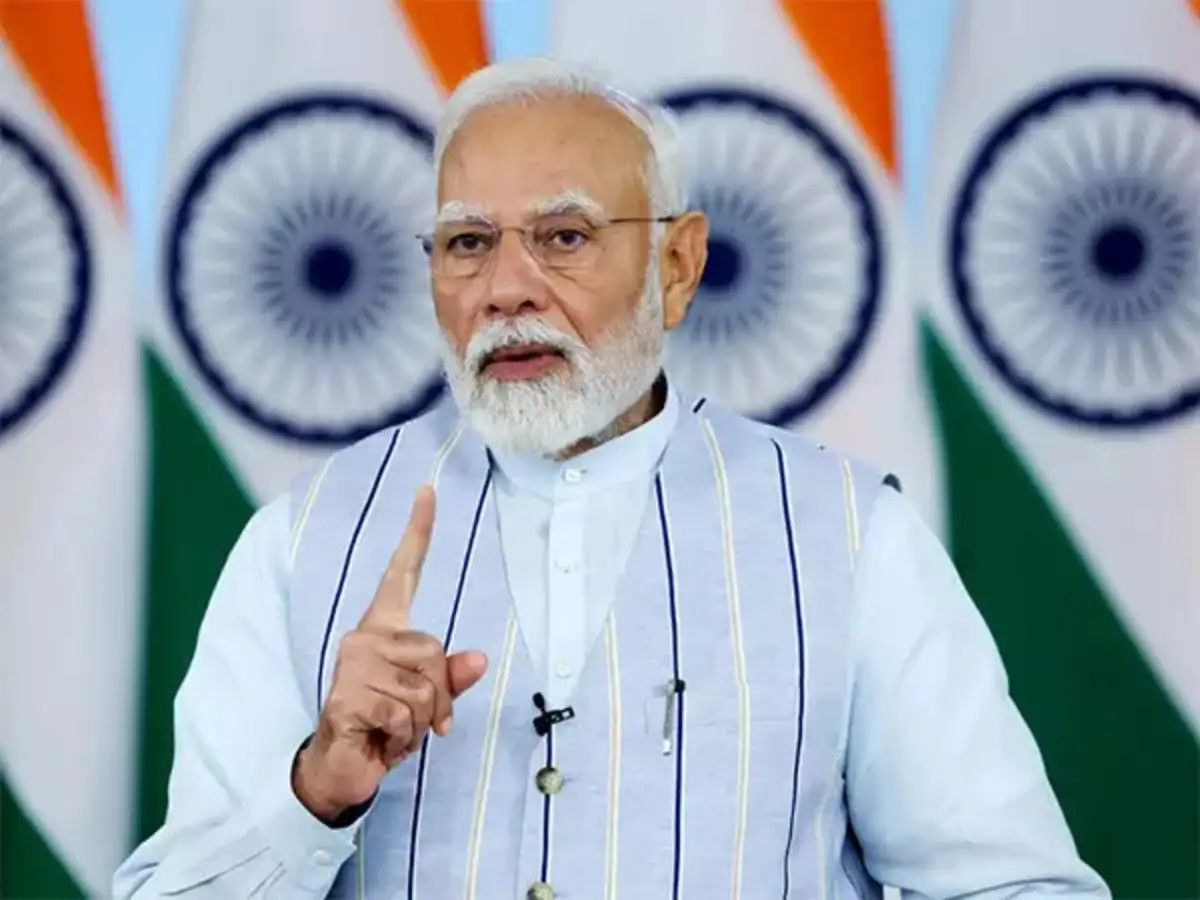
Contrasting is the Modi doctrine, which many analysts widely identify it “as a proactive, smart power” approach to Indian foreign policy that centers on strategic autonomy, national security, and economic development. (Wikipedia) Its difference with previous administrations is that it sees India’s role as a “leading power” rather than only one of balancing. Instead, if you will, India is now a major pole of a “new”, evolving multipolar order. This multi-oriented approach can be also seen in India’s official strategic partnerships with US, Russia, France, Japan, Australia, Israel, and the UK.
“ENLIGHTENED” NATIONAL INTEREST
Foreign policy is seriously defined by national economic needs, such as technology transfer and investment, exemplified by initiatives like “Make in India”.
PROACTIVE REGIONAL LEADERSHIP:
Known as “Neighbourhood First,” in the Indian Ocean region and reacting strongly to territorial challenges, including a strong position on terrorism such as attacking havens of terrorism within Pakistan when a response is required.
CIVILIZATIONAL DIPLOMACY & CULTURAL INFLUENCE:
Indian culture, (for example, Bollywood) yoga, and democracy supporting freedom and soft power internationally but without giving self-righteous lectures on Indian exceptionalism or committing unnecessary foreign interference.
SECURITY-DRIVEN PRAGMATISM:
A shift toward treating threats as immediate matters to be dealt with swiftly rather than just diplomacy, as seen in the handling of border issues. Nations and those they sponsor know the cost of supporting terrorism and such against Bharat.
This Modi-led approach is generally a departure from traditional, overly cautious foreign policy of many previous administrations but still maximizing security. Both seen as complimentary when calibrated properly.
WHAT ABOUT OTHERS IN SHORT:
The Trump doctrine. A doctrine centered around Make America Great Again (MAGA), economic opportunism and transactionalism intertwined with certainly and domestic lobbies. Without being bonale, “Show me (enough) money” often intersects with changing or modifying regimes not on the Trump good side and his worldview. And America can be risky or even dangerous to both friends or foes that seriously worry it strategically. Note, even Greenland rich in rare earths US is missing, part of NATO alliance Denmark, that at the time berated with the possibility of an invasion.
China Regional hegemon As University of Chicago, global expert, Professor John Mearsheimer declares, China is looking essentially to be global hegemon, one day. But as he and other experts argue, it is rising its Belt and Road Initiative to gain global power. Its assertions of control of almost the “entire” East China and South China Seas, along with incursions periodically into northern India show it is willing to assert itself around its boundaries, not necessarily in accordance with international law. As with Trump international law will be followed when suitable. And there is the Taiwan question. Rightfully, India watches such a rise in cluding with strategic interest. India’s reaction under Modi’s leadership is not docility but with realism. And with an impressive growing military that no sane foe would wish to take on.
Russia is another regional hegemon It is looking in a sense to revive some of its global status, as a once serious contender to the US when it was less fragmented as part of the USSR. However, Vladimir Putin is one step at a time “realist” to exercising global influence. He knows he cannot take on the West singularly. He avoids direct conflict with the West even with massive sanctions against his country. Instead, he plays the long game with his abundant energy and others resources and waiting for enough blowback of sanctions on Europe, causing more Russian friendly governments to get elected. Russia promotes its Orthodox, more socially conservative values as a dam to so-called irreligious European decadence. His outreach to Africa is significant. India understands Russia’s values and so does not antagonize it while others do, not necessarily in prudence.
Carney Doctrine. Canada is back on the geopolitical map though there is a caveat that it may not amount to that much—at least on the short-term. Canada in the 1950s – 1980s possibly had global impact. Post war it had one of the world’s major navies. Canadian John Peter Humphreys in same decade of the 1940s was a key drafter of the UN Universal Declaration of Human Rights. Individuals like George Ignatieff, Canadian ambassador to NATO made important contributions to strengthening the alliance. Before Lester Pearson became Canadian prime minister, he received the Nobel Prize for peace in his initiatives to establish the first UN peacekeeping force. Pierre Trudeau, Prime Minister of Canada worked hard to promote the needs of the Global South and the UN and to push US president Reagan to work harder for peace with Mikhail Gorbachev, leader of the USSR. And Canadian prime minister Jean Chretien said a definitive no to joining with the US in invading Iraq that led to a post-invasion debacle.
But then, with some exceptions, one might describe Canadian foreign policy in the 21st century to 2025 not being sovereign enough to the US or inspiring enough. That is including the disastrous approach to India under Canadian PM Justin Trudeau.
Now to the switch—including to a more independent Canada from Washington—well the Trump variety. Current Prime Minister Mark Carney has essentially declared Trump Washington as a hegemon. This publicly loudly stated was applauded at the Davos forum by many lead Europeans. And a number of European leaders who would have liked to have declared the same but worried too much publicly uttering such views would get a Trumpian wrath.
Carney’s view is increasingly for Canada and Europe to become more independent of America. But to coordinate much better with middle powers of the “willing” to use their collective wealth and leverage to better stand up to Trump “bullying” and his excesses as they see them. And trying to better counter his tariffs and threats. That is such on Greenland, taking over Canada and brazenly breaking international law on Venezuela and Iran. And their also perceived lack of his commitment to supporting Ukraine.
In the present state of the world and major doctrines, the Modi ones looks more globally communal, pragmatic, peaceful and short and long term oriented and economically viable for the region and even the world. It does neither to egg on Iran and Trump to be more combative but to look for peace and more to international law. It rightfully understands that the Carney doctrine is unrealistic, though if conditions change in Washington with a more unified Europe, parts of Carney doctrine might be attractive to support. How much Carney can accomplish standing up to Trump, in a leadership role representing the “non” US West and some others, begs major question.
For the Modi doctrine may compare best to others and importantly provides solid protection for Indians.
Peter Dash has taught international relations in the Global South, and was past Associate at Harvard’s Center for International Affairs.