
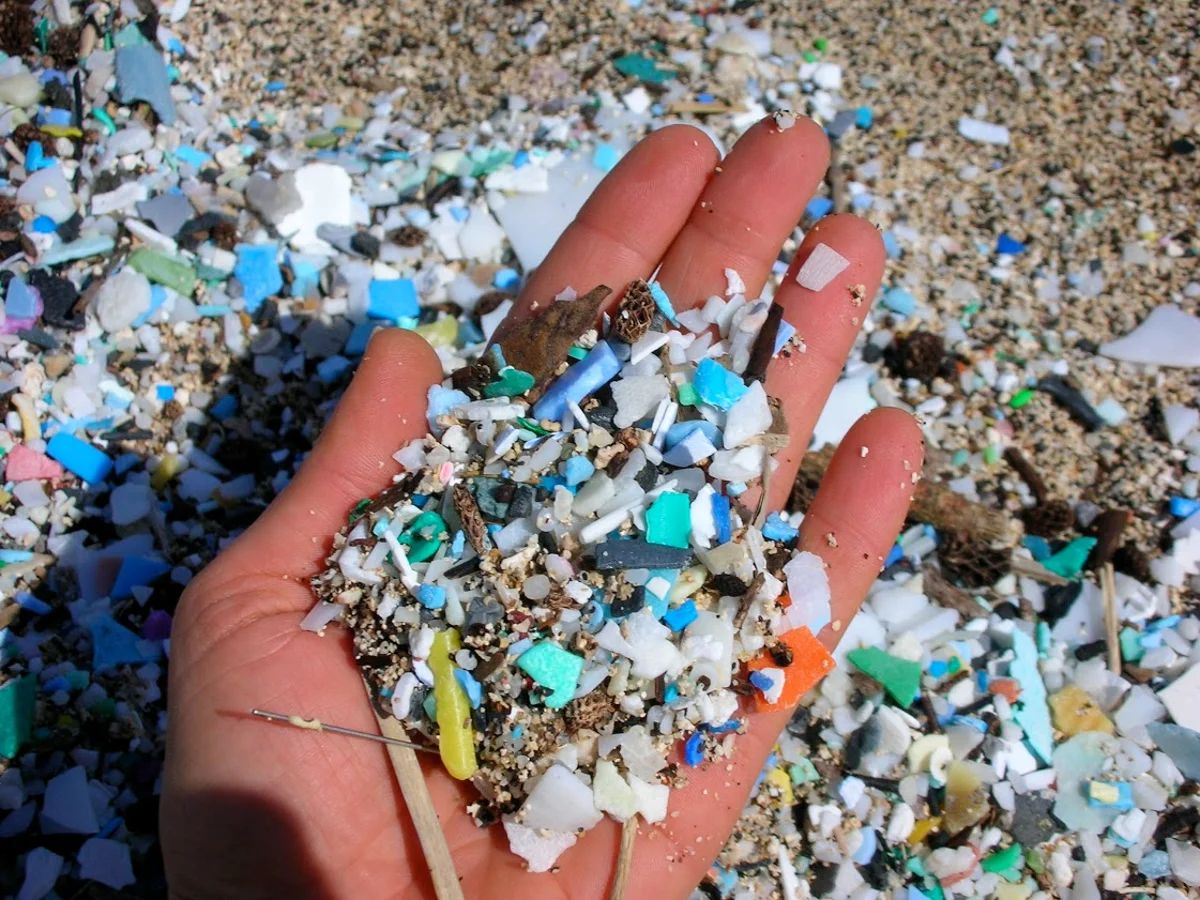
Every day, millions of Indians have food delivered directly to their doors. In countless homes, the morning begins with deliveries of pouch milk used to make the first of several cups of tea or coffee. Also delivered regularly are items like sugar and salt wrapped in plastic, essential to making homecooked food even more flavourful. However, unbeknownst to many, the same packaging that keeps these items fresh and secure, also sheds harmful microscopic particles into them. Indeed, the Madras High Court recently directed that all plastic/PET bottles and packaging used to sell sugar, water, and salt be labelled as containing micro/nano plastics. The Supreme Court backed up the decision, saying there is nothing wrong in displaying the warning.
The problem is more acute than most realise. A New England Journal of Medicine (NEJM) study found that Polyethylene, the material used in most food packaging in India, is in the arterial plaque of 58.4% of patients. Alarmingly, patients with microplastics in their arteries are four and a half times more likely to suffer a heart attack or stroke. With the health risks posed by microplastics understood only recently, regulation is yet to keep pace, leaving the public vulnerable. For a problem that for decades was framed as a solely environmental one, the evidence increasingly points to it also being a public health crisis, with microplastics being found in food and water supplies, and in peoples’ bloodstreams.
The Packaging Dilemma & Policy Gaps
The microplastics finding their way into our bodies do not arrive from a single source. They shed from the packaging films, single-use containers and multi-layered packaging that form the backbone of how food and consumer goods are packaged across India. The country generates 9.3 million tonnes of plastic waste annually, reflecting a consumption economy that has grown faster than the infrastructure built to manage it.
Recycling is the natural first response to a problem of this size, but it cannot be the whole answer. Only 9% of plastic waste is recycled globally, and research projections suggest that as it scales, microplastic discharge from the process itself is expected to increase fortyfold by 2060. This makes the solution accelerate the problem it was meant to solve.
India is among the regions flagged as most significant for microplastic discharge from recycling, which makes the case for stronger upstream intervention even more pressing. A global plastics treaty has been in negotiation under the United Nations since 2022 and while each session has advanced the conversation, member states have yet to agree on anything binding. India’s own ban on single-use plastics, introduced in 2022, is a meaningful legislative step, though a 2025 assessment noted that enforcement remains inconsistent across cities and states, with a long way to go before the policy translates into real world impact. The recent decision by the Madras High Court to add a warning label on food products stored in plastic is a crucial step in creating greater awareness about the dangers of microplastics and in accelerating the enforcement of the passed legislation.
The “Greenwashing” Trap
Most of us have, at some point, reached for a product that looked like the more responsible choice, or appreciated a business for switching to packaging labelled biodegradable or eco-friendly. The intention behind that choice is understandable. The problem is that those labels often suggest a material is harmless when it may simply be breaking down differently.
Most packaging marketed as degradable does not disappear but breaks down into smaller pieces of plastic faster than conventional packaging. The European Union recognised this and moved to ban the entire category, known as oxo-degradable plastics, under its Single Use Plastics Directive. Accelerated fragmentation does not result in biodegradation but a faster breakdown into microplastics, as happens to oxo-degradable plastics. Meanwhile, significant plastic-coated paper is falsely labelled as ‘paper-based’ and ‘compostable’, with claims made without the requisite EN 13432/TUV certification. In addition, greenwashing also takes the form of highlighting a single green feature while ignoring the packaging’s overall impact. Hence, it is common for packaging to be technically recyclable, but doing so is practically unfeasible.
In short, products that are labeled as biodegradable are not compostable. Currently, many purchase widely used products that are marketed as being wrapped in PE based aqueous coating; however, this is not compostable. Meanwhile, existing paper products aren’t ecofriendly, neither are products labelled as Bagasse with their environmental credentials resting on a plastic-coated barrier.
Conversely, truly compostable packaging breaks down into water, organic matter, and CO2 with no toxic residue. That outcome, however, depends on the material being processed under the conditions it was designed for, which for most certified compostable packaging means a managed industrial composting facility. Outside those conditions, even packaging labelled bio-based may persist and behave much like conventional plastic. The question worth asking, then, is not what our packaging is made of, but what it leaves behind.
A Scalable Solution
As domestic policies lag the ground reality, material science and private-sector innovation must lead the way, finding solutions to overcome the microplastics hazard.
The private sector has already developed innovative solutions, including bioplastics and biobased coatings. These are designed with active packaging technology, which is safe to store food, having a performance matching that of plastic, and an end life concluding in compostability. Moreover, while conventional plastic bags, films, containers, cutlery, and straws leach toxic chemicals directly into food and beverages, those made with bioplastics—produced from renewable sources like corn starch, sugarcane, and seaweed – don’t have harmful chemicals, making them completely safe. Additionally, products made from bioplastics degrade naturally into water, carbon dioxide, and compost within 180 days, whether in an industrial or home compostable setting in line with composability Standard EN13432.
Meanwhile, compostable Aqueous Barrier Coating made from Natural Polymers, Biobased Additives & Cellulose Acrylate, agricultural by-products or derived from plant polymers can replace plastic linings in paper cups, wraps, and containers. These coatings can be applied to paper surfaces to add barrier properties, biodegradability, and aesthetic appeal. Since compostable aqueous coatings are made from natural materials, they are free from harmful chemicals, making them completely safe. Furthermore, the technology underpinning them is robust and scalable, capable of meeting the growing demands of Indian industries, including quick-service restaurants.
For the Indian industry, including QSRs, transitioning to truly plastic-free, compostable, food safe & toxin free serve ware and packaging applications can no longer be about merely ticking a CSR checkbox; it is fundamental for good public health and managing the risks presented by microplastics. True circular packaging requires both compostability and repulpability—something PE-based systems fail to achieve.