
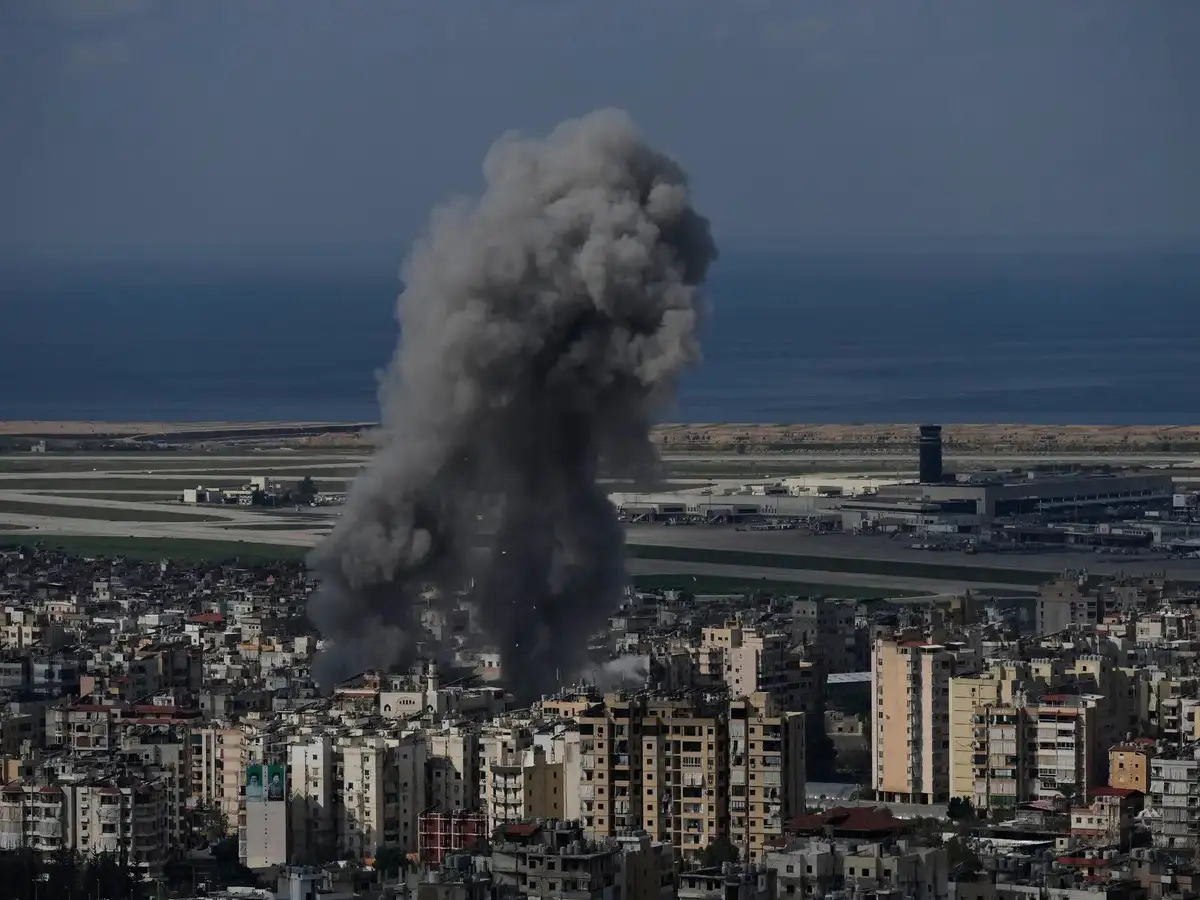
Every time tensions have risen in the Middle East, India’s public discourse has gravitated toward the diplomatic and the political, who said what to whom, which alliance is fraying and whether New Delhi’s stated neutrality is sustainable. The scenario that analysts long warned India to prepare for—a direct military confrontation involving Iran and the disruption of Gulf shipping lanes—is no longer hypothetical. Since late February 2026, Israel and the United States have been conducting strikes against Iran, and at least 150 tankers have dropped anchor in waters beyond the Strait of Hormuz. What this means for ordinary Indians deserves far more structured attention than it is currently receiving.
The Middle East is not just a geopolitical flashpoint. For India, it is the single most consequential external economic zone—the source of the majority of our crude oil, a critical supplier of agricultural inputs, the world’s largest hub for our diaspora, and a key node in our trade and logistics architecture. Understanding what the current regional disruption means across each of these dimensions is no longer a planning exercise. It is an immediate economic reality.
ENERGY: THE FIRST AND MOST IMMEDIATE EXPOSURE
India imports approximately 85 to 88 per cent of its crude oil requirements. Before the current conflict, the Middle East accounted for roughly 44 to 46 per cent of that total—down from over 60 per cent before 2022, as India significantly expanded Russian crude imports, which rose to approximately 36 per cent of total imports by 2024. Iraq, Saudi Arabia, the UAE and Kuwait remain among India’s top suppliers. This diversification has provided some buffer, but it does not provide insulation. Complicating the picture further, US secondary tariffs imposed on India in August 2025 in response to its Russian crude purchases have raised the cost of that diversification option significantly, leaving India’s two main supply alternatives simultaneously under pressure.
The Gulf’s geographic advantage is the three-week sailing distance from Ras Tanura to Paradip versus the six-week route from Russian Baltic ports, which means that Middle Eastern crude will remain the base supply layer for Indian refineries regardless of the political environment. As the Strait of Hormuz comes under direct military stress, this structural dependency is being stress-tested in real time.
FERTILISERS: THE AGRICULTURAL SUPPLY CHAIN EXPOSURE
Less visible than oil but no less consequential is India’s dependence on Gulf-sourced agricultural inputs. Saudi Arabia and Qatar are among the world’s largest producers of ammonia and urea, the feedstock for the nitrogen-based fertilisers that underpin India’s Green Revolution-era agricultural productivity. India imports over 30 per cent of its urea requirements and is heavily dependent on imported potash and phosphatic fertilisers.
A disruption in Gulf fertiliser supply does not merely raise input costs for farmers. It forces India’s heavily subsidised fertiliser procurement system to seek alternative suppliers, typically at a premium, at precisely the moment when global commodity markets are simultaneously disrupted by the same geopolitical event. The compound effect on India’s food subsidy bill and retail food prices is material and will be felt within weeks, not months. This link between Gulf stability and Indian food security is no longer a planning consideration; it is an active policy emergency.
SHIPPING AND THE STRAIT OF HORMUZ: THE CHOKE POINT UNDER STRESS
Approximately 20 to 21 per cent of the world’s total oil supply transits the Strait of Hormuz daily, a choke point 33 kilometres wide at its narrowest. That passage is now under active military threat. The US military has destroyed Iranian naval vessels near the strait, and at least 150 tankers, including crude oil and LNG carriers, have dropped anchor in open Gulf waters, effectively pausing movement while shipowners await clarity on the security situation. Marine insurance rates on Gulf-bound cargo have spiked sharply.
India’s expanding trade footprint makes this exposure particularly acute. The country is among the world’s top ten merchandise trading economies. Shipping insurance and freight costs are already a material component of import pricing in sectors from electronics to edible oils. The Hormuz disruption is not a scenario being planned for, it is a supply chain shock already in motion.
QATAR LNG: THE COMPOUNDING SHOCK
A dimension that received insufficient attention in pre-conflict analysis is India’s exposure to Qatari liquefied natural gas. Qatar is the world’s largest LNG exporter, and India is among its primary customer dependents on Qatari LNG both for power generation and as a feedstock for its fertiliser sector. In early March 2026, Qatar Energy declared force majeure at its Ras Laffan LNG plant, which handles approximately 20 per cent of global LNG production. LNG spot prices in Asia more than doubled to three-year highs within days. For India, this compounds the fertiliser and energy supply shock in a single event, affecting both the fuel and the feedstock for agricultural production simultaneously.
THE GULF AS INDIA’S GATEWAY TO AFRICA
An underappreciated dimension of the Gulf’s economic significance for India is its role as a commercial bridge to the African continent. Dubai and Abu Dhabi have emerged as the primary hubs through which Indian firms structure their engagement with East African markets, from logistics and trade finance to infrastructure and retail. Indian business communities in the UAE serve as intermediaries, facilitators and investors in markets from Kenya to Ethiopia to Mozambique. India-Africa trade reached approximately $100 billion in FY2023-24, and the UAE-India CEPA explicitly facilitates the triangular trade flows that run through these Gulf hubs.
Instability in the Gulf does not merely affect the hubs themselves. Dubai International Airport has sustained damage in the current conflict, and airlines have suspended services, placing the commercial architecture that Indian firms have built around these hubs under direct operational stress. For a country with stated ambitions of deepening its African engagement, both economically and diplomatically, the Gulf’s stability is a precondition, not merely a preference.
THE IRAN DIMENSION: FROM CONSTRAINED ASSET TO ACTIVE FLASHPOINT
India’s relationship with Iran has historically served two strategic functions: as an energy diversification option and as the gateway to the Chabahar corridor. It is India’s only viable surface route into Afghanistan and Central Asia that bypasses Pakistan. Both were already significantly constrained by US sanctions before the current conflict. India’s oil imports from Iran had fallen from over 23 million tonnes in 2018-19 to near zero following the reimposition of sanctions. Chabahar port development had proceeded far more slowly than India’s strategic planners originally envisioned.
The binary alignment risk that analysts warned about, forcing India to choose between its Gulf relationships, its US partnership and its Iran interests, has now materialised. Iran is in an active military confrontation with the United States and Israel. The geopolitical cost of any Indian engagement with Tehran has increased dramatically. New Delhi’s posture of studied neutrality, already under pressure, is now facing its most severe test. India’s residual strategic options through Iran are effectively foreclosed for the duration of this conflict, and the policy window to benefit from the Chabahar corridor has narrowed sharply.
REMITTANCES: THE DIRECT TRANSMISSION TO INDIAN HOUSEHOLDS
The remittance link between the Gulf and India is among the most direct economic transmission mechanisms in the relationship and the one most immediately felt by ordinary households. Approximately 9.9 million Indians live and work across the six Gulf Cooperation Council states. The UAE alone hosts around 4.3 million Indian nationals; Saudi Arabia, approximately 2.65 million; Kuwait, one million; Qatar, 830,000; Oman, 665,000; and Bahrain, 350,000.
According to Reserve Bank of India data and World Bank estimates, Gulf remittances contribute approximately $47 to $54 billion annually to India’s inward remittance flows, which are the largest regional source within a total that reached a record $135.46 billion in FY2025, making India the world’s largest remittance recipient. These flows are not abstract macroeconomic statistics. They fund school fees in Kerala, agricultural inputs in Rajasthan, housing construction in Bihar and small business working capital across dozens of Indian states.
A sustained economic disruption in the Gulf, whether from the contraction of construction and hospitality activity during conflict, reduced business confidence, or, in a worst-case scenario, a mass repatriation event, would directly reduce household income for tens of millions of Indians. The socioeconomic consequences would be concentrated in precisely the states and communities that are most dependent on these flows and least equipped to absorb the shock.
STRATEGIC STABILITY, NOT REACTIVE MANAGEMENT
The cumulative picture is of an economy whose external dependencies are concentrated in a single region in ways that India’s strategic planning community has not fully internalised and which is now in active disruption. Oil, fertilisers, LNG, maritime logistics, diaspora remittances, Africa trade corridors and Iran transit options all run through the same geographic corridor. That corridor is under military stress.
This is no longer a warning. It is a reckoning. India needs explicit scenario planning in the Ministry of Finance and Ministry of Petroleum around disruption cases; more proactive engagement by the Ministry of External Affairs on the Hormuz, LNG, shipping insurance and diaspora dimensions; and a domestic narrative, in government communications, in media and in public discourse that treats Gulf stability as an economic national interest requiring urgent, structured management, not diplomatic courtesy.
For India, a stable Middle East is not a foreign policy preference. It is an economic prerequisite. That prerequisite is now in jeopardy. And India’s response must reflect the full weight of that reality.
Rakesh K. Chitkara has spent over thirty years at the intersection of business and government, leading public policy strategy for major multinationals across agriculture, chemicals, infrastructure and healthcare. He is UAE Country Director of the World Agricultural Forum, Netherlands, and is based in Dubai.