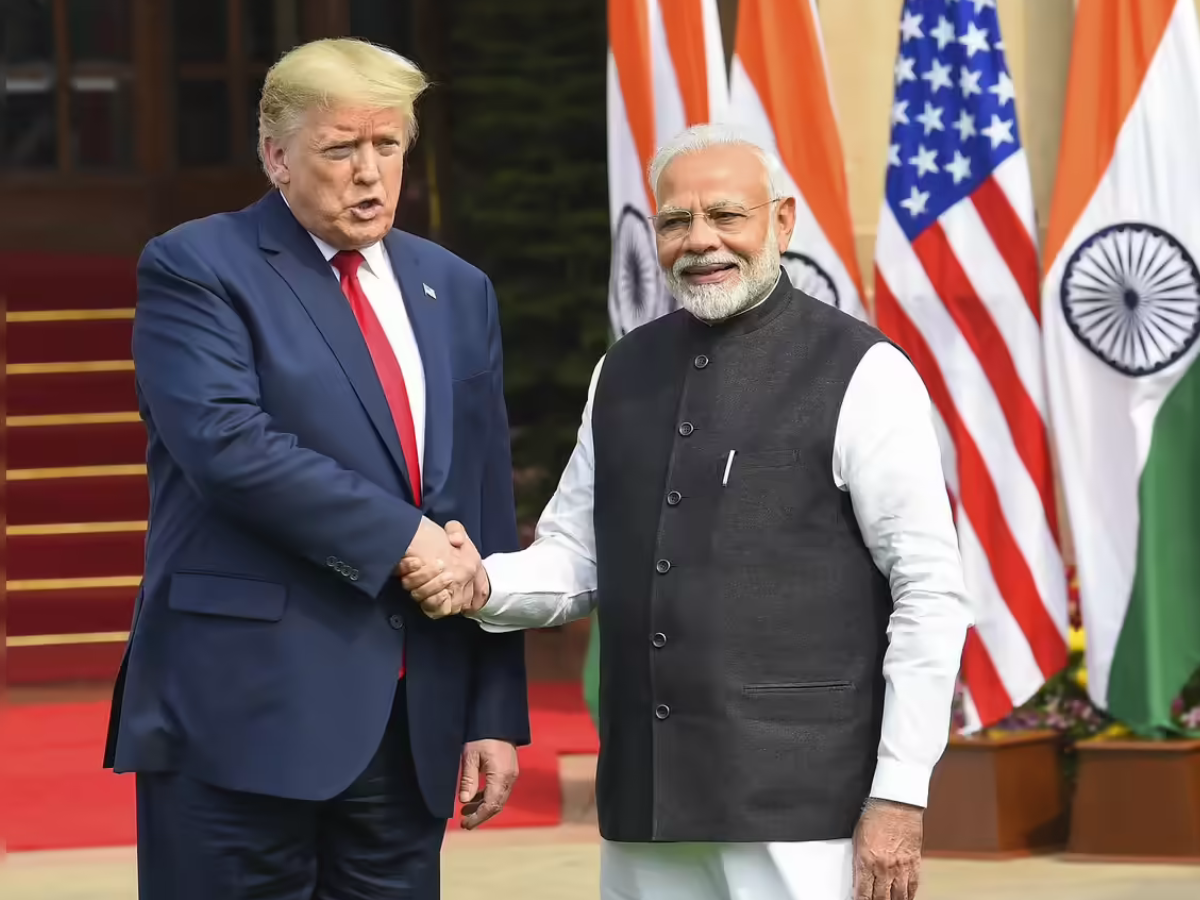
A single high-stakes phone call between Prime Minister Narendra Modi and President Donald Trump effectively dismantled a six-month trade ‘wall’ that had threatened to decouple two of the world’s most critical economies. The resulting agreement—slashing U.S. tariffs on Indian goods from a prohibitive 50% to a competitive 18%—is more than a mere reversal of duties; it is a structural realignment of global supply chains designed to isolate the China-Russia axis and cement a new Indo-Pacific economic order.
For the international community, the deal signals that “reciprocal trade” has moved from a campaign slogan to a functional bilateral framework. For India, it represents a masterful diplomatic balancing act: securing market access while reinforcing the “fortress” of its domestic agricultural sector.
The Anatomy of the Breakthrough: Beyond the 18%
The headline of the deal is the 18% tariff ceiling. To understand its significance, one must look at the ‘hanging sword’ it removed. Since August 2025, Indian exports had been reeling under a dual-layer tax: a 25% “reciprocal” tariff and a 25% ‘punitive’ duty linked to New Delhi’s continued procurement of Russian crude.
The new agreement rescinds the punitive duty entirely and recalibrates the reciprocal rate to 18%. This places India in a “sweet spot” of global trade. With Chinese goods facing average U.S. duties of 34–37% and regional competitors like Vietnam and Bangladesh hovering at 20%, India has suddenly emerged as the most price-competitive manufacturing hub in the Global South.
The Strategic Pivot: Energy for Market Access
The most profound, albeit sensitive, component of the deal is the Energy Accord. The U.S. administration has explicitly linked the tariff relief to India’s commitment to halt purchases of Russian oil—a supply that had reached nearly 40% of India’s imports in late 2025.
In its place, India is pivoting toward a ‘Buy American’ energy strategy. The commitment to procure over $500 billion in U.S. energy, technology, and defense goods over the next five years serves two purposes: it addresses the U.S. trade deficit concerns and aligns India’s energy security with Western interests. While this may increase India’s immediate import bill, the geopolitical “security premium” is viewed by New Delhi as a necessary price for long-term manufacturing growth.
Protecting the Heartlands: Why Indian Agriculture Remains Unharmed
A primary concern is the fate of the nearly 50% of India’s workforce tied to the land. Despite U.S. claims of “zero-tariff” access, a closer look at the deal’s architecture reveals a sophisticated “Two-Tier” system designed to protect the Indian farmer. This ensures that the core of rural India remains insulated from international market volatility.
Capital Markets: The ‘Wealth Wave’
The financial reaction to the deal was instantaneous and historic. On February 3, the BSE Sensex surged over 2,000 points, adding an estimated ₹13 lakh crore in investor wealth within the first fifteen minutes of trade.
Winners and Losers: A Political Scorecard
The deal is a masterpiece of ‘transactional diplomacy, where both leaders can claim a total victory to their respective domestic audiences.
The Winners:
The Losers:
The Strategic Ambiguity
Observers note that the deal is currently a “political handshake” lacking a finalized legal schedule. This ambiguity is intentional. By keeping the “fine print” behind closed doors for a few weeks, both governments can manage domestic expectations and address specific sector concerns before the final treaty is signed.
The Century’s Defining Partnership
The India-US Trade Deal of 2026 is not just about the price of shrimp or the duty on iPhones. It is the economic architecture of the ‘Pacific Century.’ By trading Russian oil for American energy and exchange-rate stability for market access, India has chosen its side in the global fracture.
The message to the world is clear: the road to global supply chain resilience now runs directly through the Indian subcontinent, paved with an 18% tariff and a $500 billion commitment.
Sudhir S. Raval is Consulting Editor at the ITV Network