
When Narendra Modi left Gandhinagar for New Delhi in 2014, he did not merely vacate the Chief Minister’s office; he left behind a governance benchmark. The “Gujarat Model” he shaped over more than a decade had already become a reference point not only within India but globally, defined by high growth, investor confidence, infrastructure-led development, administrative discipline, and a strong emphasis on participatory governance. A decade later, as Prime Minister, Modi continues to set national standards. Gujarat’s challenge, however, has been distinct: how to maintain the high standards set by Narendra Modi in Gujarat.
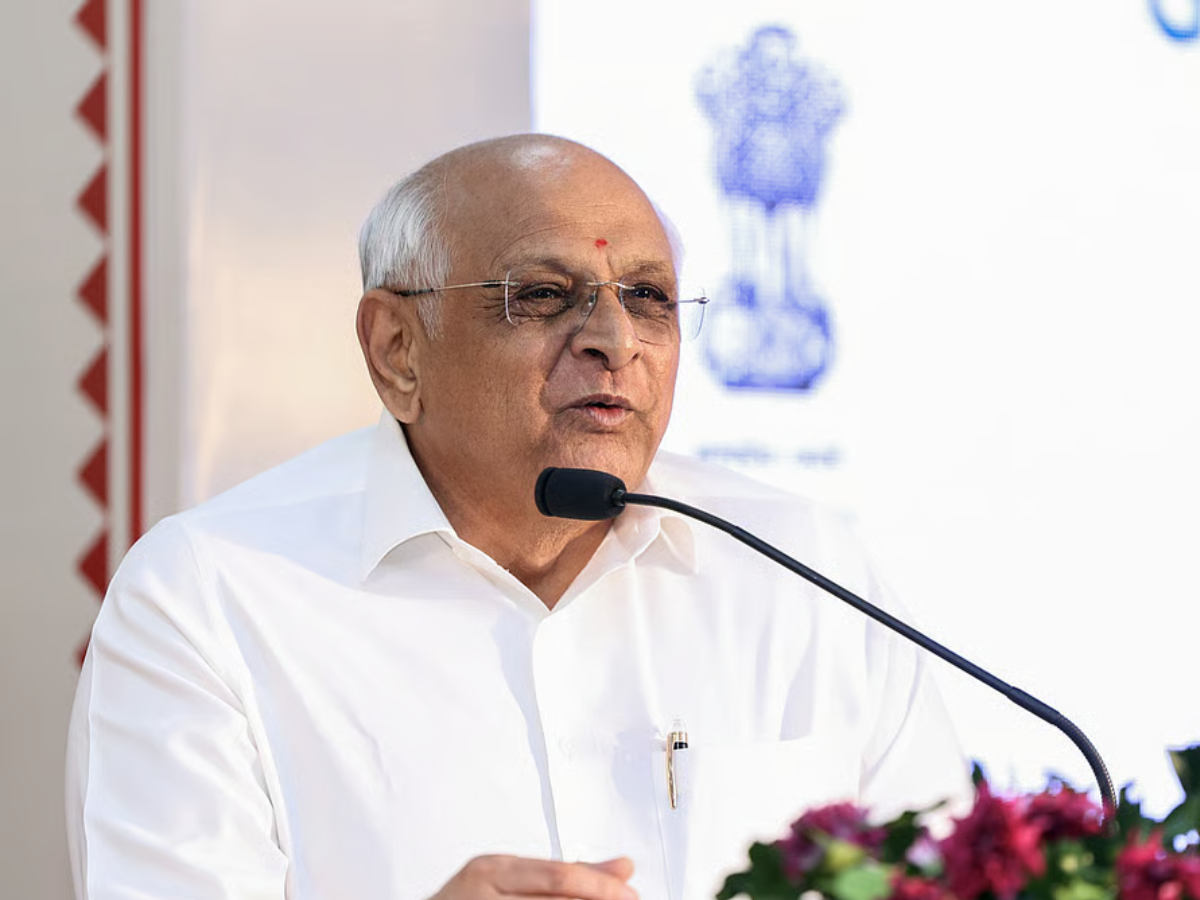
In Bhupendra Patel, Modi appears to have chosen the right man. Patel is a Chief Minister who delivers quietly, avoids the limelight, and remains focused on outcomes rather than optics.
Bhupendra Patel, who first assumed office on September 13, 2021, and was sworn in again in December 2022, has carried forward the governance framework shaped under Narendra Modi, strengthening Gujarat’s development momentum across welfare delivery, industrial growth, and long-term planning through disciplined implementation and Jan Bhagidari. Over the past four years, the state has constructed more than 15 lakh housing units, while 116 shelters across 38 cities now support nearly 10,000 homeless citizens daily. Food security has been reinforced through the Pradhan Mantri Garib Kalyan Anna Yojana, benefiting 3.26 crore people, and the Shramik Annapurna Yojana, which has served 2.68 crore meals across 19 districts. Healthcare access has expanded significantly, with insurance coverage under the Jan Arogya Yojana, Mukhyamantri Amrutam scheme doubled from ₹5 lakh to ₹10 lakh, reaching 1.2 crore family members. Women-centric initiatives such as the Namo Lakshmi Yojana, assisting over 10 lakh girl students, and the Mukhyamantri Matrushakti Yojana, benefiting nearly five lakh mothers annually, underline a governance approach where welfare delivery runs parallel to growth rather than trailing it.
Simultaneously, Gujarat is pursuing long-horizon economic and structural transformation. The 10th Vibrant Gujarat Global Summit attracted more than 61,000 delegates from 140 countries, reaffirming the state’s position as India’s premier investment destination. Urban transformation has gained renewed momentum, with 2025 designated as the Urban Development Year and over 100 town-planning schemes approved alongside the notification of nine new municipal corporations. Large-scale investments are being channelled into air-quality improvement, public transport, and core infrastructure, laying the groundwork for Gujarat’s preparations ahead of the 2030 Commonwealth Games.
In October 2025, the Gujarat government unveiled a Regional Economic Master Plan, dividing the state into six economic zones aligned with sector-specific strengths under the broader “Viksit Gujarat, Viksit Bharat” vision. The state has set an ambitious target of expanding its economy from roughly $282 billion to over $3.5 trillion by 2047, raising per capita income from about $38,000 to $43,000, and achieving net-zero emissions by 2047, almost two decades ahead of India’s national commitment. Sixteen sector-specific industrial policies covering semiconductors, biotechnology, green hydrogen, and emerging technologies have been rolled out, supported by the Gujarat State Institution for Transformation (GRIT) and the Gujarat Administrative Reforms Commission to enable data-driven governance. Gujarat now leads the country with over 10 lakh rooftop solar installations, including 5.23 lakh under the PM Surya Ghar Yojana, and remains the only Indian state hosting four semiconductor plants, including a fabrication unit by Tata Electronics and Powerchip.
Patel has publicly acknowledged that the Prime Minister’s guidance continues to be a source of energy and inspiration, reinforcing the state’s resolve to accelerate development. Narendra Modi once transformed Gujarat into a national benchmark, today, as Prime Minister, he has set the bar for India’s transformation. For Bhupendra Patel, the challenge has never been replication, but preservation, how to sustain the high standards set by Modi in Gujarat. Through quiet governance, institutional continuity, and long-term vision, Patel is ensuring that the Modi Gujarat Model remains dynamic and future-ready for Gujarat’s development journey.