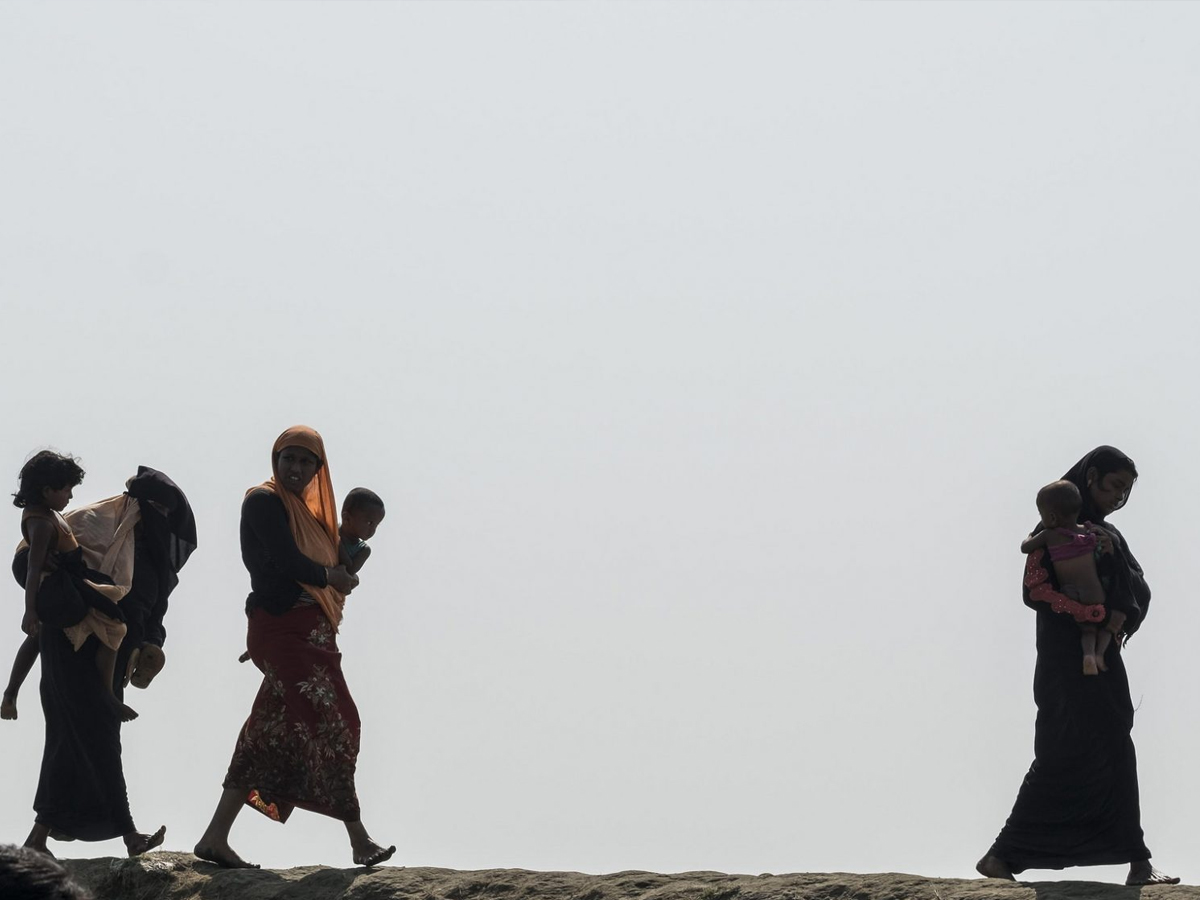
Driven by the ‘Axis of Crisis’—war, climate change, and demographic demand—global migration has peaked at 304 million in 2026. This mass movement is now the primary stress test for Western political stability and the single most important engine of economic resilience for the developing world.
As 2026 unfolds, the movement of people across borders has ceased to be a mere byproduct of global instability; it has become the defining geopolitical and economic force of the decade. Following years of compounded crises—from the post-pandemic labor reshuffle to the escalating territorial conflicts in Sudan, Ukraine, and the Levant—the global community finds itself at a crossroads. Today, migration is no longer just a humanitarian concern; it is a high-stakes competition for talent, a flashpoint for nationalist fervor, and the ultimate stress test for international law.
By the start of this year, the total number of international migrants has reached an estimated 304 million, a figure that reflects a world in permanent flux. While this represents a modest 3.7% of the global population, the concentration of these flows into a handful of ‘destination hubs’ has created a profound sense of localized crisis.
The Paradox of Open Borders
The current situation is defined by a striking paradox. Wealthy nations with aging demographics—such as Germany, Japan, and Canada—are locked in an ‘arms race’ for skilled labor to sustain their healthcare and technology sectors. Yet, the political rhetoric in these same nations has turned sharply restrictive. In the United States, 2026 legislative sessions are dominated by border enforcement, signaling a decisive break between immigration and its historical link to national growth.
The Flashpoint of Sovereignty: Why Migration Dominates the Global Ballot Box
The sensitivity of the migration issue in 2026 is driven by three interlocking anxieties that have reshaped the global electoral map:
Infrastructural Capacity: In hubs like New York and London, rapid inflows have outpaced housing construction, leading to a spike in sentiment that immigration levels are unsustainable despite the demand for workers.
The Populist Surge: As we look toward the 2026 U.S. Midterms and European polls, ‘Border Security’ has become the primary metric of government competence. Centrist governments are now forced to adopt ‘caps’ to remain politically viable.
The Erosion of Identity: Fear of ‘parallel societies’ continues to fuel sensitivity, allowing nationalist narratives to characterize migration as a threat to the secular and cultural fabric of host nations.
The Humanitarian Crisis: Displacement by Design and Disaster
Perhaps the most harrowing aspect of 2026 is the surge in forced displacement, now exceeding 117 million people. Unlike economic migrants, these populations are fleeing ‘territorial expansionism’ and ‘climate risk.’ The wars in Sudan and Ukraine have created a permanent class of ‘protracted refugees.’ Over a million people remain in overcrowded camps in Bangladesh, with ‘dwindling resources’ driving thousands toward perilous sea journeys. ‘The Climate Risk Index 2026’ highlights that extreme weather events uprooted over 20 million people in the last year alone. For many ‘climate refugees,’ there is no habitable land to return to.
Migration as a Weapon of War
In the increasingly anarchic world of 2026, migration has been weaponized. Adversarial states have begun using ‘engineered migration flows’ to pressure neighbors—a tactic seen on the borders of the EU and North Africa. This ‘hybrid warfare’ uses human desperation as a tool to overwhelm a rival’s social infrastructure and trigger political polarization. Furthermore, the retreat from traditional humanitarian leadership has allowed regional powers to set their own, often harsher, rules for migration.
India: A Global Talent Powerhouse
India is not just a participant in global migration; it is its primary engine. As of 2026, the Indian diaspora remains the largest in the world, with over 18.5 million citizens living abroad. For India, emigration is a strategic asset. In 2025, India recorded a staggering $120 billion in remittance inflows, a figure that now dwarfs traditional foreign aid and provides a vital cushion for the nation’s foreign exchange reserves. However, the Indian position in 2026 has shifted from ‘Brain Drain’ to ‘Circular Mobility.’ India has championed a Global Workplace framework, encouraging professionals to gain international experience before returning to contribute to the domestic ‘Viksit Bharat’ vision.
A significant friction point is the tightening of student visa norms in traditional destinations like Canada and the UK. With a 90% drop in Canadian study permits and surging rejection rates in the US, Indian students are rerouting to Germany, France, and Japan. This ‘Great Re-routing’ is forcing Western institutions to reckon with the loss of their most lucrative and talented demographic.
India Under Siege: The Western Backlash
As 2026 unfolds, India’s ‘strategic autonomy’ is being tested by the aggressive weaponization of migration policy in the West. The US administration’s recent imposition of a $100,000 fee on new H-1B petitions and the shift toward a wage-weighted selection system are no longer seen in New Delhi as mere domestic reforms, but as a direct assault on the Indian tech ecosystem. These “economic walls,” combined with the ‘prudential revocation’ of thousands of existing visas, have left Indian professionals in a state of legal limbo, transforming a celebrated “bridge of innovation” into a pawn for transactional diplomacy.
Beyond the US, a rising tide of xenophobia in Europe and Australia has further marginalized the Indian diaspora. From Sweden to Sydney, aggressive enforcement actions and “nativist” labor laws are dismantling the global workplace vision. India now faces a structural crisis: the “secession of the successful” is being met by a ‘hostile return.’ As the West alternates between predatory talent-scouting and systemic exclusion, India is forced to absorb the shocks of “reverse brain drain” while championing a new Global South narrative—one that demands that sovereignty must not be used to dehumanize the very workforce that sustains the digital world.
Managing the Unavoidable
The immigrant problem of 2026 is not a problem that can be solved through walls alone; it is a global phenomenon that must be managed. The movement of people is the natural response to a world of extreme inequality and shifting climates. For destination countries, the challenge is to move past the rhetoric of crises and invest in integration infrastructure. For the international community, the challenge is to address the ‘drivers of flight’ before they become ‘flows of desperation.’ We live in a world in motion; the only question is whether that motion will lead to global synthesis or a collapse of the international order.
Sudhir S. Raval is Consulting Editor at the ITV Network.