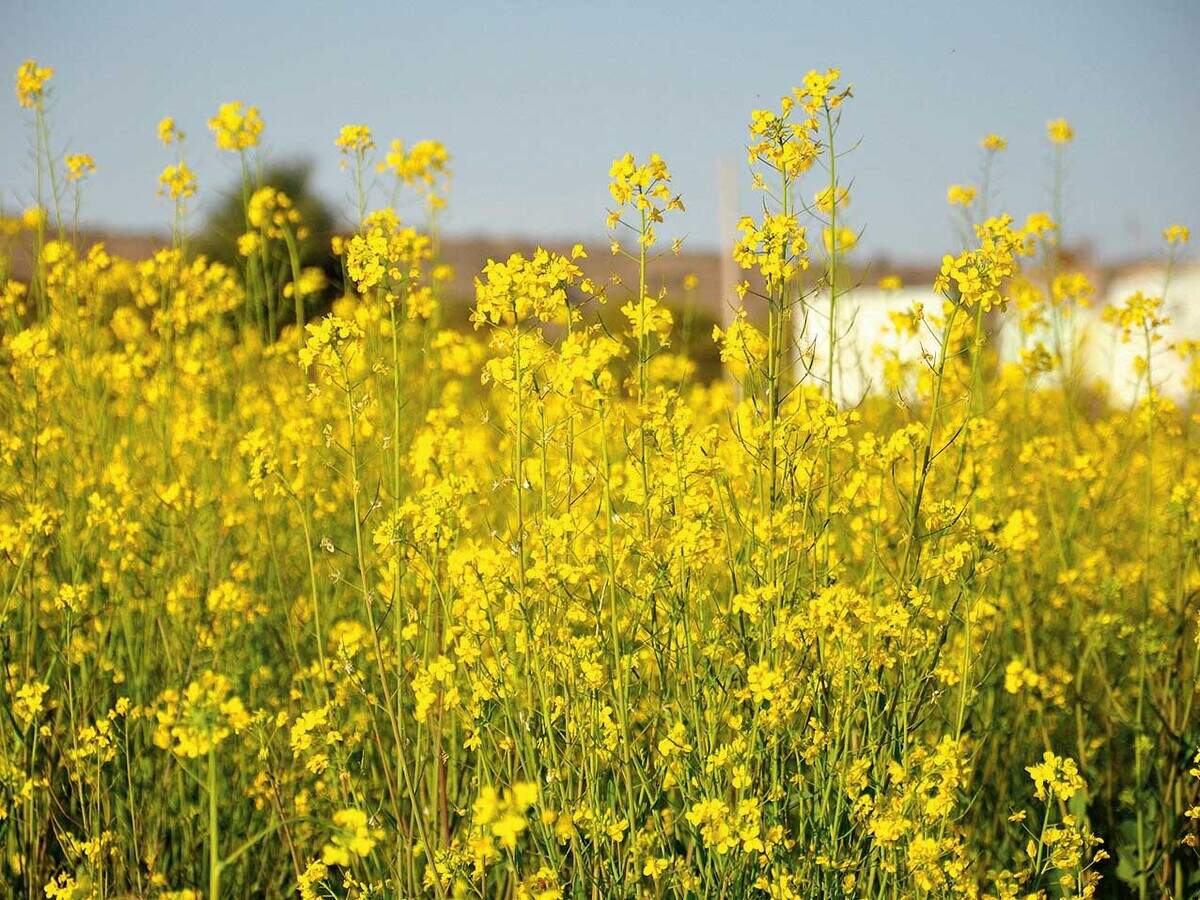
Hope is such a beautiful word. We all live on it. Spring or Basant as we call it in India is the season of ‘hope’. When it arrives each year it signals hope in the flowering of the trees, in the mustard sprouting and spreading the yellow colour far and wide. It comes after the winter and so all look forward to it. It says that do not worry, that things shall improve. And therefore millions of people all over the world celebrate the arrival of spring in song and dance to convey and to hope that ‘Do not worry things shall improve’. And the nature whom poets have praised and prayed to manifest this hope as the opening line of the song attributed to Amir Khusrow stated in the title above:
‘Sakal ban phool rahi sarson Abas jhoote tesu phule Koyal bole daal daal Aur Gori karat shringar Malaniya gadhwa le aayi kar sorn’… (The mustard is ripening in the entire forest Mango buds are breaking open and the red Tesu (Palash flower) is flowering The cuckoo is singing from branch to branch And the beautiful woman is getting decorated The Gardner woman has brought many flower garlands)
The three motifs—Amva (mango), Tesu (forest fire) and Koyal (cuckoo) are such constant and potent symbols of spring arrival since ages. It seems that when nature was all around and the wild construction had not occurred its appearance during the season could not go unnoticed by both the poets and commoners. What is so beautiful in the above lines is ‘Gori karat Shringar’ that in response to the new season the women have also responded by putting new clothes, ornaments and make up! This way they are acknowledging the arrival of spring and expressing their happiness and hope! They are now in new clothes and have shed their melancholies which keeps their beauty hidden!
Our hope, our collective wish however remains that as there occurs a dramatic change in the surroundings created by some unknown power so would there be some change in the wretched lives of the large population of the world, lives of suppression, lives of oppression, lives of penury, lives of inadequacy. Perhaps for a moment we forget that our lives are in such a pitiable state and get charmed and enchanted by the turn in nature and so we sing along with nature. Have we seen a rich man singing Basant and Savan songs?
But why this gross social injustice in humans when they too are part of the same nature? There is balance, redemption and creation in nature in terms of the distinct seasonal changes and spring brings that change in flowers and fruits as they blossom and the birds acknowledge that beauty and salute their expression by their matching sound of sweet melody. Imagine if there was no spring, what would happen to the world? It would die and decay. It is said that when the world would die it would be covered with ice and no flower shall bloom and no bird shall sing.
This change in surrounding, this greening of trees and flowering of gardens acts as a healer to the society which is bearing the daily bouts of innumerable injustices and misfortunes. Spring is sort of a signal of God to mankind to maintain calm and believe in oneself and that one day they shall overcome. It is a therapy, a blessing, a dose of tonic to rise and move and hope and smile. Till tomorrow comes and the day of deliverance arrives.
Three colours dominate the spring season other than green. The yellow and its variants are all around in the mustard, flowering and showering of ‘Amaltas’, the ‘yellow bells’. There is red and white to accompany and interestingly these three colours are dominant in our rituals and ceremonies in marriages, etc yellow is so auspicious.
The origin of this love and expression toward various seasons perhaps emanates from the poetry of Kalidas who lived and wrote in the fourth century AD during the Gupta period. In ‘Ritusamhara’ in the canto dedicated to the spring season he writes in the concluding stanza:
‘With the veiled arrows of tender Mango blossom and the burnishing bow of lovely Palashu blown, the row of drishnu bees as his bowstring, the pristine parasol of soft moonbeams, the gentle southerly Malaya breeze-its fragrant elephant, the melodious cuckoo-the mustard fields, amaltas and the wild flowers of Tesu -Husni-oos-bin shinghar banki… may the conqueror of the world, the formless love-god along with his bosom buddy Basanta bring ye and the world many gratification evermore joy! (translated by Abhay K)
Here again the constant companions of spring- Mango, Palash, Cuckoo are mentioned. The popularity of Kalidas could be observed from the fact his works such as ‘Shakuntalam’, ‘Meghdoot’ and ‘Ritusamhar’ are read widely not only in India but in the west. Large number of translations are available in English by the western scholars. In Kalidas they see not only his vivid imagery and beauty of language but also the highly progressive society which existed during his time and it was indeed called the Golden Age. And again one thing which is not ignorable was the vast expanse of natural beauty which existed at that time. Both flora and fauna.
Many poets through the ages have sung songs in praise of the season and there exists a large body of work on the subject. The great romantic poet Shelly in his most famous poem—”Ode to the West Wind” says something remarkable regarding the regenerative quality of Spring when he writes how the Spring winds awaken the dead leaves and seeds which sprout as flowers in the spring season:
‘The winged seeds, where they lie cold and low, Each like a corpse within its grave, until Thine azure sister of the Spring shall blow Her clarion o’er the dreaming earth and fill (Driving sweet buds like flocks to feed in air)* With living hues and odours plain and hill’
And in the concluding lines he underlines the ‘Spring’ to be the symbol of hope and happiness. These lines are quoted often by writers and intellectuals as human endeavour and misery are universal. I remember the famous editor of the ‘Mainstream Weekly’ Nikhil Chakravorty writing these lines in his editorial during emergency and it had such an impact on the students that we would quote it often and now it is part of our vocabulary.
‘The trumpet of a prophecy ! O Wind If Winter comes, can Spring be far behind?’
I am also quoting here a few famous and popular lines from the ‘Basanti – Tarana’ of Hafiz Jalandari. He takes inspiration from the rich literature on the subject and creates such beautiful images of the season. This song was sung by Mallika Pukhraj and her daughter and that was the reason behind its immense popularity and the joy it brings:
‘Lo phir basant aayi, phoolon mein rang layiee Hai khet khet kaisa, kismet palat gayi hai… … khetan ka har khuranda, bagon ka har parinda Kalgan-kise-kini nagma-rai-utha hai Phir ba-gaya haizinda, bagon ka har parinda Khetan ka har khuranda… Dharti ki bet-boote, andaz apna-apna Hua bahkt sabka mla nishat sah…Phoolon ki bal barson, khuli hai baisarson Nahin kuch bhi yaad yakin hai masti Hoi khili hai jown-kini, masti bhi jinki jhoom bhi Kahin dil ne dard, Kahin aah e sard. Kahin rangan-e-phir basant aayi…’ (The season of spring (basant) has arrived yet again and has brought colour to the flowers… the problem of the winter season is over… the fortune of the world have turned favourably… the grandeur of the farming fields… the birds of the gardens… some slow, some fast, some warm-blooded some who ring continuously have arisen and are alive—the flowers and the creepers of the earth have sprouted in a stylish newness—there is blessed greenery in new clothes—the mustard has sprouted and is forceful in its bloom and has attained its purpose—there is love and passion, fun and frolicking, there are heart aches and sighs of pain and the colour yellow all over—the spring (basant) has arrived yet again)
I conclude this article with the famous lines of Emily Dickens on Hope from her poem “Hope” is the thing with feathers:
“Hope” is the thing with feathers- That perches in the soul- And sings the tune without the words- And never stops-at all -‘
Himanshu Dhuliya is an Indian Navy veteran, author and podcaster.