When Law Bows to Power
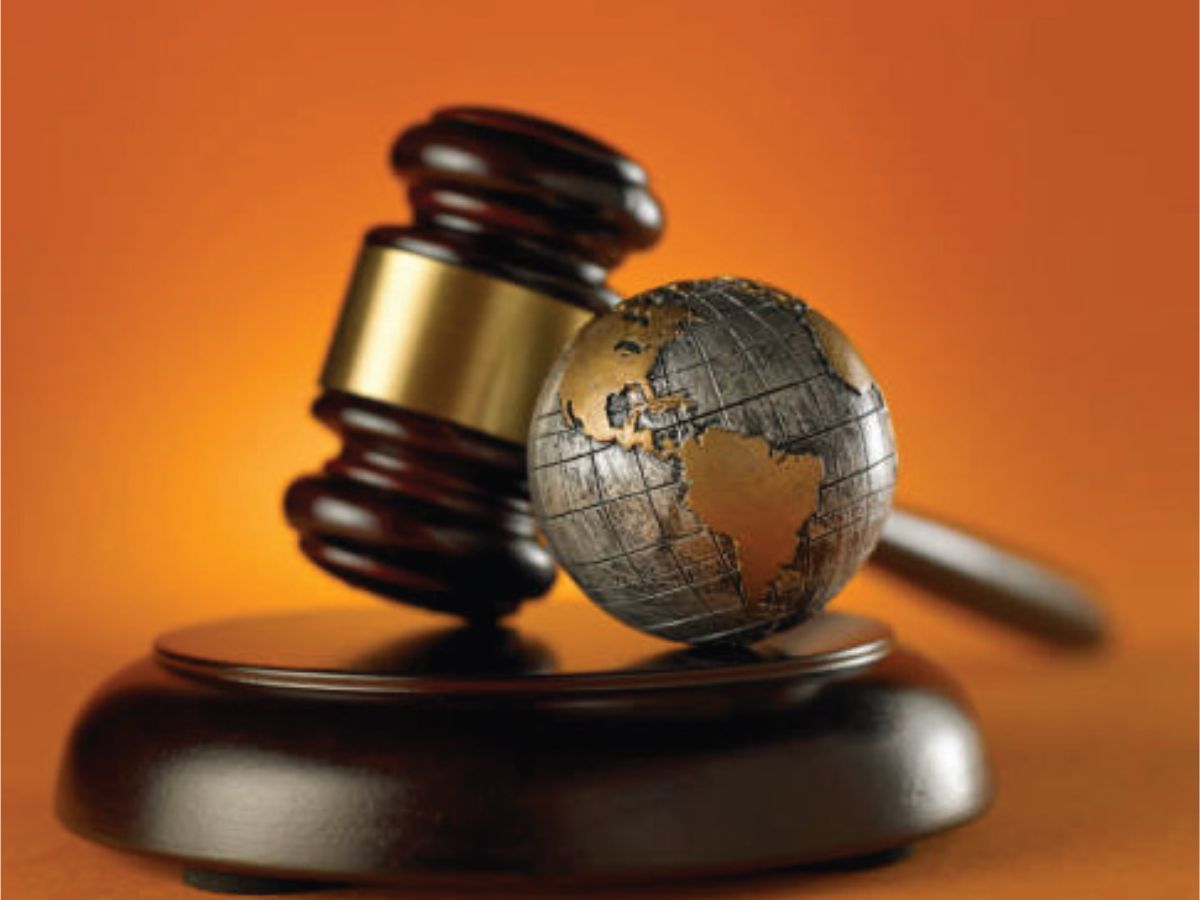
Every major global crisis today is accompanied by familiar language of sovereignty, international law, rules-based order. Yet behind this vocabulary lies an uncomfortable truth: global justice is no longer applied evenly. Some states are disciplined, sanctioned, and shamed for violating international norms, while others bend, reinterpret, or ignore those same rules with little consequence. This growing inconsistency is not accidental; it reflects a global order where power increasingly determines legality. As conflicts multiply and diplomacy weakens, the selective application of International law has become one of the most serious threats to global stability.
The United States: Champion of Rules, Exception to Them
The United States remains one of the most vocal defenders of democracy and international norms. However, its recent actions expose a persistent gap between advocacy and practice. U.S. involvement in Venezuela offers a clear example. Military and political interventions, justified on security and governance grounds, proceeded without broad international authorisation. Several Latin American nations condemned these actions as violations of sovereignty, yet no meaningful legal accountability followed. The message was unmistakable: when power acts, the law adapts.
A similar pattern emerges in U.S. policy towards Iran. Tehran faces continuous sanctions and international scrutiny, framed as enforcement of global norms. At the same time, repeated threats of unilateral military action are justified as preventive measures rather than potential breaches of international law. The legal standard shifts depending on the actor involved. Even relations with allies are not immune to this selective reasoning. Recent remarks highlighting Greenland’s strategic importance to U.S. security unsettled Denmark and European partners. While no formal claim followed, the episode revealed how easily sovereignty and self-determination can be rhetorically questioned when strategic interests dominate. Such language, if used by weaker states, would likely provoke immediate condemnation. Together, these cases point to a troubling reality: International law, when applied by powerful states, often becomes a matter of interpretation rather than obligation.
Russia and China: Power as Protection
Russia’s actions in Ukraine represent a clear violation of International law. Yet Moscow frequently responds to criticism by pointing to Western interventions elsewhere, arguing that legality is enforced selectively. While this does not justify Russia’s conduct, it highlights how inconsistency weakens the authority of global norms.
China adopts a quieter strategy. It strongly invokes sovereignty and non-interference to resist external scrutiny, while selectively relying on International law to advance economic and strategic interests. Its growing influence often results in muted global responses, reinforcing the perception that accountability diminishes as power increases. In both cases, power acts as a shield.
Europe and the UK: Principles with Strategic Limits
Europe and the United Kingdom continue to champion human rights and multilateral institutions. Yet strategic alliances, economic interests, and unresolved colonial legacies sometimes lead to selective silence. When principles are applied inconsistently, moral authority suffers, and advocacy for justice appears conditional.
Institutions Losing Credibility
International institutions were designed to stand above geopolitics. However, when powerful states reject jurisdiction, delay compliance, or ignore adverse rulings, these institutions weaken. This has fostered growing distrust, particularly among Global South countries, who increasingly view global justice mechanisms as selective rather than universal.
India’s Position: Consistency as Credibility
In this fractured global environment, India’s approach stands out for its emphasis on consistency and restraint. India has avoided absolutist moral positions, stressing dialogue, sovereignty, and reform of global institutions. It neither dismisses International law nor weaponises it. India’s call for strategic autonomy reflects a broader concern shared across the Global South: that international law must apply uniformly to remain credible. By advocating reform rather than abandonment of multilateral institutions, India positions itself as a pragmatic voice seeking fairness over selective enforcement.
Conclusion: Law Cannot Survive Selective Silence
International law cannot endure as a system that binds only the weak while accommodating the powerful. When violations by influential states are met with silence, the rule-based order collapses into power politics. Justice that depends on strength is not justice at all. If global governance is to regain legitimacy, consistency must replace convenience. Rules must restrain power, not bend before it.