
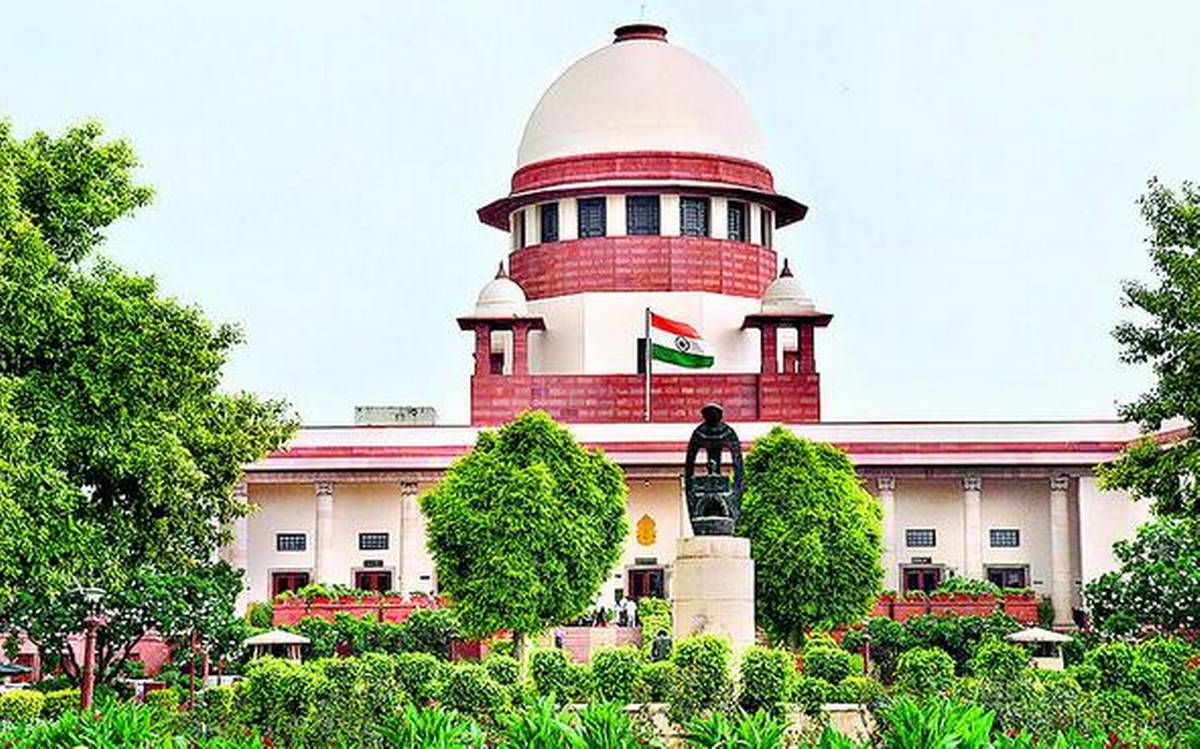
On 25th of January, 2021 a written complaint was reported at before Chandole Police Station at Guntur district, Andhra Pradesh. The appellant was Chinthada Anand, a man born into the Madiga community, which is recognized as a Scheduled Caste. He was a resident of Kothapalem Village, Pittalavanipalem Mandal, Guntur District. Over time he embraced Christianity and had been serving as a Pastor for nearly a decade in his village. He conducted regular Sunday prayer meetings and was actively involved in religious preaching. According to the facts of the case, Anand alleged that he was subjected to physical assault, caste-based abuse, and threats by members of a dominant caste group while returning from one such prayer gathering. Seeking justice, he invoked the provisions of the SC/ST (Prevention of Atrocities) Act, claiming protection as a Scheduled Caste individual.
However, the legal question that arose before the Supreme Court was not merely about violence or abuse, but about identity itself: could a person who openly professes Christianity continue to claim Scheduled Caste status under the Constitution? The Supreme Court, after a detailed examination of constitutional provisions and precedents, marks a significant moment in the constitutional history of India with the decision in Chinthada Anand vs State of Andhra Pradesh (2026) on 24 March 2026. It quashed the case by the judgement that Anand, by virtue of his conversion and continued profession of Christianity, ceased to be a member of a Scheduled Caste in the eyes of law. The Court relied heavily on Clause 3 of the Constitution (Scheduled Castes) Order, 1950, which explicitly excludes persons professing religions other than Hinduism, Sikhism, or Buddhism from being recognized as Scheduled Castes. The Court interpreted the term “profess” to mean a public declaration and practice of religion, and Anand’s role as a Pastor clearly established such profession. Consequently, he was held ineligible to invoke the protections of the SC/ST Act. The foundation of this narrative can be traced back to Rev. Stanislaus vs State of Madhya Pradesh (1977), when a Christian missionary, Rev. Stanislaus, went to court. He argued: “I have the right to spread my religion. That includes converting people.”
But the Supreme Court stepped in and said: “You can spread your religion, but you cannot force or manipulate someone to change theirs”. It was the first time the Supreme Court addressed the scope of religious conversion under Article 25. In that case, the Court drew a careful distinction that religious freedom must coexist with public order and the protection of others’ freedom of conscience. The Chinthada Anand case builds upon this principle by recognizing that conversion is a serious legal act with consequences, not merely a private spiritual decision insulated from law. The issue of misuse of conversion was further elaborated in Sarla Mudgal vs Union of India (1995), where the Court encountered that a Hindu men converted to Islam solely to contract second marriages without dissolving their first marriages under Hindu law. The Court condemned this practice, holding that such conversion was not an expression of genuine faith but a device to circumvent legal obligations. This principle was reaffirmed in Lily Thomas vs Union of India (2000), where the Court clarified that conversion does not automatically dissolve prior legal responsibilities. These cases collectively established that conversion must be bona fide and cannot be used as a tool for personal or legal advantage.
The 2026 judgment resonates strongly with this line of reasoning, as it rejects the possibility of selectively retaining benefits associated with a prior religious identity after conversion. At the same time, the Supreme Court has also been careful to protect individual autonomy in matters of faith. This is most clearly seen in Shafin Jahan vs Asokan K.M. (2018), popularly known as the Hadiya case. In that case, a young woman’s decision to convert to Islam and marry a person of her choice was challenged by her family, and the High Court had annulled her marriage. The Supreme Court reversed this decision, affirming that the choice of religion and partner lies at the core of personal liberty under Article 21. The Court emphasized that the State and society have no role in determining the faith of an adult individual. This judgment underscores that conversion, when voluntary, is fully protected by the Constitution.
The Chinthada Anand judgment must be understood in light of this dual framework. On one hand, it fully respects the individual’s right to convert and practice a religion of choice, as affirmed in the Hadiya case. On the other hand, it reinforces the principle that such conversion has legal implications, particularly in relation to caste-based benefits. The Court makes it clear that constitutional protections such as reservation and safeguards under the SC/ST Act are not merely linked to birth but are conditioned by the religious identity recognized under the Constitution. Once a person chooses to profess a religion outside the specified categories, the legal status attached to their earlier identity cannot be retained. This approach reflects a consistent judicial attempt to balance competing values: freedom and regulation, faith and law, identity and entitlement. The earlier cases laid down the principles that conversion must be voluntary and genuine, while the 2026 judgment completes the doctrinal by clarifying that conversion also entails a transformation of legal identity. It rejects the possibility of dual identity, where an individual could simultaneously claim the benefits of one religioussocial category while practicing another faith. The story of Chinthada Anand is not merely about one individual’s struggle, but about the broader question of how the Constitution negotiates the relationship between belief and law. The Court however clears that while faith is a matter of personal choice; its legal consequences are governed by constitutional principles that seek to preserve both individual liberty and social justice.
Former Vice–Chancellor, Central Tribal University of Andhra Pradesh & Indira Gandhi National Tribal University , Amarkantak, M.P EmailId-tvkattimani@gmail. com