
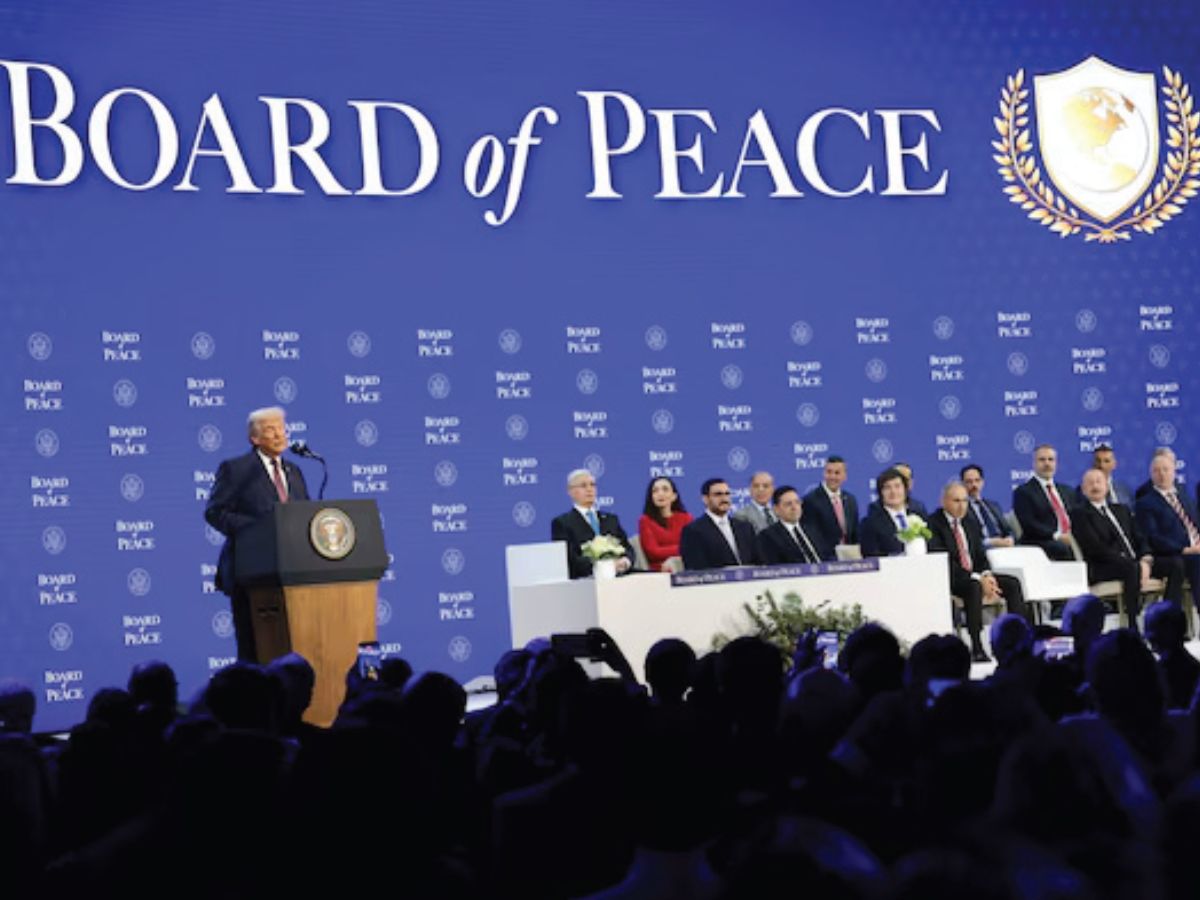
The prolonged conflict in Gaza has exposed the deep limitations of existing international mechanisms for conflict prevention, civilian protection, and post-conflict governance. Despite the presence of established international organizations such as the United Nations, the Security Council, and various humanitarian agencies, peace has remained elusive. In this context, the idea of a Board of Peace for Gaza, a specialized, conflict-specific body dedicated to ceasefire enforcement, civilian protection, and reconstruction, deserves serious consideration. When examined through the lens of international organization law, such a Board poses both challenges to traditional institutional models and highlights their failures.
International organization law is built on a few foundational principles: state consent, limited jurisdiction, collective decision-making, and respect for sovereignty. Most global institutions operate within these constraints. While this framework has enabled broad participation, it has also produced paralysis, particularly in politically sensitive conflicts like Gaza. A Board of Peace for Gaza would represent a departure from this model, favouring functional necessity and moral urgency over rigid adherence to traditional legal formalism.
At the heart of the problem lies the United Nations Security Council, the primary organ responsible for maintaining international peace and security. Under the UN Charter, it has unparalleled legal authority, including the power to impose sanctions and authorize the use of force. Yet, in practice, its effectiveness in the Gaza context has been severely undermined by the veto power of permanent members. International organization law permits this arrangement as a political compromise, but legality does not equate to legitimacy. The repeated failure to halt violence or ensure accountability has eroded confidence in the Security Council as a credible peace guarantor.
A Board of Peace for Gaza, by contrast, would be issue-specific, regionally focused, and time-bound. Unlike universal organizations, it would not be burdened by unrelated geopolitical disputes. From an international organization law perspective, this resembles specialized or hybrid bodies, such as international commissions, trusteeship arrangements, or ad hoc peace implementation councils. These entities often operate with narrower mandates but greater operational clarity, allowing them to act decisively where larger organizations cannot.
Critics might argue that such a Board would lack legal authority without formal state consent. Indeed, consent remains a cornerstone of international organization law. However, this principle has already been stretched in practice. International administrations in Kosovo and East Timor, for example, exercised governing authority justified by humanitarian necessity and Security Council endorsement. A Board of Peace for Gaza could similarly derive legitimacy from a combination of General Assembly support, regional backing, and international humanitarian law obligations, particularly the duty to protect civilians.
Another key distinction lies in decision-making structures. International organizations typically rely on consensus or weighted voting among states, often leading to watered-down resolutions. A Gaza Board of Peace could instead adopt a technocratic and expert-driven model, incorporating international jurists, humanitarian experts, regional representatives, and civil society voices. While this would challenge the state-centric bias of international organization law, it would align with its evolving practice, which increasingly recognizes the role of non-state actors.
Enforcement remains the most difficult issue. Traditional international organizations suffer from a chronic enforcement deficit; they can recommend, condemn, or monitor, but rarely compel compliance. A Board of Peace for Gaza could be designed with automatic compliance mechanisms, such as conditional aid distribution, international monitoring forces, and legal referral pathways to international courts. Though controversial, such mechanisms would be consistent with the functionalist logic underpinning international organization law, institutions exist to solve problems states cannot solve alone.
Importantly, a Board of Peace would also address a blind spot in current international governance which is post-conflict continuity. International organizations often operate in silos i.e. humanitarian relief, human rights monitoring, reconstruction without a unified strategy. A Gaza-specific Board could integrate ceasefire supervision, humanitarian access, reconstruction planning, and transitional justice under one institutional umbrella. This holistic approach is largely absent from existing international legal structures.
The creation of the United Nations after World War II, international criminal tribunals in the 1990s, and hybrid peace missions all emerged from institutional failure. Gaza represents such a failure. Clinging to existing mechanisms simply because they are legally established risks confusing institutional continuity with moral responsibility.
In conclusion, a Board of Peace for Gaza would not replace international organizations but expose their limitations. It would challenge the traditional state-centric and consent-driven assumptions of international organization law while remaining grounded in its functional purpose i.e. maintaining peace and protecting human dignity. Whether or not such a Board is ultimately established, the very discussion forces a necessary question, if international law cannot deliver peace in Gaza, then for whom, and for what, does it truly exist?
Prof. Abhinav Mehrotra is an Associate Professor and Deputy Director at O.P. Jindal Global University. Dr. Biswanath Gupta is an Associate Professor at O.P. Jindal Global University.