Does the Opposition have an effective organisation to take on the BJP and the RSS?
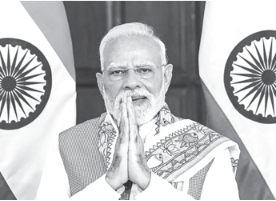
Indian politics never ceases to fascinate. Last week, two significant developments unfolded simultaneously. On the one hand, Narendra Modi set a new record by becoming the longest-serving elected Prime Minister in India’s history. Congratulations to Modi ji! On the other hand, I found myself waiting to congratulate Rahul Gandhi as well, expecting that the 25 constituent parties of the Indian National Developmental Inclusive Alliance, better known as the INDIA bloc, would formally entrust him with the leadership of the opposition alliance. That, however, did not happen!
Critics of Modi are quick to point out that Pandit Jawaharlal Nehru spent more years in office as Prime Minister. Their calculation includes the period from 1947 to 1952. Yet India did not hold a general election in 1947. Pandit Nehru assumed office as the head of the newly independent nation and was formally elected Prime Minister by the members of Parliament only after the country’s first general election in 1952. The distinction drawn by Modi supporters, therefore, concerns the longest-serving elected Prime Minister. From their perspective, the Opposition’s objections amount to nothing more than political lamentation.
Of course, such debates are part and parcel of politics. Every camp has its own arithmetic, its own interpretation of history and its own preferred narrative. Ultimately, however, the electorate does its own calculation when it casts its vote. That is why this controversy appears largely academic.
Narendra Modi’s political appeal remains intact and that is the central reality. People continue to support him. Much of the world continues to engage with him. The Opposition may repeatedly highlight soaring prices, concerns over fuel costs, agrarian distress, allegations of American economic pressures on Indian agriculture, and numerous domestic and international challenges. The controversy surrounding NEET has generated its own political storm. Cockroaches generated some curiosity too. Yet the broader picture remains unchanged: Confidence in Narendra Modi continues to endure both within India and beyond its borders. Political criticism alone, however loud, does not necessarily translate into political change.
Few would dispute that leaders across the world have bestowed upon Modi more than 30 international awards and high civilian honours. Seven Muslim majority nations — Saudi Arabia, the United Arab Emirates, Bahrain, Palestine, Afghanistan, Egypt and the Maldives — have conferred their highest civilian awards upon him. This recognition underscores his international profile and influence.
The same political momentum is reflected domestically. If the Bharatiya Janata Party has managed to make significant inroads even in regions long dominated by formidable leaders such as Mamata Banerjee in West Bengal, it is, in large measure, a testament to Modi’s political appeal. Notably, he also has a skilled ‘sarathi’ like Amit Shah by his side.
To challenge a leader of such stature, the Opposition must first accomplish a far more basic task: The 25 parties in the alliance must agree on a leader of their own.
It has been three years since the formation of the Indian National Developmental Inclusive Alliance (INDIA). Before and after the 2024 Lok Sabha elections, the alliance held only brief consultations. Throughout 2025, no significant meeting took place. It is worth reflecting on the fact that even after three years, the alliance has yet to decide who should hold the steering wheel.
Regional parties within the coalition would do well to recognise a simple political reality: Among all the alliance partners, only the Congress has a nationwide organisational presence. By that logic, Rahul Gandhi is the most natural candidate to lead the alliance. Had the coalition formally entrusted him with the responsibility, crowned him and handed him the mandate, he could at least have begun the work of building a coherent opposition strategy. Alternatively, there is Priyanka Gandhi. But without a clearly designated leader, how can any political combine move forward?
In the absence of direction, the alliance risks doing little more than criticising Narendra Modi while remaining unable to offer a credible alternative. Endless rhetoric may generate headlines, but it does not build political momentum.
Yet this is the predicament the Opposition finds itself in. Every leader wishes to lead; failing that, many seem content to pull down those who aspire to do so. What appears to be missing is a broader appreciation of a fundamental democratic truth: A strong democracy requires not only a strong government but also a strong and effective opposition.
Celebrating new, neglecting old
Whenever I hear the railways minister Ashwini Vaishnaw enumerate the achievements of Indian Railways, I find myself experiencing two very different emotions simultaneously. On the one hand, the expansion and modernisation of the railway network, along with the introduction of Vande Bharat trains on new routes, inspire a genuine sense of pride. The sight of rail connectivity reaching the rugged and remote landscapes of Kashmir is a remarkable achievement and a testament to India’s infrastructural ambitions.
Yet these accomplishments also raise an uncomfortable question: Why does enthusiasm for the new so often come at the expense of long pending projects?
Take the Wardha-Yavatmal-Nanded railway line. Following sustained efforts on my part, the project received approval in the financial year 2008-09. Yet, even today, the 284-kilometre railway line remains incomplete. Is Ashwini Vaishnaw aware of this?
Cockroaches, termites feeding on sanctity of newspaper industry
These days, the word cockroach seems to be everywhere in the national conversation. But let me tell you a different story — one involving the cockroaches that, in my view, have infested Maharashtra’s newspaper industry.
There are publications that struggle to sell even 5,000 or 10,000 copies, yet they allegedly report circulations running into hundreds of thousands. On the basis of these inflated figures, questionable circulation certificates are reportedly obtained from the Registrar of Newspapers for India (RNI), enabling these publications to corner government advertising revenue. In effect, taxpayers’ money finds its way into private pockets through a system built on misrepresentation.
Several complaints have reportedly been submitted to the Central Bureau of Investigation. Letters have also been sent to the offices of the Prime Minister and the home minister. Yet, remarkably, there appears to have been little visible action.
The result is predictable. The cockroaches engaged in such practices have grown increasingly emboldened. Far from exercising caution, they continue to operate with apparent impunity.
Since newsprint is imported from abroad, the matter potentially touches upon issues governed by both the Foreign Exchange Regulation Act and the Foreign Exchange Management Act. This naturally raises a troubling question: Who is protecting those involved, and why?
When I posed this question to a government official, the response I received was surprising. “Why complain about your competitors?” he asked.
My answer was simple: “Precisely because they are competitors, I am familiar with what is happening. If those with firsthand knowledge do not raise concerns, who will?”
Governments routinely crack down on corruption involving ordinary individuals and small-scale operators. Why, then, does the same resolve appear absent when it comes to alleged wrongdoing within sections of the newspaper industry?
Journalism is not merely a business, it is a public trust. Newspapers occupy a vital place in a democratic society and have long been regarded as a profession of exceptional responsibility and integrity. If that institution is being hollowed out either by cockroaches feeding upon it from within or by termites slowly eating away at its foundations, it is not merely an industry problem. It is a stain on the credibility of journalism itself. And stains of this nature cannot be allowed to remain. They must be removed.
The question is whether the government is prepared to take notice.
*The author is the chairman, Editorial Board of Lokmat Media and former member of Rajya Sabha. vijaydarda@ lokmat.com