
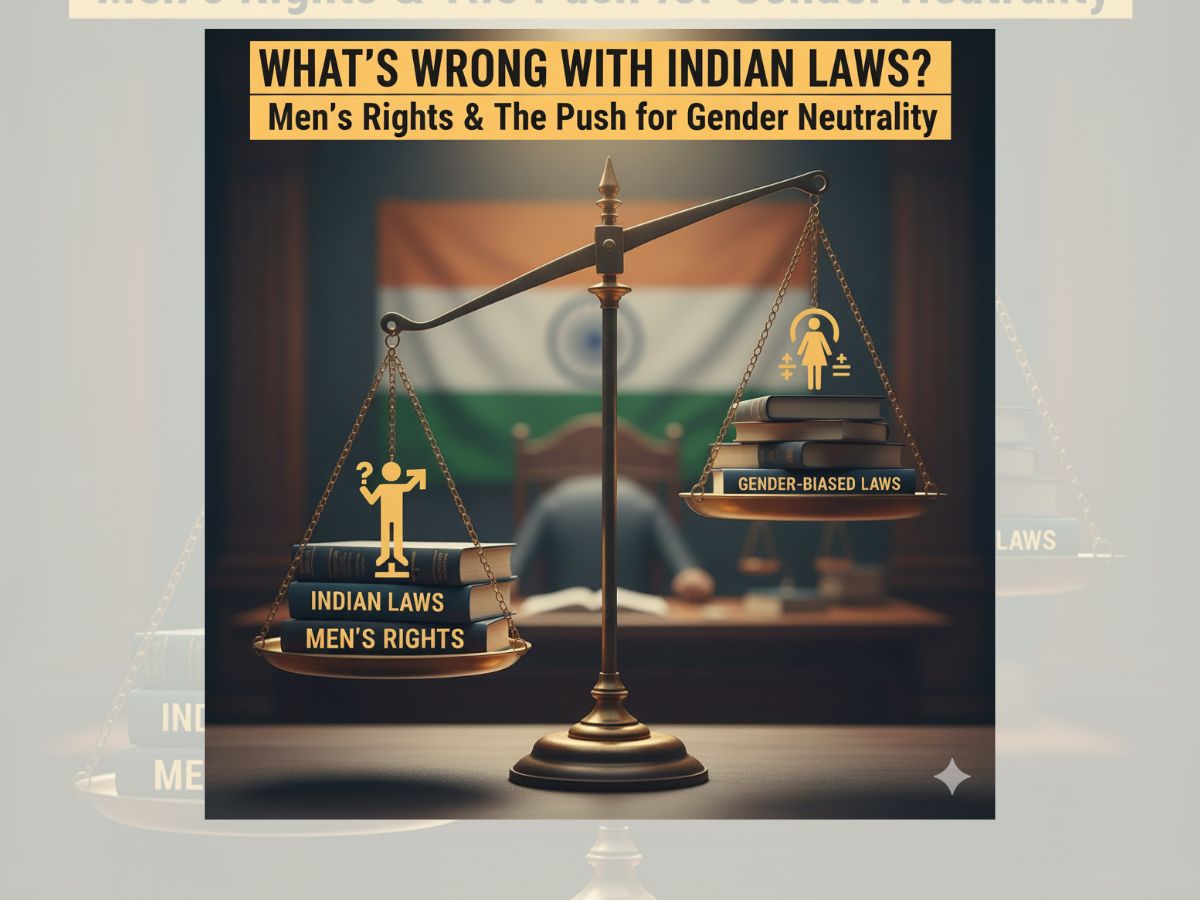
India’s legal system, especially with regard to dowry, domestic violence, and sexual assault, was traditionally framed to deal with serious brutality against women and to strengthen them towards justice. But in contemporary times, India is facing a new social dilemma- several instances in which protective gender laws are abused, in fact severely misused and innocent men are framed while true victims wait for justice. This has raised to the forefront an important issue i.e. the necessity of gender-neutral laws in accordance with strong mechanisms for punishing false allegations.
Problem With Gender-Biased Laws – Good Intention, Bad Implementation
These laws like Section 498A of the Indian Penal Code (cruelty by husband or his relatives), Dowry Prohibition Act, and rape laws came into being to push towards immediate and effective relief to harassed and abused victim women. Sadly, their one-sided nature tends to take the man’s guilt for granted until proven otherwise, leaving huge scope for abuse. The data of the National Crime Records Bureau (NCRB) also indicates a considerable percentage of acquittals in dowry and rape cases (although after huge delay), indicating that a large number of allegations do not lead to conviction because there is no evidence or the case proves to be baseless, concluding to be false.
High-Profile Cases and Patterns of Misuse
Several high-profile cases have highlighted the misuse of these laws. In the infamous Rohtak sisters’ case, two sisters accused three men of molestation, leading to nationwide outrage. However, subsequent investigations and video evidence questioned the authenticity of their claims, and the accused were acquitted. Similarly, the Supreme Court of India, in multiple judgments, has observed that Section 498A is widely misused as a tool for “legal terrorism”. The Varanasi case of alleged gang-rape has been equally questioned after reports of the victim extorting money from the accused men, blackmailing and threatening. Bangalore techie Atul Subhash’s suicide case is another jolt to the dormant judicial mechanism.
False rape claims are especially troubling. When relationships go wrong or financial gain is involved, claims of rape or sexual assault have been used as a tool for revenge or intimidation. This not only ruins lives, but it also diminishes the legitimacy of true victims seeking justice.
The Urgent Need for Gender Neutrality and Accountability
Gender neutrality in legislation refers to the recognition that both men and women can be victims or offenders. The UK and Australia have already made some of their family and sexual offence legislation gender-neutral in order to provide justice. In India, gender-neutrality in laws would give relief to male and transgender victims also, filling the present loophole in several laws.
In addition, there should be actual accountability for those who bring patently false cases. Penal provisions for malicious prosecution, quick investigation, and damages to the falsely accused are necessary steps to avoid abuse.
Impact on Genuine Victims
When legislation is misused for private or financial benefits, actual victims whether women or men, are pushed down to the periphery, as resources and public sympathy become directed towards celebrity but fabricated claims. It has a chilling effect on victims, undermining confidence in the legal system. Also, this very idea of misuse of the laws has severely affected men into fears and skepticism regarding marriage which is a dangerous pretext to be set for the society, to endanger marriage as a holy institution.
Nutshell
India’s legal agenda needs to move beyond gender dualisms so that justice, compassion, and accountability for all are ensured. Gender-blind laws and ending false cases are the need of the hour to restore faith in justice and actually protect the vulnerable. Along with ensuring accountability of the criminals and justice to the victims, the legal mechanism also needs to address the flood of false cases of rape, domestic violence and dowry so that justice in true sense prevails and the people with malacious intentions running extortion rackets may come to terms with justice.