The recent alleged murder of Ketan by Siya has sent ripples across public discourse, not merely because of its brutality but because of the intimate betrayal it represents. Close on its heels, the Sonam case has surfaced with an unsettling sense of déjà vu, reinforcing a pattern that is beginning to trouble the social imagination. While both cases are distinct in their facts and legal trajectories, together they have contributed to a growing psychological undercurrent among Indian men: a quiet but noticeable fear of marriage.
Marriage in India has historically been more than a personal choice. It has functioned as a social institution that binds families, ensures continuity, and provides emotional and economic stability. Trust has always been its invisible foundation. However, when narratives of violence emerge from within this sacred space, they do more than shock. They destabilize belief. The Ketan case is not being viewed in isolation but through a lens of vulnerability, where the idea of companionship is suddenly intertwined with risk. The Sonam case, appearing so soon after, deepens this perception and creates a psychological loop that amplifies fear beyond the immediate facts.
It is important to emphasize that such incidents remain statistically rare, yet human behavior is rarely guided by statistics alone. It is shaped by stories, repetition, and emotional resonance. In an age of constant media exposure, isolated events can acquire disproportionate significance. The more frequently such narratives are discussed and debated, the more they begin to define reality for many.
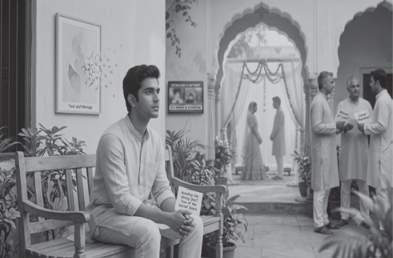
This phenomenon has a direct bearing on how young and unmarried men are beginning to approach the idea of marriage. Across urban and semi urban India, there is evidence of a subtle shift. Men are delaying marriage, sometimes citing career priorities, but often revealing deeper concerns about trust and compatibility. Conversations that were once centered on finding the right partner are increasingly focused on avoiding the wrong one. This shift is not always articulated openly, but it is visible in attitudes marked by caution, skepticism, and in some cases, withdrawal from the institution altogether.
The roots of this emerging marriage phobia are complex and layered. One significant factor is the rapid transformation of gender roles. Women today are more educated, financially independent, and socially assertive than ever before, which is a positive and necessary evolution. However, social change often moves faster than emotional adaptation. Traditional expectations and modern aspirations coexist uneasily, leading to misunderstandings and conflicts within relationships. When communication fails to bridge this gap, mistrust finds fertile ground.
Another contributing element is the ongoing debate around legal frameworks governing marriage. Laws designed to protect women from exploitation and abuse are essential in addressing historical inequalities. At the same time, there is a growing discourse among men about the potential misuse of these laws. Whether such concerns are widespread or limited to specific instances, their psychological impact cannot be dismissed. Perception, even when not fully aligned with reality, has the power to shape behavior.
The role of media in this context is both influential and delicate. Sensational reporting, driven by the need for attention, often highlights extreme cases without sufficient contextual balance. This can create a distorted perception of frequency and risk. When every such incident is presented as part of a broader pattern, it reinforces fear rather than encouraging informed understanding. Responsible journalism must therefore strive to report facts without amplifying anxiety.
At its core, the issue is not about gender conflict but about the erosion of trust. Marriage demands emotional transparency, mutual respect, and the ability to navigate disagreements constructively. When these elements weaken, fear becomes a natural consequence. The recent cases have acted as catalysts, bringing underlying anxieties to the surface, but they are not the sole cause of the problem.
Addressing this emerging trend requires a comprehensive and empathetic approach. Families must move beyond superficial criteria in matchmaking and invest in understanding emotional compatibility. Premarital counselling should be normalized, not as a corrective measure but as a preparatory step. Educational institutions can play a role by integrating discussions on relationships, emotional intelligence, and conflict resolution into their broader framework.
Equally important is the need to foster balanced narratives. For every disturbing incident that captures headlines, there are countless examples of healthy and resilient marriages that go unnoticed. Highlighting such stories can help restore perspective and rebuild confidence in the institution.
The fear surrounding marriage among Indian men is real, but it is not irreversible. It reflects a society in transition, grappling with new realities while holding on to old expectations. The challenge lies in navigating this transition with sensitivity, dialogue, and mutual respect. Marriage must not be reduced to a site of anxiety but reclaimed as a partnership grounded in dignity, trust, and shared responsibility.
The recent tragedies should serve as moments of reflection, not as definitive judgments on the institution of marriage. Fear, when left unexamined, can quietly reshape social behavior in ways that are neither visible nor desirable. The task before us is to confront this fear with reason, empathy, and a renewed commitment to the values that sustain human relationships.
*(Dr Shiv Sethi is a noted columnist and media personality with a strong voice on social issues.)a