India’s police expenditure for FY 2026-27 under the Union Budget, stands at Rs.1.75 lakh crore, reflecting a year-on-year increase of a little over 7 per cent. While the magnitude of the allocation invites attention, its analytical significance lies less in its size than in its internal composition. The distribution of expenditure across revenue and capital heads, and across operational and institutional functions, provides insight into how policing capacity is being incrementally structured.
A salient feature of the 2026-27 budget is the sharp increase in capital outlay. Capital expenditure on police rose from approximately Rs.16,020 crore in FY 2025-26 to Rs.21,272 crore in FY 2026-27, representing an increase of nearly 33 per cent. This expansion materially alters the expenditure mix by increasing the share of spending devoted to asset creation. In public finance terms, this indicates a shift toward investments with longer gestation periods and longer institutional payoffs—such as infrastructure, equipment, laboratories, and information systems—rather than an exclusive reliance on recurrent spending.
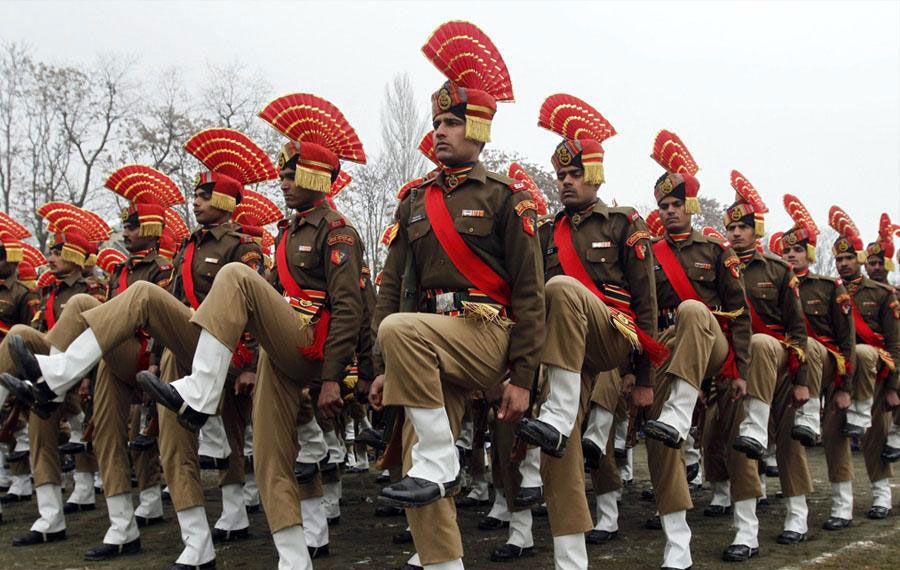
The Central Armed Police Forces continue to account for the largest share of allocations, reflecting India’s enduring internal and border security responsibilities. Importantly, growth in this segment remains steady rather than steep, ensuring continuity without fiscal shock. This stability allows forces to plan, train, and maintain readiness without the distortions that come from episodic funding spikes. In a sector where predictability is as important as adequacy, this approach reflects fiscal maturity.
One area where this reallocation is particularly visible is forensic and investigative capacity. Allocations for criminology and forensic science, modernisation of forensic laboratories, and the National Forensic Infrastructure Enhancement Scheme continue to increase, with some components recording growth of over 30 per cent year-on-year. These investments address a persistent constraint within the criminal justice system: delays and deficiencies at the investigation stage. By strengthening laboratory capacity and forensic infrastructure, the budget improves the institutional conditions necessary for timely and evidence-based case processing.
The 2026-27 budget also reinforces investment in system-level integration through digital platforms. The allocation for the Inter-Operable Criminal Justice System increases sharply to Rs.850 crore, up from Rs.300 crore in the previous year. This scale of funding underscores the importance being placed on coordination among police, courts, prisons, prosecution, and forensic agencies. From an administrative perspective, such integration has the potential to reduce duplication, improve information flow, and shorten procedural timelines, all of which are central to improving system efficiency.
Welfare-related provisions, while showing variation in aggregate figures, reflect ongoing institutionalisation of personnel support. The provision of healthcare coverage for Central Armed Police Forces personnel and their dependents through Ayushman Bharat represents a shift toward scheme-based, standardised welfare delivery. This transition aligns police welfare more closely with broader public service frameworks and contributes to greater predictability in personnel support mechanisms.
The continued but measured inclusion of development-linked security initiatives such as the Vibrant Villages Programme and the Border Area Development Programme highlights the growing overlap between security and development policy. These allocations reflect a complex understanding that infrastructure, connectivity and access to services play a role in sustaining state presence in border and remote regions. By situating policing expenditure alongside developmental interventions, the budget aligns security objectives with longer-term administrative integration.
It would be incorrect to assume a direct or automatic relationship between higher allocations and improved policing outcomes. Budgetary priorities are mediated by implementation capacity, inter-governmental coordination and organisational practice. However, budgets remain the clearest expression of institutional intent. In a democracy of India’s scale, institutional reform is rarely episodic or dramatic. It proceeds through accumulation, incremental investments in laboratories, information systems, training capacity and welfare frameworks embedded within routine budgetary decisions. Over time, these allocations shape the operational environment in which policing decisions are made, influencing how investigations are conducted, how discretion is exercised and how authority is balanced with restraint at the street level.
If policing constitutes the most visible interface between the state and citizens, budgetary choices reveal the underlying priorities that sustain it. In this instance, the pattern of expenditure points to a gradual shift away from reliance on predominantly manpower-driven responses toward strengthening institutional capability, professional competence and systemic continuity.
Valay Vaidya, IPS officer from Gujarat cadre
Simran Bhardwaj, IPS officer from Gujarat cadre