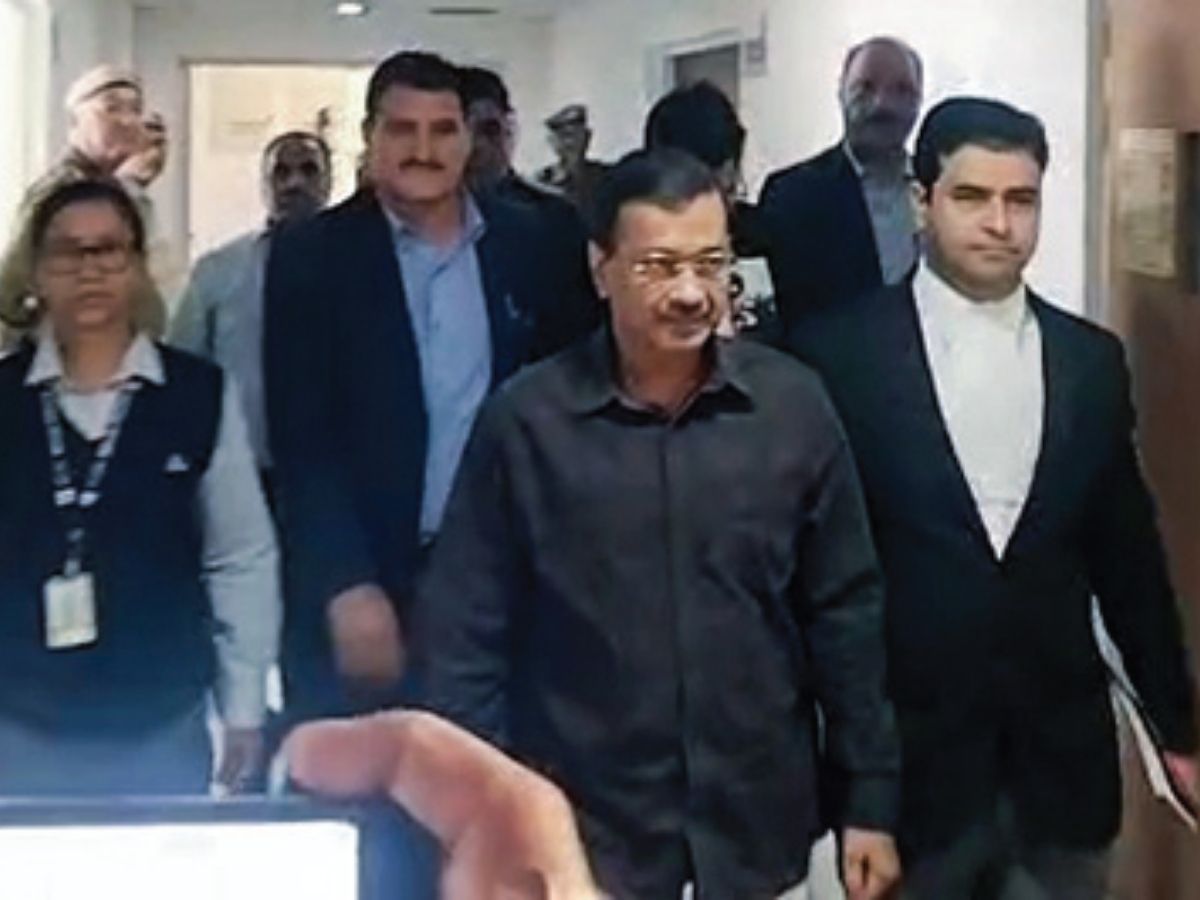
The acquittal of Aam Aadmi Party (AAP) chief Arvind Kejriwal and several other party leaders in the liquor scam case could mark a fresh turning point in Opposition politics. The verdict comes at a time when Congress leader Rahul Gandhi was attempting to position himself at the forefront of the Opposition, targeting Prime Minister Narendra Modi and drawing significant media attention. The political equation may now shift.
Kejriwal is likely to reemerge as a contender for Opposition space and visibility. His acquittal has come at a moment when the Congress appeared to face little internal challenge within the broader Opposition. That dynamic may now change.
The bitterness between the Congress and the AAP, which intensified during the Delhi Assembly elections last year, continues. The AAP had even alleged that the Congress colluded with the BJP to defeat it. In the evolving political scenario, the Congress could find itself increasingly isolated.
Kejriwal maintains cordial ties with several Opposition leaders, including Mamata Banerjee, Akhilesh Yadav, Tejashwi Yadav, Uddhav Thackeray, Sharad Pawar and leaders of the Left parties. Many among them have not been fully comfortable with Rahul Gandhi’s leadership. Mamata Banerjee, in particular, has not publicly endorsed his leadership. Kejriwal, too, has harboured national ambitions and sought to project himself as a key Opposition face.
Several of these parties supported the AAP during the Delhi elections, hoping it would emerge as a viable alternative to the BJP. However, the BJP secured victory and the AAP was removed from power. The party was subsequently engulfed in crisis as Kejriwal and other leaders faced allegations in the liquor scam. The AAP’s weakening indirectly benefited the Congress, which no longer faced a strong rival within the Opposition space.
Now, that balance may tilt again. Both Rahul Gandhi and Kejriwal belong to a similar political generation, and the latter’s renewed political momentum could intensify competition. The AAP is likely to challenge the Congress in states where it directly confronts the BJP. Since its defeat in Delhi, the AAP has targeted the Congress, particularly accusing it of denting its support in Muslim-majority areas. Any revival of the AAP is expected to impact the Congress’s vote share.
Following the court’s verdict on Friday, Kejriwal and his wife Sunita Kejriwal addressed supporters, signalling a renewed phase of political activity. The AAP is expected to expand its presence in states where the Congress is active. In states such as Goa and Gujarat, the AAP has built a stronger organisational presence in recent years and is likely to intensify its efforts.
For nearly a year after its Delhi defeat, the AAP’s visibility had declined. That phase may now end. Kejriwal’s emotional appearance before the media, where he reiterated his innocence, could become a rallying point for the party. The acquittal appears to pose a direct political challenge to the Congress.
A key difference between the two parties lies in their approach to state elections. The AAP treats state contests as high-stakes battles, while the Congress leadership is often criticised for lacking focus at the state level. Moreover, factionalism within the Congress remains a persistent concern, whereas the AAP projects greater internal cohesion.
Kejriwal’s immediate political target is likely to be the Congress rather than the BJP. Congress spokesperson Pawan Khera has suggested that the timing of the verdict is politically significant, particularly with elections approaching in several states. There are apprehensions within the Congress that the BJP’s strategic interests may indirectly benefit from the AAP’s expansion in BJP-ruled states, primarily at the Congress’s expense.
Elections in Punjab, Uttar Pradesh and Uttarakhand are due next year. The AAP governs Punjab, though it currently has limited presence in Uttar Pradesh and Uttarakhand. However, potential alliances — with the Uttarakhand Kranti Dal in Uttarakhand and the Samajwadi Party in Uttar Pradesh — could complicate the Congress’s prospects. Such developments may ultimately benefit the BJP.
In Punjab, Kejriwal’s acquittal is expected to energise party workers. If the AAP retains power there, it may shift its focus to Gujarat and other states. In Gujarat, the AAP has improved its vote share in recent elections and remains organisationally active. Goa and other smaller states may also feature on its expansion agenda.
Punjab will remain central to Kejriwal’s strategy, but efforts to rebuild organisational strength in Delhi, Haryana and other neighbouring regions are likely. While the AAP may not prioritise the immediate round of state elections, contests scheduled next year and beyond — including in Gujarat and Himachal Pradesh — could witness heightened activity from the party.
With elections lined up through 2027, 2028 and 2029, the Congress may now find itself navigating competition not only from the BJP but also from a revitalised Aam Aadmi Party under Arvind Kejriwal.