
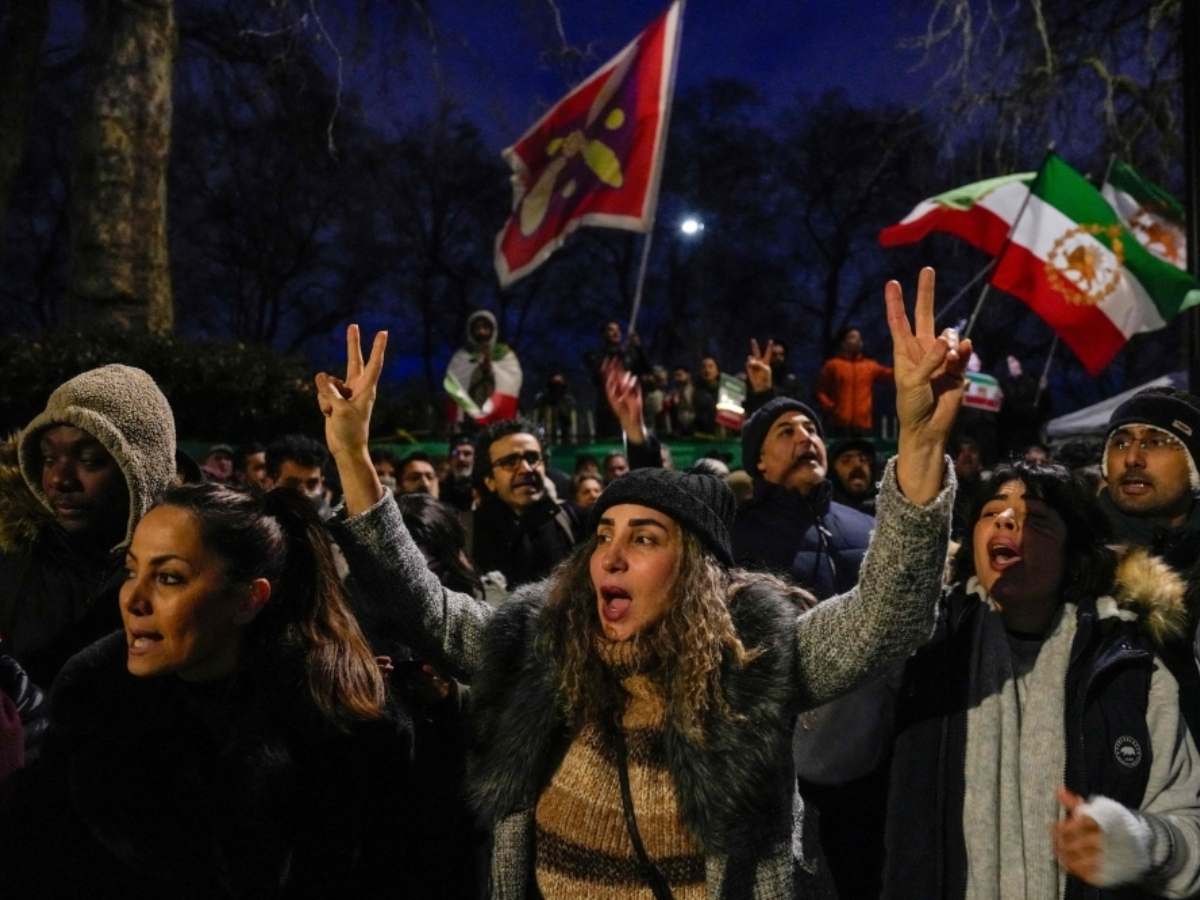
As January 2026 unfolds, the Islamic Republic of Iran stands at a historic inflection point. The ‘12-Day War’ of June 2025—a series of high-precision strikes by Israel and the United States—has not only degraded Tehran’s strategic assets but has also catalyzed a domestic crisis that threatens the very foundations of the state. Today, the nation is caught between a fractured internal political landscape, a looming succession crisis, and a surging monarchist sentiment that represents the most direct challenge to clerical rule since 1979. Let’s look at overall scenario:
Nuclear Capabilities: The Final Card
Despite the 2025 strikes, Iran remains a nuclear-threshold state. Analysts estimate that while ‘breakout time’ was extended, the technical know-how remains intact. Tehran’s current strategy is a ‘Hedge and Deter’ model—using dispersed stockpiles of 60% enriched uranium as an insurance policy. There is growing concern that if the regime feels its survival is threatened by the Pahlavi-led uprising, it may discard its religious fatwa and move toward rapid weaponization as a final deterrent.
The Military Standoff:
The strategic calculus was reordered following the June 2025 kinetic operations. Israeli strikes on the Natanz enrichment plant and U.S. strikes on the Fordow facility significantly hampered Iran’s ‘breakout’ timeline. In response to external threats and internal unrest, the IRGC has activated its Mosaic Defense. This strategy decentralizes command to provincial units to ensure the regime can suppress local dissent even if the Tehran central hub is decapitated by a foreign strike. However, reports from early January indicate that this mosaic is cracking, with security forces in Kurdistan Province showing signs of defection.
The Axis of Upheaval:
An expanded conflict in Iran would serve as a catalyst for the ‘Axis of Upheaval’—the alignment of China, Russia, and Iran. Moscow’s reliance on Iranian drones has created a symbiotic relationship. Russia is reportedly providing advanced electronic warfare (EW) systems to Tehran to frustrate U.S. air superiority. As Iran’s primary economic lifeline, Beijing is using its veto power at the UN to protect the regime, while simultaneously preparing for a ‘post-Islamic Republic’ reality by maintaining back-channel communications with opposition elements. Saudi Arabia and the UAE find themselves in a precarious position. While they view a weakened Iran as a net positive, they fear a ‘terminal scenario’ that triggers a massive refugee crisis or leads to a chaotic civil war on their doorstep.
The Succession Paralysis:
The physical decline of the 86-year-old Supreme Leader, Ayatollah Ali Khamenei, has created a vacuum that the Pahlavi-led opposition is now exploiting. The question of succession is now challenged by a surging monarchist alternative. Mojtaba Khamenei remains the ‘continuity’ candidate, leveraging his IRGC ties to secure a hereditary transition, though this risks a revolutionary backlash against a clerical monarchy. Alireza Arafi represents the hardline establishment, offering a path of ideological purity and intensified suppression. However, the IRGC Council may bypass both, establishing a ‘Praetorian Junta’ to prioritize military survival over theocracy.
Interacting with this fracture is the Pahlavi Factor. Reza Pahlavi has positioned himself as a secular, democratic bridge, specifically targeting the Artesh (Regular Army) and disillusioned IRGC members to defect. By offering a path to national unity through a secular referendum, Pahlavi has turned the succession crisis into a choice between a collapsing regime and a democratic restoration, forcing the security apparatus to weigh their loyalty to a dying leadership against the survival of the nation.
A Return to the ‘Peacock Throne’?
For the first time in nearly five decades, the name ‘Pahlavi’ is no longer a whispered nostalgia but a revolutionary slogan. Since the escalation of nationwide protests on December 28, 2025, the exiled Crown Prince Reza Pahlavi has emerged as the opposition’s most prominent figure. Unlike previous movements, the January 2026 protests feature explicit monarchist chants—‘Javid Shah’ (Long Live the Shah) and ‘Pahlavi will return’—ringing through traditionalist hubs like the Tehran Grand Bazaar. Pahlavi has positioned himself as a ‘unifying father figure’ rather than an absolute monarch, advocating for a secular democratic referendum. His calls for ‘coordinated strikes’ on January 8, 2026, led to exceptionally large crowds flooding city centers, forcing the IRGC to rethink its containment strategy. With a seat at prominent global forums and a warning from U.S. President Trump that ‘the U.S. will act if protesters are killed,’ Pahlavi has successfully globalized the domestic struggle, turning it into a referendum on the regime’s survival. The monarchist slogan is not a declaration of love for the past; it is a declaration of disgust for the present. It is a cry of ‘no’ when no ‘yes’ is available!
The Point of No Return:
Finally, the Islamic Republic is facing a perfect storm. The convergence of military pressure from the U.S. and Israel, the Pahlavi Factor galvanizing the streets, and a terminal leadership transition has created a situation where the status quo is dead. The coming months will determine whether Iran undergoes a managed transition, a violent revolution, or becomes the epicenter of a broader regional war. The Iranian Problem has moved beyond the halls of diplomacy; it is now being decided in the streets of Tehran and the flight decks of the Persian Gulf.
Sudhir S. Raval is Consulting Editor at the ITV Network.