
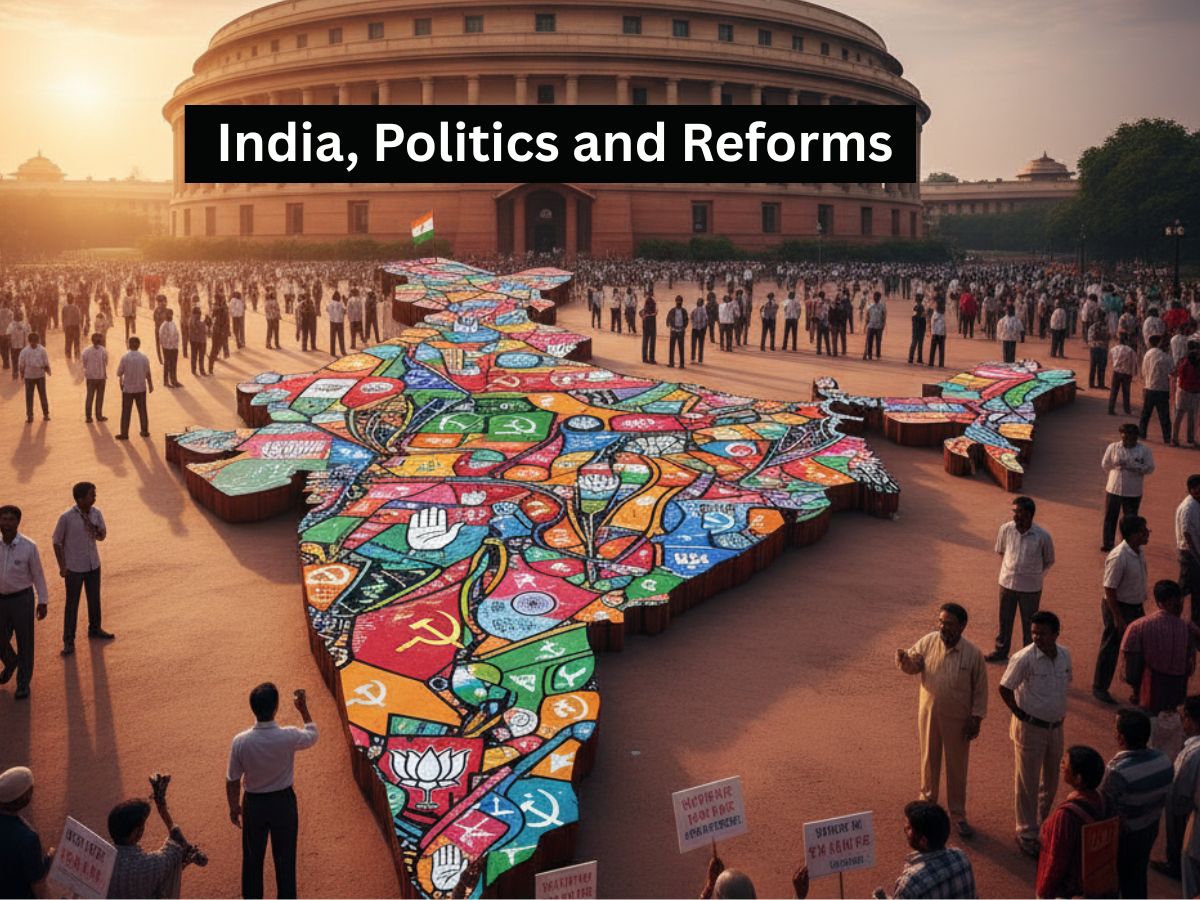
India’s political system carries on to be a federal parliamentary democratic republic, with multi-party democracy and periodic elections. Today, the country’s political scene is experiencing dramatic changes that reflect wider societal changes. Most obviously, more and more bureaucrats and members of the middle class are turning to politics, and with them come fresh ideas and skills but also altering classic party organisations and dynamics. Also, the evolution has brought new challenges, roadblocks and needs to reform at multiple levels.
Increasing Involvement of Bureaucrats and Middle Class
India’s political landscape, previously controlled by career politicians and political dynasties, is increasingly witnessing bureaucrats and middle-class professionals entering electoral politics. This stream is partly a reflection of increased citizen pressure on politics for reforms in governance and professionalisation. Middle-class activism, particularly in cities, is also shaping politics through novel means of civic participation and issue-based campaigns, apart from voting.
Crime, Money and Horse-Trading in Politics
In spite of these encouraging trends, criminal intimidation and money power continues to be rooted deeply in Indian politics. Horse-trading, the practice of wooing, convincing or bribing elected members to change allegiance post-elections, taints the credibility of the democratic system. Public confidence is undermined, governments are destabilised, and corruption is encouraged by this practice in India. The Supreme Court has recognised the magnitude of horse-trading, highlighting the necessity of evidence-based action but emphasising its enduring danger to democratic integrity.
Corruption and Its Effect
Corruption still runs deep in Indian politics on various levels, including bribery, nepotism, and abuse of public assets. It disables governance and economic growth and results in the poor delivery of basic services like healthcare and education. Corruption is entrenched to the point where it influences voter confidence and disables political accountability. Initiatives such as anti-corruption legislation, technological reform, and citizen participation endeavours are ongoing but have not been able to completely stop the tide. Tickets are distributed after monetary ‘contributions’ which are amounts unreachable from a commoner’s POV.
Challenges, Reforms Needed and the Road Ahead
The increasing influence of bureaucracy and the middle class displays a possibility of more efficient and transparent governance, but this is still to balance against well-entrenched problems such as money politics, horse-trading based ticket distribution, and institutionalised corruption. Political parties mostly depend on money power to get electoral tickets, pushing merit and ideology aside in the process. These problems dilute India’s political system and erode the democratic mandate. The need of reforms is now more than ever. Regular monitoring, accountability and a robust mechanism to check corruption can neutralise the hiccups to a good extent. The Citizens need to be more aware of their voting rights and the power it brings, and they need to question their MLAs, MPs and other elected representatives regarding relevant issues, progress and grievance redressals.
Nutshell
Summing up, India’s political establishment today stands on a turning point. The stability in governments and fewer cases of coalition also shows the maturity of Indian voters with time. However, there is huge potential for change in the form of new entries from bureaucracy and the middle class, but money power, horse-trading, and corruption continue to be painful challenges. These need to be overcome to increase the legitimacy, stability, and efficiency of Indian democracy in the years to come.