
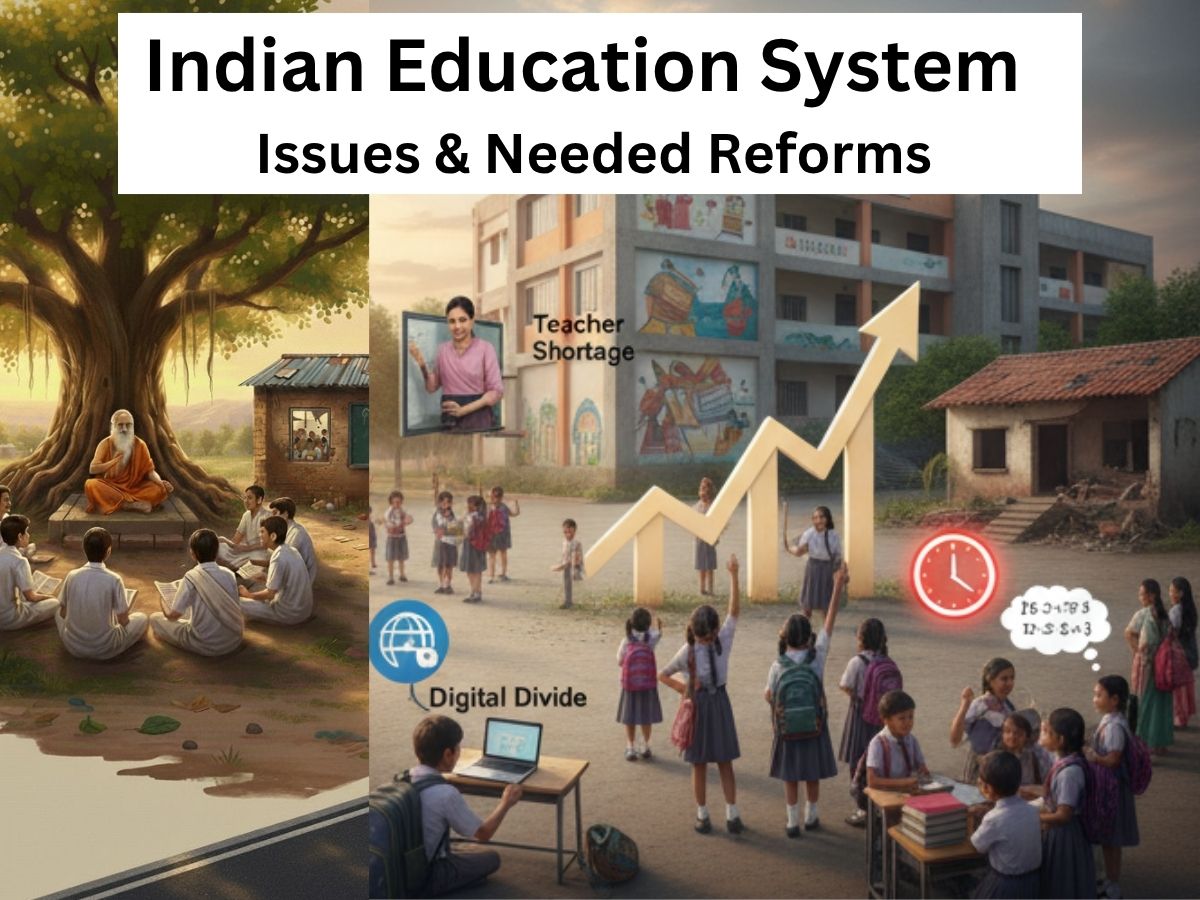
India’s education system, seemingly prima-facie fancy, massive and well-tested in terms of time, is at its crucial crossroads today. One of the world’s biggest webs of schools and students, it is currently struggling with a severe crisis of skill-building, identity and relevance. Obsolete curriculums, the absence of innovation, and the overemphasis on the theoretical knowledge have resulted in a stubborn toothless form of education where marks in the scoring matters more than learning to develop understanding or capabilities. This has given rise to a generation that does well in exams but panics at problem-solving in the real world and employability.
Root Causes and Structural Flaws
The cause of the problem is rooted in a colonial inheritance that placed emphasis on training out clerks at the expense of innovative and critical thinkers. Even post-Independence, decades down the line, India’s education system continued to emphasise the same discipline at the expense of creativity. The fascination with degrees and white-collar employment discourages students from learning vocational skills, creative occupations, or entrepreneurship. Naturally, millions pursue short-term job prospects while sectors struggle with a severe lack of skilled labour, smart personnels and innovative minds.
The ‘Modern’ Dilemma of Idea Western
India’s education crisis also gets its roots from an asymmetrical adoption of Western ideals. While global exposure is necessary in a globalised world, blind copying has distanced students from India’s own intellectual and moral heritage. Traditional Indian education through Gurukul setups and learning from texts such as the Upanishads and other practical books enriched comprehensive development by harmonising ethics, physical health, and knowledge. From communication, physical health, mental well-being to combat skills, innovative brain-storming and inculcation of curious attitude to learn, Bharat’s age old traditional methods of schooling, seems far superior to the covent hotshot schooling today. The emphasis of the contemporary system on careerism, competition, and consumption has undermined the basic values, creating moral and spiritual gaps among students.
The Skill and Employability Gap
Today, unemployability is one of India’s biggest challenges despite its demographic dividend. Government initiatives like the National Education Policy (NEP) 2020, Skill India, and Startup India are positive steps toward bridging this gap by promoting multidisciplinary learning and entrepreneurship. However, implementation remains inconsistent, and many institutions treat “skills” as mere add-ons rather than core learning components. The result is an educated population lacking the competencies industries truly demand.
Reviving Indian Wisdom with Modern Relevance
India has to revive its old-world educational values in combination with modern tools to ascertain employability coupled with moral foundations. Curricula have to incorporate local knowledge systems, traditional arts, environmental care, civic ethics, and life skills. Education has to be practical-learning, emotionally intelligent, financially literate, and digitally savvy readying students for livelihood as well as life.
Building Self-Reliant and Ethical Citizens
The destiny of Indian education does not lie in job dependency but in self-dependence. By pushing towards entrepreneurship, innovation, and community-based projects, educational institutions can encourage students to become creators, not merely job-seekers. When education once again embodies India’s civilisational ethos, a synergy of intellect, skill, and morality, it can raise a generation that is self-assured, ethical, self-reliant, and globally competent.