For more than five decades, Left-Wing Extremism—popularly known as Naxalism—has been India’s most persistent internal security challenge. Originating in 1967 at Naxalbari in West Bengal under radical communist leaders such as Charu Majumdar, Kanu Sanyal and Jangal Santhal, it was later institutionalised through organisations like CPI (Marxist–Leninist) and CPI (Maoist). Drawing ideological inspiration from Mao Zedong’s doctrine of protracted people’s war, the movement spread across the forested tribal belts of West Bengal, Bihar, Jharkhand, Odisha, Chhattisgarh, Andhra Pradesh and Maharashtra, forming the so-called Red Corridor. This was not merely a law-and-order failure but the creation of a parallel state enforced through guns, intimidation, kangaroo courts and ideological indoctrination.
Over time, Naxalism thrived on two reinforcing pillars: armed guerrilla warfare in remote regions and urban ideological support networks. Sections of academia, media, civil society and university campuses became breeding grounds for what came to be described as “urban Naxalism”, normalising armed rebellion as political dissent and providing legal, financial and narrative cover to violent extremism. On the ground, development stalled—roads remained unbuilt, schools shut, healthcare absent—and democratic institutions were systematically attacked.
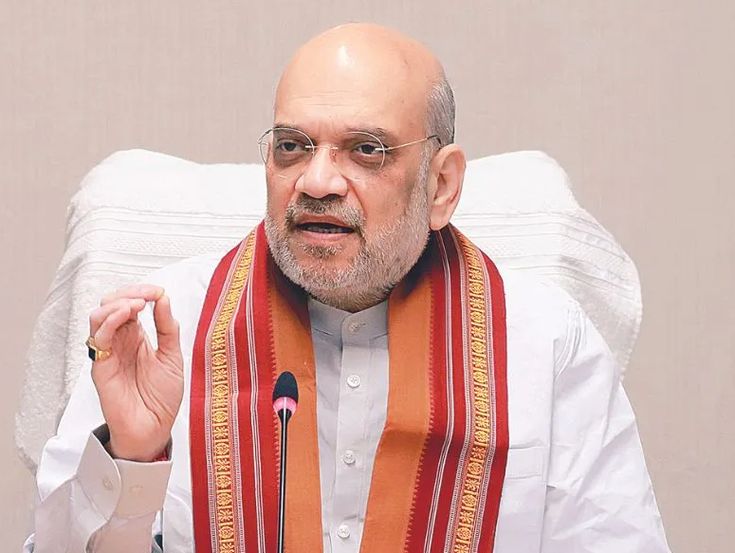
This entrenched crisis entered a decisive phase of reversal after 2019 under Union Home Minister Amit Shah, who replaced decades of drift with mission-mode resolve, transforming passive containment into a time-bound campaign to eliminate Naxalism by March 2026.
From drift to direction
Before 2014, India’s response to Naxalism was largely reactive and incident-driven. Weak inter-state coordination and the absence of unified command allowed Maoist violence to strike repeatedly. The Dantewada massacre of April 2010, in which 76 CRPF personnel were killed, and the Sukma attack of April 2017, which claimed 26 lives, exposed these failures. Despite extraordinary bravery on the ground, the lack of sustained political direction and integrated planning kept operations defensive, resulting in high casualties and a prolonged stalemate.
That pattern changed after Amit Shah assumed charge. The approach was stark and unambiguous: zero tolerance for violence. Those willing to lay down arms would be offered a structured path to rehabilitation; those persisting with armed confrontation would face sustained, uncompromising pressure. For the first time, as Shah put it, the “steering wheel” of policy was firmly in the hands of the state.
The SAMADHAN doctrine
At the core of India’s renewed success lies the SAMADHAN doctrine, articulated by the Ministry of Home Affairs in 2017 and operationalised with full force after 2019. Designed to overcome fragmented leadership, reactive policing and weak intelligence flows, SAMADHAN integrates security, governance and development through eight pillars:
Smart leadership: Clear strategic supervision by the MHA, with regular reviews chaired by the Home Minister and structured coordination with Chief Ministers, DGPs and operational commanders.
Aggressive, intelligence-driven strategy: A shift from area-domination patrols to long-duration, target-based operations such as Operation Prahar, Operation Octopus and Operation Black Forest.
Motivation and training: Specialised jungle warfare training for state police elite units alongside CRPF and CoBRA battalions, improving morale and interoperability.
Actionable intelligence: Strengthened multi-agency fusion centres combining human and technical intelligence for precise strikes.
Dashboard-based KPIs: Data-driven reviews tracking incidents, casualties, surrenders, infrastructure creation and territorial control.
Harnessing technology: Drones, satellite imagery, call-data analysis, forensic mapping and GPS-based tracking, particularly against IED networks.
Action plans for each theatre: District-specific security and development blueprints.
No access to financing: NIA- and ED-led actions to cripple Maoist funding through seizures and arrests.
By 2024–25, Maoist violence, leadership depth and territorial control had fallen to their lowest levels since the 1970s, putting India firmly on track towards a Naxal-free future by 2026.
Breaking the backbone: security operations
Outcomes underscore the shift. Official data show that incidents, which peaked at 1,936 in 2010 with over 1,000 deaths, fell to around 374 by 2024—an over 80 per cent reduction. Between 2004–14 and 2014–24, security-force deaths declined by 73 per cent and civilian fatalities by 70 per cent.
Territorially, the contraction is equally stark. From 126 LWE-affected districts across 10 states in 2014, the number dropped to 11 by 2024–25, with only three districts in Chhattisgarh remaining “most affected”. The once-sprawling Red Corridor has collapsed into isolated forest pockets.
Operations such as Operation Black Forest in the Karreguttalu Hills on the Chhattisgarh–Telangana border exemplify the transformed doctrine. Long a CPI (Maoist) sanctuary, the area hosted training camps, arms units and logistics hubs. Between April and May 2025, coordinated, intelligence-led operations dismantled the base, neutralised senior cadres, destroyed weapons infrastructure and established permanent security camps—without mass civilian displacement.
Parallel efforts decapitated Maoist leadership across committees, while NIA and ED actions under UAPA and PMLA dismantled financial networks, including urban support systems. Unified command and joint training integrated DRG, STF, CRPF and CoBRA into cohesive forces delivering lower casualties, higher surrenders and durable territorial control.
The surrender-rehabilitation pivot
Unlike earlier force-heavy approaches, the strategy kept the door open for reintegration. Surrender policies were strengthened, incentives rationalised and skill-based rehabilitation emphasised. In 2025 alone, 317 Naxals were neutralised, over 800 arrested and nearly 2,000 surrendered. As leadership collapsed and morale eroded, surrender increasingly replaced resistance, with entire panchayats in Bastar and Sukma declared Naxal-free through voluntary disengagement.
Development as counter-insurgency
Security operations were synchronised with development delivery. Roads, telecom towers, banking infrastructure, schools and health centres followed closely behind forces.
₹3,331 crore was released under the Security Related Expenditure scheme—a 155 per cent increase over the previous decade. Under the Special Infrastructure Scheme, ₹371 crore strengthened State Special Forces and Intelligence Branches, alongside ₹620 crore for fortified police stations, later extended with additional approvals. Since 2014, 586 fortified police stations have been constructed.
Infrastructure expansion accelerated: 12,000 km of roads built between 2014 and August 2025; mobile connectivity expanded through thousands of 2G and 4G towers; financial inclusion deepened with new bank branches, ATMs, banking correspondents and post offices; and educational empowerment advanced through ITIs and Skill Development Centres across affected districts.
Political will and deadlines
What distinguishes this approach is political will reinforced by clear timelines. The declaration that India will be free of armed Naxalism by March 31, 2026 is a strategic signal that ambiguity has ended. Deadlines focus bureaucracy, compel inter-state coordination and deny insurgents the luxury of waiting out governments—an approach that previously transformed the North-East and Jammu & Kashmir, and is now reshaping central India.
From Red Corridor to Development Corridor
India’s battle against Naxalism reached a historic inflection point under Amit Shah’s stewardship. By treating Left-Wing Extremism as a security, governance and ideological challenge, the strategy delivered clarity, discipline and resolve. Through centralised command, the SAMADHAN doctrine, leadership decapitation and financial disruption, a sprawling insurgency has been compressed into isolated remnants. Equally transformative was the insistence that security be followed immediately by governance, converting liberated zones into administered spaces. Today, Maoism is territorially marginal, financially starved and ideologically exposed. For the first time since Naxalbari in 1967, a Naxal-free India by 2026 is not a slogan but a credible outcome.
Rakesh Singh is the Managing Editor of ITV Network.