India stands at a defining technological moment. Across sectors such as semiconductors, artificial intelligence, advanced manufacturing, and robotics, nations are reconsidering how technology shapes power, resilience, long-term economic & national security. The global shift from efficiency-driven globalisation to strategic technological self-reliance has made technology a national priority rather than a futuristic aspiration.
The discussion that now centres around industrial policy, manufacturing incentives or geopolitical positioning needs to make a shift to what should be taught in the classrooms and university labs and how the student innovation system should be designed and supported. Tech sovereignty can be supported and ideated in industry corridors or policy documents but will only start in the classrooms, where our youth’s minds are getting shaped.
Technological leadership is not only built through individuals. It is built through Vyakti Nirman, which is developing capable individuals, and sustained through the right Vyavastha, that is, institutional ecologies that allow experimentation, risk-taking and long-term innovative thinking.
INDIA’S TALENT STRENGTH: A POWERFUL YET INCOMPLETE STORY
India produces one of the largest pools of engineering and technical talent in the world with 1.5 billion engineers graduating annually. According to industry estimates and reports by NASSCOM and the Ministry of Electronics and IT, India contributes one-fifth of the global semiconductor design workforce. Indian engineers design, test, and support some of the world’s most sophisticated technologies.
Yet, much of the intellectual property, product ownership, and large-scale deep-tech commercialisation continues to remain concentrated in the United States, Taiwan, South Korea, and parts of Europe. This is not a failure of talent. It is a reflection of ecosystem design.
India has mastered participation. The next phase requires leadership.
If India continues to nurture talent primarily for global deployment rather than domestic innovation ownership, technological sovereignty will remain an ambition rather than an outcome. Universities and educational institutions therefore become central to this national transition.
WILL THE FUTURE RESPECT ACADEMIC BOUNDARIES?
Traditional technical education has largely followed a subject-first approach. Students learn disciplines independently and are later expected to connect them to real-world applications. This model is increasingly misaligned with deep-tech innovation, which demands systems-level thinking and interdisciplinary collaboration.
Curriculum design must start with industry and national challenges. When educational programmes are structured around solving real problems like energy storage, healthcare technologies, advanced electronics, assistive devices, sustainable infrastructure—learning automatically becomes applied and innovation-oriented.
India’s semiconductor market alone is projected to exceed $100 billion by 2030, driven by demand across telecommunications, automotive electronics, and digital infrastructure. However, scaling domestic capability in such sectors requires engineers who understand not only theory but also integration, deployment, and commercial translation.
This transition cannot remain an extracurricular activity. It must become an academic priority.
THE QUIET FOUNDATION OF TECH SOVEREIGNTY
Every student-led innovation is a seed. Not every seed becomes a product. Yet every attempt builds design confidence, experimentation ability, and interdisciplinary thinking—capabilities that form the backbone of sovereign innovation ecosystems. The impact of such early experimentation is visible globally. For instance, student-built satellite prototypes at Cornell University have evolved into flight-ready technologies scheduled for deployment at the International Space Station in the United States. This progression shows how academic innovation, when consistently nurtured, can translate into sophisticated technologies with strategic and national capability impact.
India has already taken meaningful steps in nurturing this innovation culture. The Atal Tinkering Labs (ATL) initiative, launched by NITI Aayog, has established more than 10,000 innovation labs across schools, providing students from Grades 6 to 12 exposure to robotics, electronics, and problem statement led problem solving. National challenges such as Viksit Bharat Buildathons have further accelerated this momentum, attracting over 2.8 lakh student submissions of ideas and prototypes addressing real societal and technological challenges.
However, the most critical transition lies in higher education. Without sustained exposure to structured prototyping, applied research, and industry-linked learning, early curiosity risks fading before it matures into capability.
What happens when students are trusted to build?
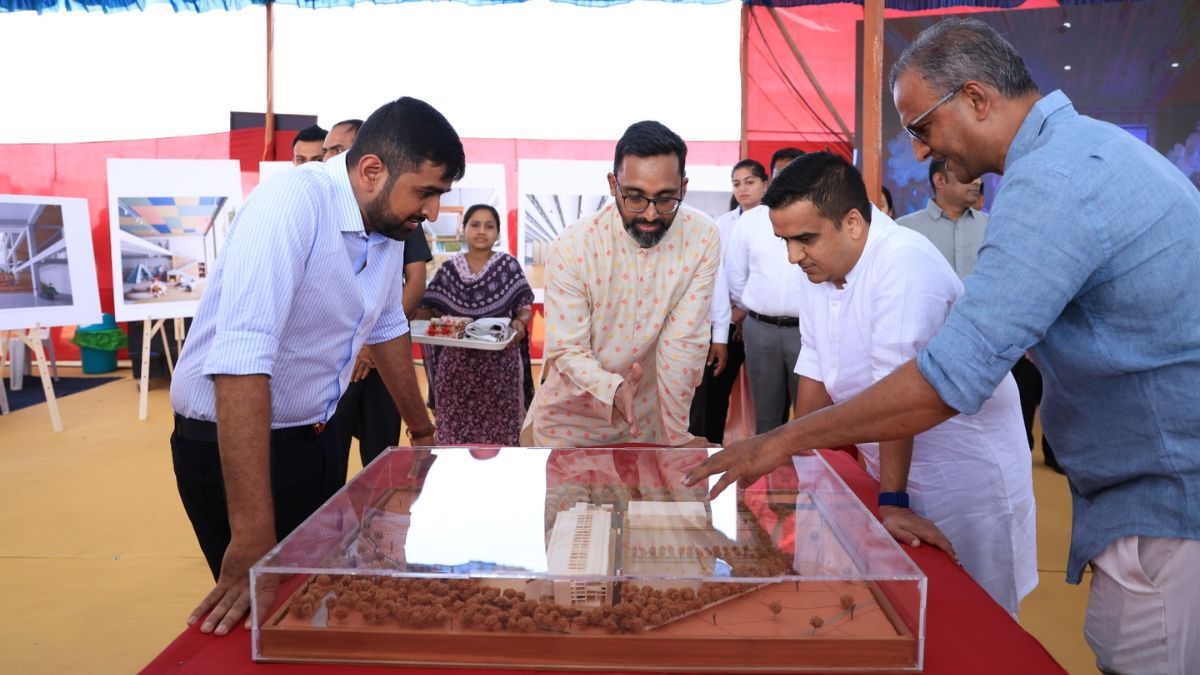
Over the past year, I have worked closely with first- and second-year university learners through a Public Impact Internship initiative focused on prototyping projects at Rishihood University. The goal was simple, to encourage students identify real campus or civic challenges and attempt technology-enabled solutions.
Building solutions initially felt unfamiliar. That changed once students began working with tools, testing ideas, and developing prototypes under faculty and domain mentorship. The projects focused on automation, sustainability, and infrastructure efficiency. Students built smart monitoring systems, energy optimisation solutions, and technology tools designed to improve campus operations and resource management.
The prototypes were not perfect. But they were real. Several are now moving toward institutional deployment. More importantly, the shift was cognitive. Students began seeing technology as a tool for solving lived problems rather than academic content to be examined.
If replicated across institutions, such initiatives can create a distributed national research and innovation culture. India’s premier technical institutions, particularly the IITs, have already demonstrated this potential. The IIT Madras Incubation Cell, for example, has supported more than 300 deep-tech startups across sectors including space technology, robotics, semiconductors, climate-tech, and AI, creating significant industrial value and employment.
The opportunity now lies in expanding this culture beyond a few centres of excellence. Stronger industry partnerships, earlier exposure to complex problem statements, and sustained support for long-cycle deep-tech research can help ensure that early student innovation evolves into scalable national technological capability.
THE ROLE OF EDUCATIONAL VYAVASTHA IN NATION BUILDING
Technological sovereignty is not simply a technology goal. It is a nation-building project. Universities influence millions of young minds every year. They shape not only skills but also purpose and confidence.
When students are encouraged to solve real societal and industrial problems, they begin contributing to national development even before entering the workforce. Education then becomes a strategic national infrastructure.
In my view, India’s demographic advantage will translate into technological leadership only if educational institutions deliberately integrate innovation, design thinking, and problem-led learning into mainstream pedagogy. Otherwise, we risk producing talent without building capability ecosystems.
When it comes to the question of innovation ownership, a long term technological resilience requires balanced interdependence with the West. The existing structural dependency did accelerate knowledge exchange and exposure to advanced research frameworks. However, long-term technological resilience requires balanced interdependence, not structural dependency.
WHAT LIES AHEAD
India’s journey toward tech sovereignty will depend on how effectively schools ignite curiosity and how consistently universities sustain it. Initiatives like Atal Tinkering Labs have already planted the seeds. Higher education must now nurture those seeds into scalable innovation capacity.
The future of India’s technological leadership will not be decided only in policy missions or industrial investments. It will be shaped in maker labs, interdisciplinary workshops and student-led experimentation spaces.
Every prototype built by a student is a small but significant step toward national technological self-reliance. When education aligns with innovation and national purpose, sovereignty becomes a culture rather than a policy objective.
And cultures, not policies alone, build enduring nations.
Puja Singh. A learning experience architect and innovation ecosystem builder working at the intersection of policy, technology and education.