Oldest IITs have become R&D universities now moving from innovations to entrepreneurship
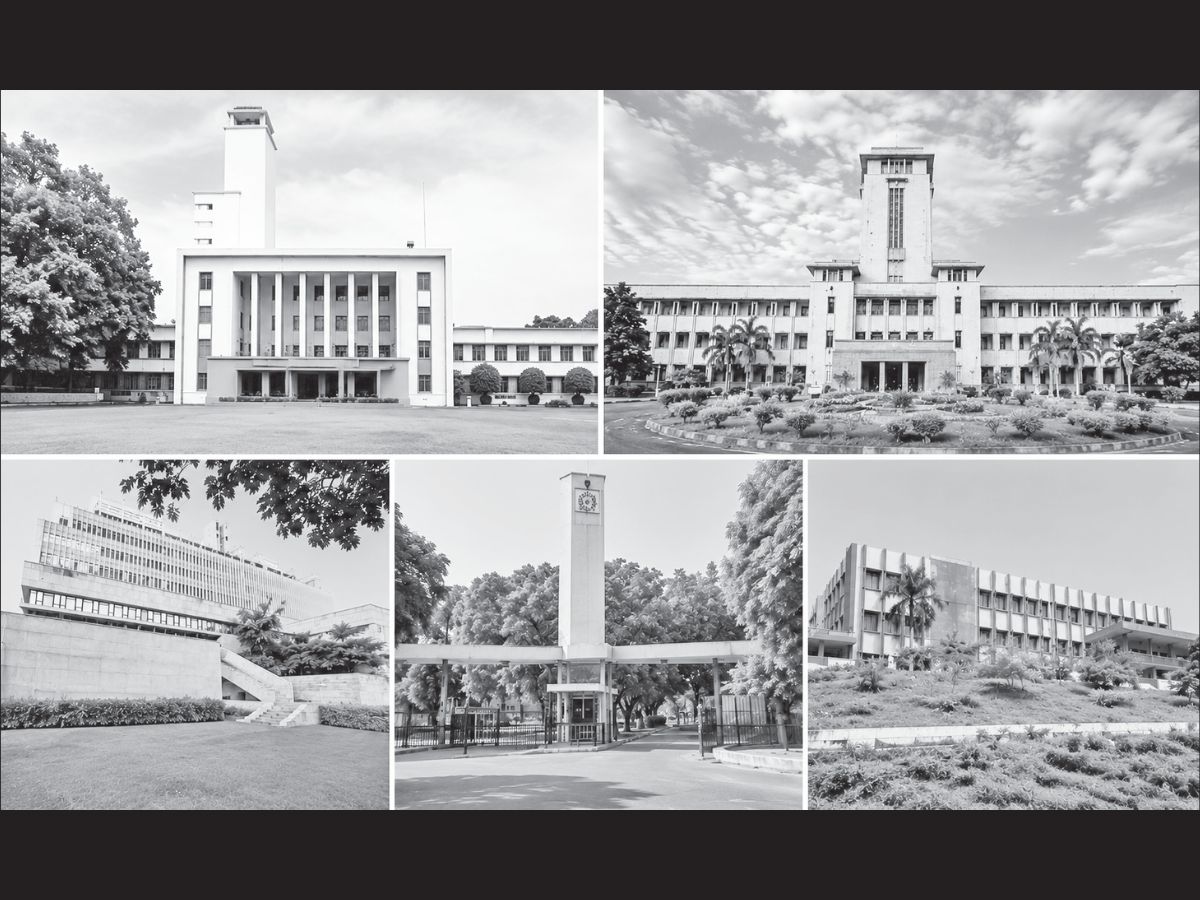
For most of their history, India’s oldest IITs measured themselves by a simple m e t r i c : h ow many engineers they turned out, and how quickly the market absorbed them. That yardstick no longer describes what is actually happening on these campuses. The numbers tell a different story, one about India’s most prestigious technical institutions redefining, for the second time in their history, what they exist to do. Start with the least glamorous but most telling number: doctoral output. In 2024 to 25, the five oldest IITs, Kharagpur, Bombay, Madras, Kanpur and Delhi, together awarded 15,676 degrees, of which 2,290, or 14.61%, were doctorates. IIT Delhi’s PhDs now account for over 18% of everything it awards; IIT Madras produced the largest absolute number of doctorates, 529, ahead of even IIT Bombay’s 498. These are not the proportions of undergraduate engineering colleges. They are the proportions of research universities. Institutions founded in the 1950s and 60s to solve India’s engineer shortage have become, without much fanfare, engines of original research, publishing, patenting and training scholars at a scale that puts them in the company of the world’s serious science universities. That transition, from teaching college to research university, took decades and mostly happened quietly, tracked in NIRF rankings and QS tables rather than headlines. The transition now underway is louder, faster, and considerably more contested: these same institutions are trying to convert research output directly into equity holding enterprise, and to do it inside a single generation of students. IIT Madras is the sharpest illustration. Its Incubation Cell has crossed 500 startups since 2013, attracting more than ₹17,000 crore in venture investment and recording 13 mergers or acquisitions. Roughly 190 of its incubated companies are currently generating revenue, together posting around ₹4,000 crore in FY24 turnover. It has built a dedicated pre incubator, Nirmaan, to catch ideas before they are even startup ready, and 117 of its own faculty members now sit as founders or shareholders in ventures that have grown out of their labs. The institute frames this candidly: its leadership has acknowledged that deep tech incubation means accepting a higher failure rate in exchange for backing genuinely difficult, boundary pushing ventures, a wager on frontier technology rather than safe, replicable business models.
But treating this as one institute’s solitary breakthrough, as recent commentary has tended to, misses the more important pattern. IIT Bombay’s incubator, SINE, has supported over 500 startups and 1,000 innovators of its own across two decades, and in December 2025 launched India’s first incubator linked deep tech venture capital fund, a ₹250 crore vehicle designed to write early cheques directly into ventures spun out of academic research, before those ventures ever reach a traditional VC’s desk. That fund followed IIT Madras’s own ₹200 crore alumni fund earlier the same year. Two of India’s oldest and most research intensive IITs, within months of each other, independently concluded that incubation support and mentorship were no longer enough, that the institution itself needed a balance sheet in the game. That is not an isolated campus culture story. It is a coordinated, structural repositioning of what an IIT is for. It is worth being precise about why this matters. An IIT that only teaches transfers knowledge outward and lets the market decide what to do with it. An IIT that does world class research adds to the stock of knowledge itself, a public good whose returns are diffuse and often decades delayed. An IIT that incubates and invests in the startups built from that research is doing something different again: it is trying to internalise the commercial upside of the knowledge it creates, rather than simply exporting the idea and letting someone else capture the value. That is a meaningful, and, for a public institution substantially funded by the state, a genuinely debatable shift in institutional purpose. The underlying pattern, of research intensive public institutions gradually absorbing a commercial, enterprise building function that once sat entirely outside their walls, is one that scholars of Indian management and industrial economics, among them Prof. Vinay Nangia at IIT Kanpur, have tracked for years in their work on how Indian institutions professionalise and scale. It is worth reading that literature alongside the incubator press releases, because it is a reminder that this shift has been building for longer, and more deliberately, than any single funding announcement suggests. It also creates tensions that deserve more scrutiny than they have received. When well over a hundred faculty members hold equity in companies built from work in their own departments, questions about research priorities, publication incentives, and conflicts of interest are not hypothetical, they are structural, and they will need governance frameworks at least as serious as the funds themselves. The “embrace failure” ethos that reads as institutional courage at a campus with a ₹17,000 crore plus investment base and a research park of its own may be far harder to sustain at a smaller, less endowed IIT with a fraction of the corpus. And as the oldest, most research dense IITs pull further ahead on this front, there is a real risk that India’s newer IITs, many still building out their basic research capacity, find themselves structurally unable to compete for the same venture attention, widening a gap within the IIT system rather than closing India’s broader innovation gap.
None of this diminishes what has actually been achieved. It is a genuinely unusual thing for public research institutions to do: to move, within roughly a decade, from being measured on placement packages to being measured on portfolio returns. But the more accurate, and more useful, story is not “one IIT solved entrepreneurship.” It is that India’s oldest technical institutions, having quietly become the doctoral research universities they were arguably always meant to be, are now running a second, riskier experiment: whether a public university can also behave like a venture investor without losing the research mission that got it here in the first place. The answer to that question will shape Indian innovation policy for the next decade far more than any single incubator’s press release.
Pravin Kaushal is a tech and social entrepreneur and Programme Director (Eastern India) at WHEELS Global Foundation, a Pan-IIT alumni initiative working across 20+ states in India. He writes on AI, Economy and Geopolitics and can be found on X at @ ipravinkaushal.