Festivals are not celebrated because they are colourful or customary. They serve a deep human need. They are not breaks from real life. They are among the ways real life is repaired.
That distinction matters. We have grown up treating festivals as events: occasions to dress well, eat together, and exchange greetings. We prepare for them, enjoy them, and then return to our routines. The outer form of a festival, the lightings, the fast, the prayer, the meal, is not the thing itself. It is something far more valuable: the recurring, disciplined act of restoring the inner life of a home.
For a family to remain inwardly strong, love is essential, but not sufficient. Even loving families, without shared practices of pause and renewal, can become hurried units of coordination, functioning well on the surface while quietly thinning within. Twenty-five years of counselling have shown me this pattern repeatedly. What weakens people is not always a crisis. Often, it is simply the absence of inner rhythm.
Many people today observe festivals mechanically, going through motions inherited from parents, without any felt meaning. In my experience, it works but partially and temporarily. A child raised in a home where certain days feel different, quieter, more attentive, more grateful, absorbs something even when no explanation is offered. But for the adults, mechanical observance eventually hollows out. The question is not whether to observe, but how to return to the practice with the seriousness it deserves.
“What weakens people is not always crisis. Often, it is simply the absence of inner rhythm.”
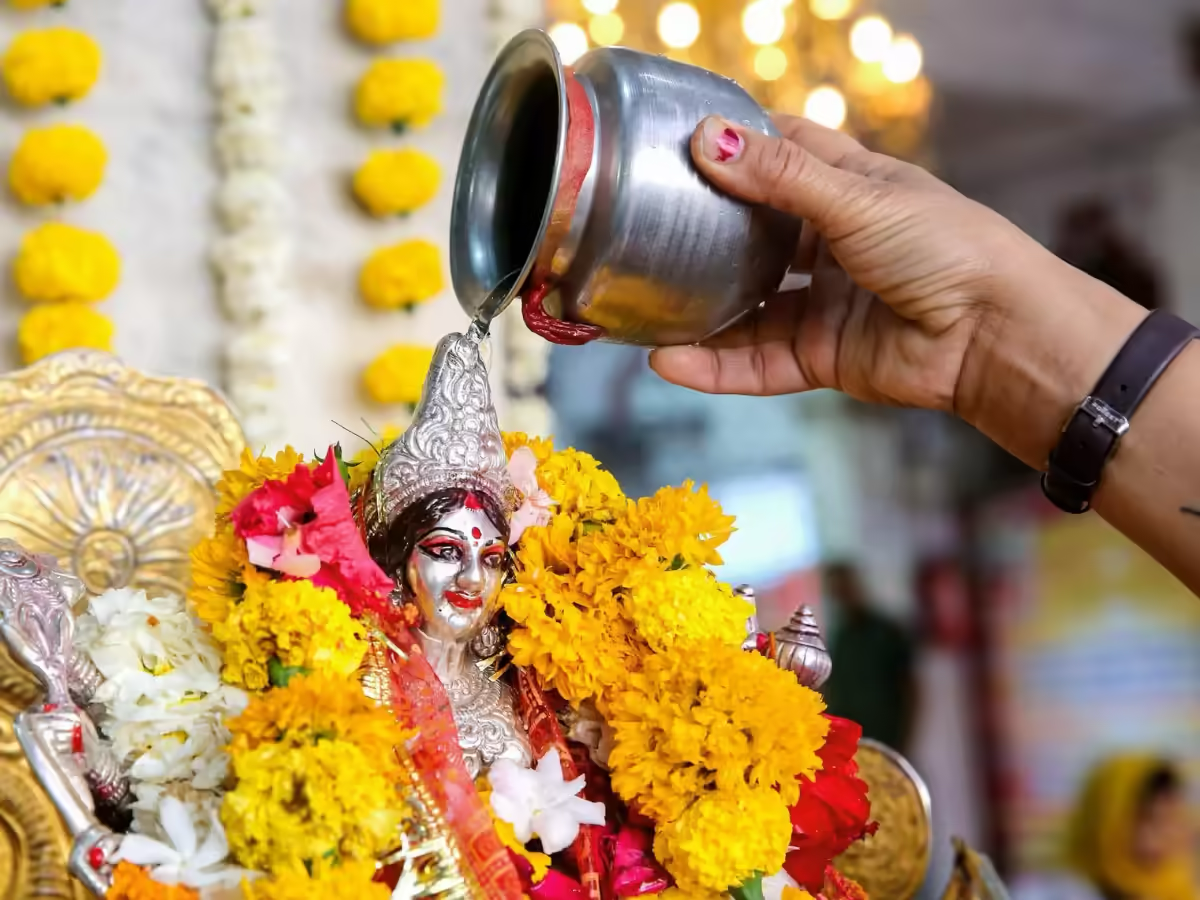
Navratri is one of the most powerful examples of this kind of purposeful renewal. Beneath its devotion, colour, and celebration lies a specific and serious function: it creates a period of purification, not dramatic or proclaimed, but disciplined and quiet. Food becomes simpler. Prayer becomes more central. The home grows more intentional. One begins to feel, in one’s own body and in the environment of the home, that these are not ordinary days. And in that very feeling, transformation has already begun.
What I find especially provocative about Navratri is its reverence for feminine energy, not as symbol or decoration, but as a living force that protects, purifies, and renews. It teaches, through practice rather than instruction, that true strength need not be harsh, and true wisdom need not be loud. A family that consciously invokes these qualities is doing something more than observing a religious season. It is shaping its own emotional culture, teaching children that courage can be compassionate, that discipline can be gentle, and that the capacity for renewal lives within.
Ramadan, which just concluded, works through another logic but toward a related end. Where Navratri purifies through atmosphere, Ramadan purified through restraint. It introduced discipline into appetite, prayer into schedule, gratitude into consumption, and empathy into daily living. It reminded the individual that desire is not destiny, that one can pause, hold, and become conscious again. But its deepest contribution to family life may be simpler and more radical than any of this: it restored shared time. In many homes today, family members inhabit different worlds under the same roof, different schedules, different screens, different emotional preoccupations. Modern life does not naturally produce togetherness; it produces parallel living. Ramadan interrupted this quiet isolation with a force that no resolution or conversation can match. The family woke together, waited together, prayed together, and broke the fast together. Shared rhythm is not a small thing. It is one of the foundations of emotional belonging, and most families have quietly lost it.
“Shared rhythm is one of the foundations of emotional belonging, and most families have quietly lost it.”
Eid, which we just celebrated, carried its joy with particular weight, precisely because it emerged from inner work. Celebration after discipline is different from celebration without discipline. It carries gratitude in it. It carries humility in it. It carries memory. Eid did not merely end Ramadan; it demonstrated what ritual is ultimately for. The austerity was never the destination. The destination is always relationship, renewed, softened, deepened, and made more generous by the effort of shared practice.
Navratri and Ramadan are theologically distinct, and those distinctions deserve full respect. I bring them together not to blur difference, but because each reveals, from its own tradition and its own language, the same essential truth: families need more than affection and efficiency. They need sacred rhythms. They need recurring moments in which time is deliberately slowed, presence is consciously deepened, and meaning is restored to the act of living together.
Children receive this not through explanation, but through impression. They may not remember every meaning told to them, but they carry something more durable: the memory that during certain days the home felt different. Calmer. More attentive. More whole. The lamp, the prayer, the fast, the waiting, the meal, the stillness, these become part of their emotional inheritance. This is how ritual forms not only memory, but identity.
We live in an age of over-stimulation. There is speed, noise, and constant outward engagement. Even love can become hurried. Even family life can become managerial. Festivals, when accessed seriously, protect us from that reduction. They gather what has become scattered. They return silence, reverence, and collective participation to the home. They do not ask us to escape life. They ask us to repair it, from the inside, together.
That is the invitation of every festival worth celebrating.
Dr Anita Chitkara is a counsellor who brings the wisdom of Indian scriptures into contemporary life. Over the past 25 years, she has counselled thousands of seekers, guiding them in spiritual and meditative practices for inner balance, emotional well-being, and deeper self-awareness.