
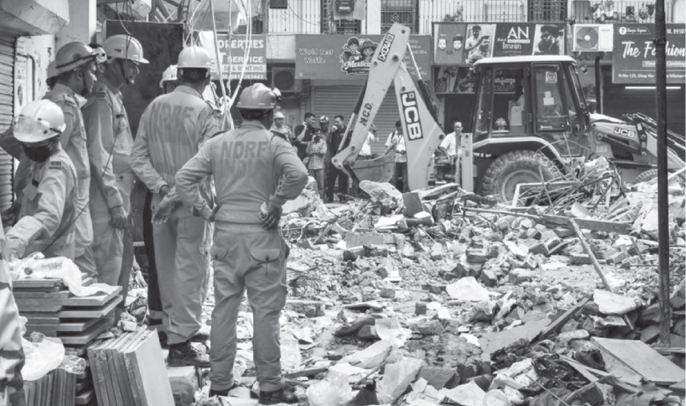
Three days ago, a hostel building collapsed in Satya Niketan, Delhi. Seven people are dead. Dozens were pulled from the rubble by NDRF teams and firefighters. Families of students are still waiting for answers and a magisterial inquiry has been ordered. This is not an isolated tragedy. It is a pattern.
• The latest published National Crime Records Bureau data shows structural collapses killed nearly 8,756 people across India between 2018 and 2022 an average of about five lives lost every single day.
• Nearly 300 people have died in bridge collapses over the past decade, with failures recurring across the country.
• School safety remains a crisis: seven children died and 20 were injured in a Jhalawar school roof collapse last year. This year ceiling collapses have injured students in Bundi and Barmer.
• Even Government hospitals are unsafe with ceilings and slabs collapsing on patients and doctors from Bhopal to Odisha and Rajasthan.
Different buildings. Different cities. Same story, every time: ageing, poorly maintained structures, substandard construction material and inspection files that gather dust instead of triggering repairs. Ask yourself, why does this keep happening? Because there is no real accountability. Contractors are named in FIRs. But the officers who approve plans, certify quality and declare buildings fit for use rarely face consequences. When those responsible for sanctioning and supervising public infrastructure escape accountability, cutting corners becomes routine and corruption thrives.
We don’t need more statements of grief. We need a system where a collapse is treated as a failure of governance, not just a tragic accident. That means:
• Independent, timebound structural audits of hostels, schools, hospitals. For over a decade now, the Government has been giving big speeches about India’s place in the world, while our children sit in classrooms that could come down on them, our sick lie in wards with cracking ceilings and our commuters cross bridges that were never built to last. roads, and bridges with the results made public, not buried in files.
• Personal, legal accountability for the sanctioning and inspecting officers, not just the contractor at the bottom of the chain.
• Strict, enforced materialquality standards with real penalties for violation.
• A national law, with clear guidelines and SOPs, governing infrastructure safety audits, certification, and emergency repair.
For over a decade now, the Government has been giving big speeches about India’s place in the world, while our children sit in classrooms that could come down on them, our sick lie in wards with cracking ceilings and our commuters cross bridges that were never built to last.
Where there is no intent to fix the basics, there can be no accountability for them either and that helplessness is exactly what our citizens are left carrying.
We owe the families of Satya Niketan more than condolences. We owe every citizen of this country a roof that doesn’t become a death trap. New guidelines and SOPs need to be made to tackle this before the next building falls.
*The author is MP from Churu, Rajasthan.