India’s MSME sector does not lack schemes, intent, or institutional attention. What it lacks is coherence. Over the years, well-meaning programmes have proliferated across ministries, states, and agencies, creating a maze that small enterprises must navigate even before they can begin to grow. The NITI Aayog’s recent emphasis on convergence is therefore timely, but its true value will be realised only if convergence is treated not as an administrative clean-up, but as a strategic economic reform.
For MSMEs, fragmentation is not a procedural inconvenience. It is a productivity tax. When credit support is disconnected from skill development, when technology upgradation is divorced from market access, and when sustainability is treated as a compliance afterthought rather than a growth enabler, enterprises remain small, informal, and vulnerable. Convergence must correct this structural imbalance.
From Scheme Alignment to Enterprise Outcomes
At its core, convergence should be outcome-led, not scheme-led. The relevant question is not how many programmes exist, but whether an MSME can seamlessly move from capability-building to capital access, from production to markets, and from compliance to competitiveness.
This is where information convergence becomes critical. India already generates vast amounts of MSMErelated data, including GST filings, Udyam registrations, credit histories, skilling records, and cluster performance metrics. Yet these data streams remain siloed. Integrating them can transform governance from reactive to predictive, allowing policymakers to identify stress points early, target interventions better, and measure real economic impact rather than schemelevel outputs.
However, data integration alone will not suffice. Process convergence must ensure that MSMEs experience government support as a single, intuitive journey rather than a series of disconnected touchpoints. A centralised digital interface can help, but only if it is designed around enterprise needs rather than departmental boundaries.
Sustainability Must Move from the Margins to the Mainstream
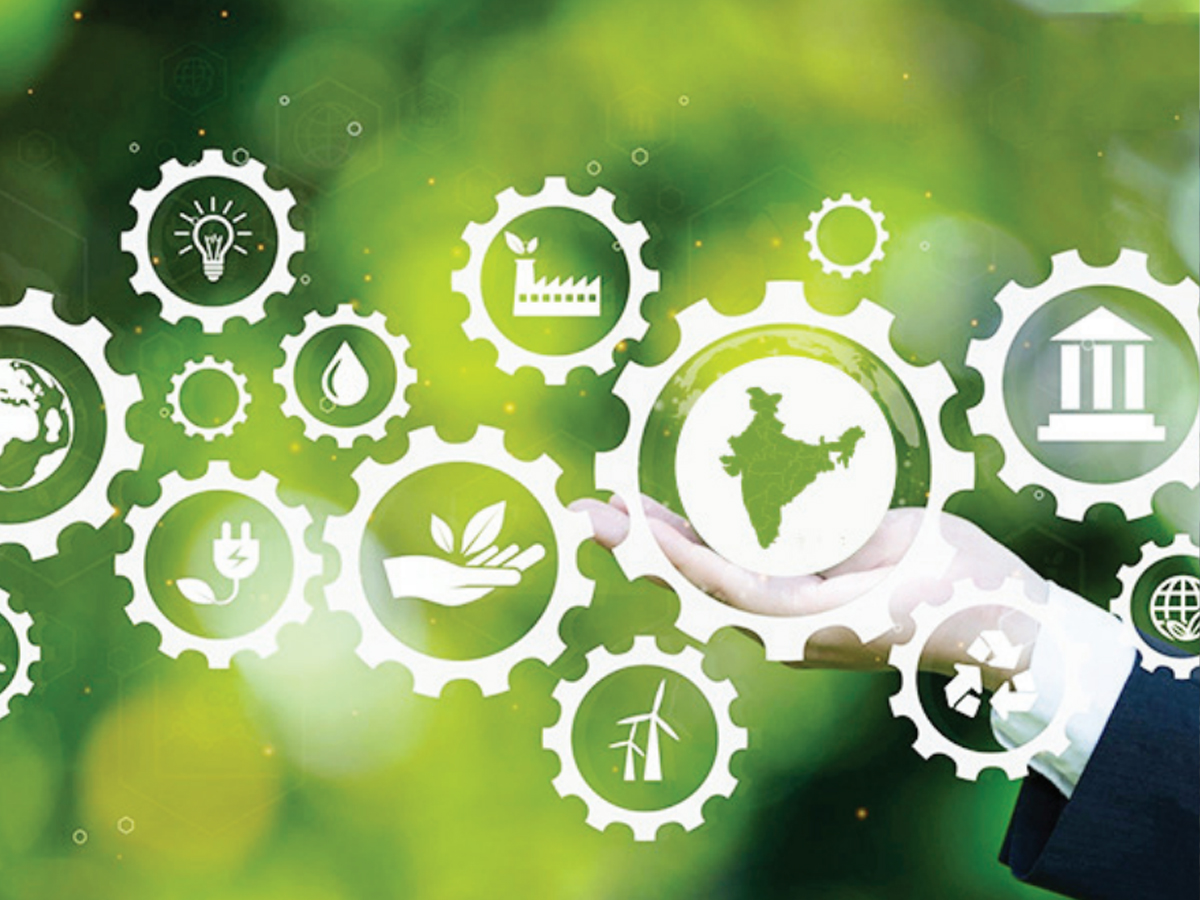
One of the most underleveraged opportunities in MSME convergence lies in embedding sustainability into the growth architecture. Today, sustainability support, whether related to energy efficiency, emissions reduction, resource optimisation, or ESG readiness, is often fragmented, pilot-driven, or treated as optional. This is a strategic misstep.
Global supply chains are rapidly tightening sustainability expectations. Export-oriented MSMEs are increasingly required to demonstrate carbon transparency, resource efficiency, and responsible sourcing. Domestic markets are also beginning to reward sustainable practices through better access to finance and procurement preferences. Convergence offers a chance to mainstream sustainability by aligning technology upgradation, finance, skilling, and market access around measurable environmental outcomes.
For instance, cluster development programmes can integrate clean technology adoption and shared sustainability infrastructure. Skill initiatives can incorporate carbon literacy and green operations. Innovation schemes can prioritise solutions that improve productivity while reducing environmental intensity. When sustainability is integrated rather than appended, it becomes a competitiveness multiplier.
The Real Test Execution at the Last Mile
The success of convergence will ultimately depend on execution discipline. Merging schemes on paper without harmonising incentives, capacities, and accountability frameworks risks creating larger but equally fragmented systems. Frontline administrators must be empowered with shared tools, common metrics, and outcome-linked incentives. MSMEs, in turn, must see tangible reductions in compliance burden and time to benefit.
Equally important is preserving focus where it matters. Targeted initiatives for women entrepreneurs, traditional industries, agrorural enterprises, and enterprises in the North Eastern Region should not be diluted in the name of efficiency. Strategic convergence is about intelligent integration, not uniformity.
A Once in a Decade Opportunity
India stands at a critical inflection point. As MSMEs are expected to power manufacturing growth, job creation, exports, and the green transition, policy design must evolve from scheme proliferation to system optimisation. Convergence, done right, can transform the MSME ecosystem from a patchwork of interventions into a platform for scale, resilience, and global relevance.
The opportunity before us is not merely to make schemes work better, but to make enterprises futureready. That is the true promise of convergence, and it is a promise India cannot afford to miss.
Dr Kaviraj Singh, CEO, Earthood