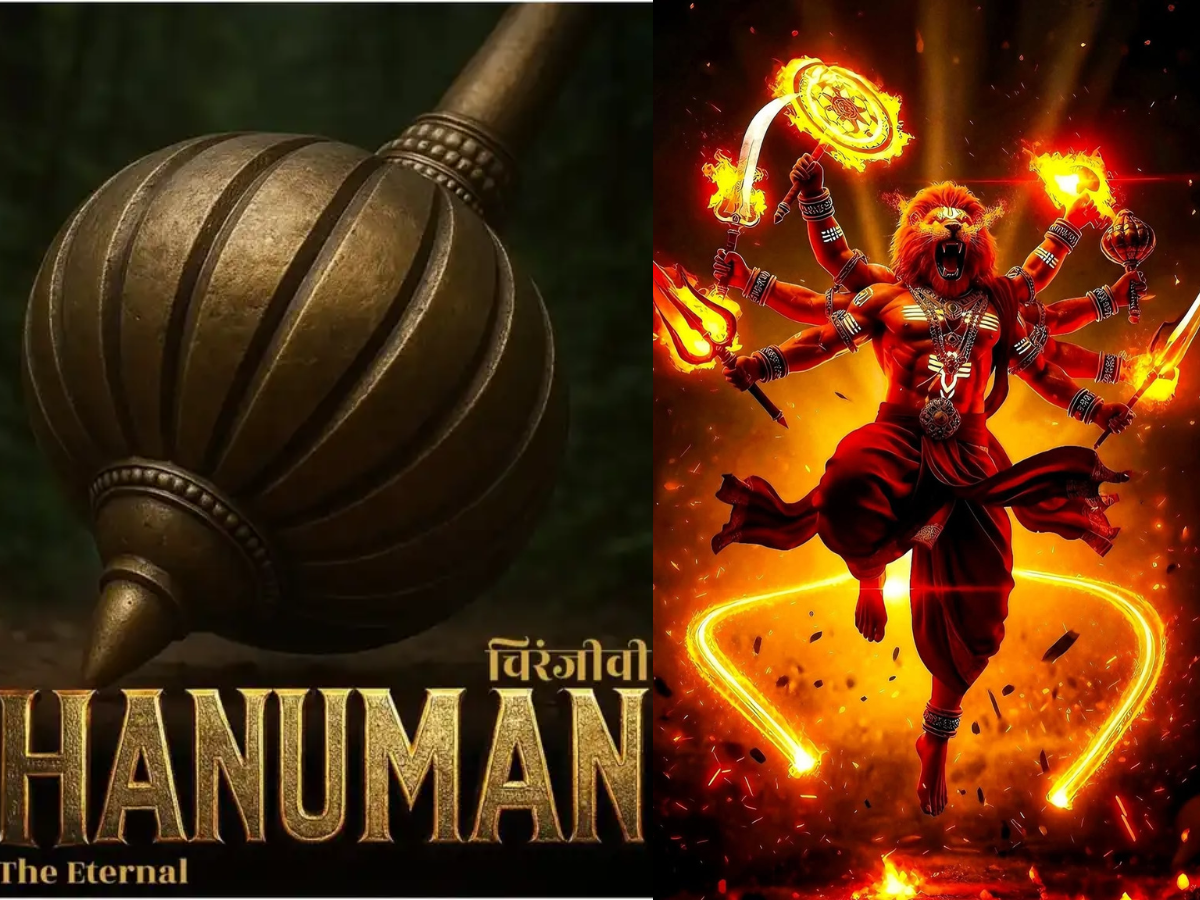
In Bharat, a simple introductory poster of a Dharmic cinema can send shivers down the spine of pseudo intellectuals and insecure fear mongers. This was on full display when the poster of ‘Chiranjeevi Hanuman – The Eternal’ was released. The cinema is to be made in AI. Now, since questioning dharmic cinema for its essence is no longer in fashion because of the fear of public backlash, the naysayers targeted the cinema for the use of AI.
Anurag Kashyap, a renowned filmmaker, in one of his posts on Instagram, targeted one of the producers of the cinema, Vijay Subramaniam, for making a film based on AI, using harsh words and fear mongering. Though Anurag, who has a history of excelling in creating controversy, yet again succeeded in creating one, his attack on the producer was more to spread negativity about the cinema and create insecurity around AI based cinema. His primary contention was AI based cinema is against the interests of artists, writers, and directors and is against the creative human mind. To address this, it is important to understand two things: one, is AI based cinema part of the creative human endeavour or not, and secondly, how to prepare ourselves for the penetration of AI in cinema as an industry.
Let’s understand this in more detail. The core essence of cinema lies in its storytelling. This has two major aspects: one is the story itself and the second is how the story is presented on the big screen. Without going too much into the technical details, how the story is being told is multifaceted. It involves cinematography, screenplay, dialogues, lighting, chemistry between characters, music, among other things. Even with the ever evolving technology, humans have maintained their choices with respect to all aspects of cinema presentation.
Technology has proven to be a tool that aids the process of filmmaking. It is there to challenge human imagination and excel in the presentation. The same is the case with AI usage in cinema. The western cinema industry appears to understand this with more and more movies utilising AI for script writing, pre-production, VFX design, editing, sound design, post-production promotional activities, among other applications. The same has been utilised in movies like Avengers: Infinity War, The Irishman and trailers for movies like Morgan. In the US, even AI film festivals are being organised.
The dawn of AI in filmmaking is upon us, and utilising the same for better storytelling should be the goal. Better visuals and sound design, aiding good stories, can go a long way in uplifting the level of cinema in Bharat. In some movies and promotional activities in Bharat, AI has started to be used as well. This is a sane approach. With more and more AI tools being developed for sharpening filmmaking, the major concern can be around a loss of human creativity. But this is more speculative, as there is much more to filmmaking than good graphics and sound design.
The establishment of a connection between the cinema and the audience is a creative process. Only good filmmakers can utilise AI tools being offered for better cinema. Now, coming back to the controversy raised by Anurag Kashyap. The person who himself directed an animated movie like ‘Return of Hanuman’, puts on a hypocritical mask to question AI based cinema. One seriously needs to post a question to him on how animated cinema ‘Return of Hanuman’ is going to be different from ‘Chiranjeevi Hanuman – The Eternal’, in terms of the creative process, keeping in mind the evolution of technology.
His blabbering appears to have been done to undermine the movie altogether and create a controversy. It appears that he wants to be relevant, especially considering the abysmal performance of his directorial venture in the last decade. Also, he has been very selective in his criticism based on ideology.
He did no speak one word when the end of Raanjhanaa’s end was changed using AI for its Tamil release. His mouth was sealed when Bharat’s first AI generated cinema ‘Naisha’ was announced. Also, when Vishal Bharadwaj shot a whole film “Fursat’ on IPhone he did not speak against the future of cameramen, the light boys etc.
One can sniff of his ulterior motives rather than genuines concerns for artists. It also appears that he wants to create hysteria around the use of AI in the Hindi film industry and push the industry against the usage of such technology. This cannot be said to be good. It is imperative in this day and age that the cinema produced in Bharat is on par with the global cinema when it comes to the quality of content. This is more so the case when it comes to periodic dramas, sci-fi movies, or depictions of ancient characters.
How the West has portrayed its mythology to make sure that it stays relevant in young minds is a case study in itself. Thus, Bharatiya cinema can take a lesson or two from it and progress accordingly. Furthermore, the argument that the use of AI will affect the jobs of artists and lower the creative process is a part of the transitional process. It is imperative that creative people take up opportunities around new technologies to stay relevant.
This sort of insecurity was also there when cinema moved from analog, celluloid filmmaking to Digital filmmaking. Hence, the only way to deal with the use of new technology is to embrace it and weave the craft around it, especially considering its wide range of utility. In conclusion, those who do not embrace change are likely to perish. Technology has taught this to many business stalwarts. This becomes more critical with the advent of technology such as artificial Intelligence (AI). AI is likely to disrupt all sectors of human society and workspaces. Imbibing this change is pivotal for growth.
This scenario cuts across industries. The cinema industry is no different. The inevitability of the penetration of AI in cinema appears closer than ever before. But how should we prepare ourselves for this change? Should we be worried only about its ill effects? Should we stop ourselves from embracing this change due to the fear of uncertainty? Should we be engulfed in fear-mongering to scare people away from the inevitable change? Or should we prepare our industry for this change? The answer to this lies in the DNA of Bharat, where people, instead of insecurity, show resilience. Where the civilisation, instead of perishing, has stood the test of time because of its ability to embrace the changing tides of time through tenacity, grit, and flexibility.
As to the naysayers and vested interest groups’ howling against the use of AI in cinema, I tell them to trust the creators and the industry to evolve with technology. This is for the betterment of the industry and the creative process. The movie ‘Chiranjeevi Hanuman – The Eternal’ is most likely to set a benchmark for it. Author is head of Company Onboarding and Ecosystem Development at GREX (A Pantomath Group Associate), teacher & cinephile.