
Swami Vivekananda, the eternal voice of Bharat’s resurgence, thundered: “All power is within you; you can do anything and everything. Believe in that; do not believe that you are weak.”
In the crucible of today’s global energy crisis—marked by wars, chokepoints, and volatile prices—Bharat embodies this indomitable energy. While the world grapples with fragile fossil-fuel dependencies and geopolitical shocks, India charts a path of Atmanirbhar (self-reliant) energy security, blending ancient wisdom of inner strength with modern renewable ambition. This is not mere survival; it is Bharat’s civilizational assertion of Shakti—power—that transforms crisis into opportunity.
The Global Energy Crisis: A World in Turmoil As of March 2026, the energy landscape is scarred by the Iran conflict. US-Israel strikes in February triggered the closure of the Strait of Hormuz, halting 20 million barrels per day of oil and Qatar’s massive LNG exports. Oil prices surged past $100 per barrel—the highest in four years—forcing the IEA’s largest-ever emergency release of 400 million barrels.
GEOPOLITICAL TENSIONS HAVE EXPOSED SYSTEMIC FRAGILITIES:
Europe reels from Russian gas curtailments, scrambling for LNG amid inflation spikes; the US leverages shale and sanctions but faces domestic political volatility on climate commitments; China dominates clean-tech manufacturing yet clings to coal while accelerating EVs. Global clean-energy investment hit $2.2 trillion in 2025 (two-thirds of total energy spend), yet fossil fuels remain the crisis default, driving price volatility, supply-chain risks, and economic uncertainty.
WHAT WILL BE BHARAT’S STRATEGIC RESPONSE: DIVERSIFICATION AND DE-CARBONISATION?
Let me give you a brief analysis on the responses: In stark contrast, Bharat has turned vulnerability into resilience. Importing 85-90% of its crude, India has diversified sourcing across nearly 40 countries, with ~70% of imports now routed outside the Strait of Hormuz. Discounted Russian oil—enabled by rupee trade and diplomatic deftness—has cushioned the blow despite Western pressure. Strategic petroleum reserves have been expanded, and naval presence in the Indian Ocean safeguards sea lanes. Domestically, the energy mix is transforming: non-fossil sources reached 50% of installed electricity capacity by June 2025. Solar capacity stands at 140 GW and wind at 54.65 GW as of January 2026.
THE ROLE OF NATIONAL HYDROGEN COMMISSION:
The National Green Hydrogen Mission targets 5 MMT annual production by 2030, with tenders already achieving near-$3/kg prices en route to the $2/kg goal. PM Surya Ghar has added 7 GW of rooftop solar across 23.9 lakh households. Nuclear capacity is slated to hit 100 GW by 2047, while the EV push and green hydrogen for industry promise to slash oil and coal imports by over 90% by 2047 under Atmanirbhar pathways. Budget 2025-26 amplified green corridors, manufacturing missions for solar modules and batteries, and incentives—reducing fossil-fuel subsidies to their lowest ratio in five years.
Let’s have a sneak peek through all this “Geopolitical Ramifications: Multi-Alignment as Strength”: Geopolitically, Bharat’s approach amplifies its global heft. Unlike Europe’s acute Russian dependence or Japan’s Hormuz panic, India’s balancing act—securing Russian barrels while deepening QUAD ties for critical minerals and partnering with the US on renewables—exemplifies strategic autonomy. The India-Middle East-Europe Corridor (IMEC) promises alternative energy routes, bypassing chokepoints. This pragmatism strengthens ties with the Global South. India positions itself as a bridge, exporting solar know-how and green tech while advocating equitable transitions at COP forums. The ramifications are profound—enhanced diplomatic leverage, reduced coercion risk from any single power, and a template for middle powers navigating US-China rivalry.
THE ECONOMIC RAMIFICATIONS: GROWTH AMIDST VOLATILITY:
Economically, India’s strategy sustains 7-8% growth despite $100+ oil. Diversification and rupee settlements have shielded forex reserves and curbed inflation pass-through. Clean-energy investments create manufacturing jobs, localize supply chains under “Make in India,” and slash import bills long-term—potentially saving $240 billion annually in oil by 2047 via EVs alone. Contrast this with Europe’s stagflation risks or China’s overcapacity strains; Bharat’s balanced transition—fossil buffers plus renewable acceleration—delivers affordability for 1.4 billion citizens while attracting global capital into green manufacturing. Subsidies for PM Surya Ghar and green hydrogen ensure energy remains accessible, preventing the social unrest seen elsewhere.
THE SOCIAL RAMIFICATIONS: EQUITY AND EMPOWERMENT:
Socially, the dividends are transformative. Universal electrification via solar microgrids has electrified remote villages, empowering women and farmers. Green jobs in solar, wind, and hydrogen offset coal-sector transitions, fostering skill development aligned with Vivekananda’s call to uplift the masses. Reduced air pollution from renewables improves public health, while rooftop schemes democratize energy ownership—households generate “muft bijli.” In contrast, Europe’s high energy prices burden the poor; the US faces partisan divides; China’s rapid shift creates urban-rural gaps. Bharat’s inclusive model ensures no one is left in darkness, turning energy access into social justice.
HOW BHARAT’S SEA DIPLOMACY PLAYED A FORMIDABLE ROLE AMIDST THE WEST ASIA & THE GULF CRISIS?
Amid the West Asia crisis triggered by the US-Israel-Iran conflict, Bharat’s sea diplomacy showcases strategic autonomy and proactive maritime leadership. While the Strait of Hormuz remains largely disrupted, India has secured safe passage for multiple Indian-flagged LPG tankers (including Shivalik, Nanda Devi, Jag Vasant, and Pine Gas) through direct high-level talks with Tehran. The Indian Navy, under Operation Sankalp, has rapidly enhanced deployments in the Gulf of Oman and Arabian Sea, positioning over half a dozen warships—including destroyers and logistics vessels—to escort merchant ships to safer waters without entering the strait itself. This blend of quiet diplomacy with Iran and robust naval presence ensures energy flows, protects Indian seafarers, and positions Bharat as a responsible net security provider in the Indian Ocean Region—independent of US-led escort calls.
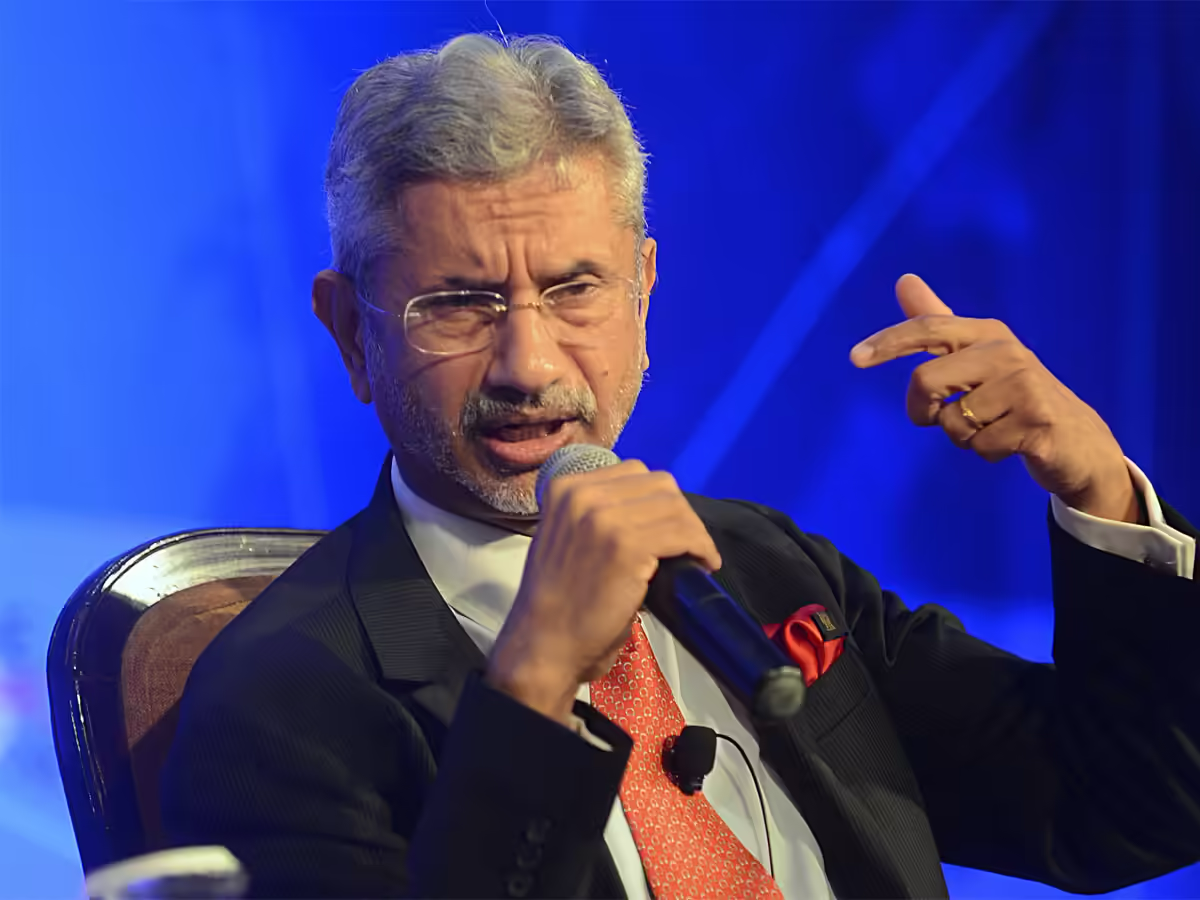
External Affairs Minister Dr. S. Jaishankar on West Asia, energy security, the Gulf/Hormuz crisis, strategic autonomy, and India’s diplomatic approach (March 2026 context) On Strategic Autonomy in Energy Choices “India is deeply committed to strategic autonomy. Our oil companies make decisions based on availability, cost and risk, and India will remain independent-minded even if our choices don’t align with what others want.”
ON WEST ASIA’S IMPORTANCE FOR INDIA
“West Asia is key to our energy security and includes many important suppliers of oil and gas… Our national interest, including energy security and trade flows, will always be paramount.”
ON DIPLOMACY WITH IRAN AND HORMUZ SHIPPING
“I am at the moment engaged in talking to them [Iran] and my talking has yielded some results… Certainly, from India’s perspective, it is better that we reason and we coordinate and we get a solution than we don’t.” (Referring to safe passage of Indian LPG tankers through the Strait of Hormuz)
On India’s Approach to the West Asia Conflict “India is in favour of peace and urges a return to dialogue and diplomacy. We advocate de-escalation, restraint and ensuring the safety of civilians… The wellbeing and security of the Indian community in the region is our overriding priority.”
ON INDIA’S INDEPENDENT STANCE
“We are very much wedded to strategic autonomy… As far as energy issues are concerned, this is a complex market today. Oil companies in India look at availability, costs, risks and take decisions that they feel are in their best interest.”
CONCLUSION
Realising Vivekananda’s vision Bharat’s handling of the energy crisis—diversified, decarbonising, and determined—stands as a beacon against the world’s reactive scramble. Where others see fragility, India sees Shakti. As Vivekananda envisioned an awakened Bharat rising through inner power and ceaseless action, today’s policies—from Hormuz hedging to 500 GW renewable dreams—fulfil that prophecy. Geopolitically sovereign, economically buoyant, and socially equitable, Bharat is not merely coping; it is leading the Global South toward a just energy future. The goal is clean energy independence by 2047, a Viksit Bharat this also reflects Bharat’s calm, pragmatic and multi-aligned diplomacy—prioritising Indian interests, consumer needs, and quiet but effective engagement even in turbulent times. They perfectly complement the narrative of sea diplomacy and energy resilience.