Allies are no longer quiet, the tone has shifted, and it has shifted in public.
A Danish member of the European Parliament, Anders Vistisen told the President of the United States Donald J Trump to “fuck off ” during a debate on Greenland and was cut off mid-sentence.
Mette Frederiksen, Prime Minister of Denmark, stood at the center of this storm, declaring that any move toward a U.S. takeover of Greenland would mark the “end of NATO.” She described the administration’s demands as an “absurd discussion,” making it clear that Danish sovereignty is not a commodity. Bart De Wever, Prime Minister of Belgium, went even further at Davos, warning that Europe cannot be a “miserable slave” and that eight decades of Atlanticism may be nearing its end.
Olaf Scholz, Chancellor of Germany, dismissed attempts by the Trump administration to link trade and security to coercive leverage, labeling the new tariffs a “path that produces only losers.”
Keir Starmer, Prime Minister of the United Kingdom, declined to align with President Trump’s rhetoric on Europe and Greenland, while Emmanuel Macron, President of France, spoke of “new colonialism” and “useless aggressivity,” asserting that he prefers “rule of law to brutality.”
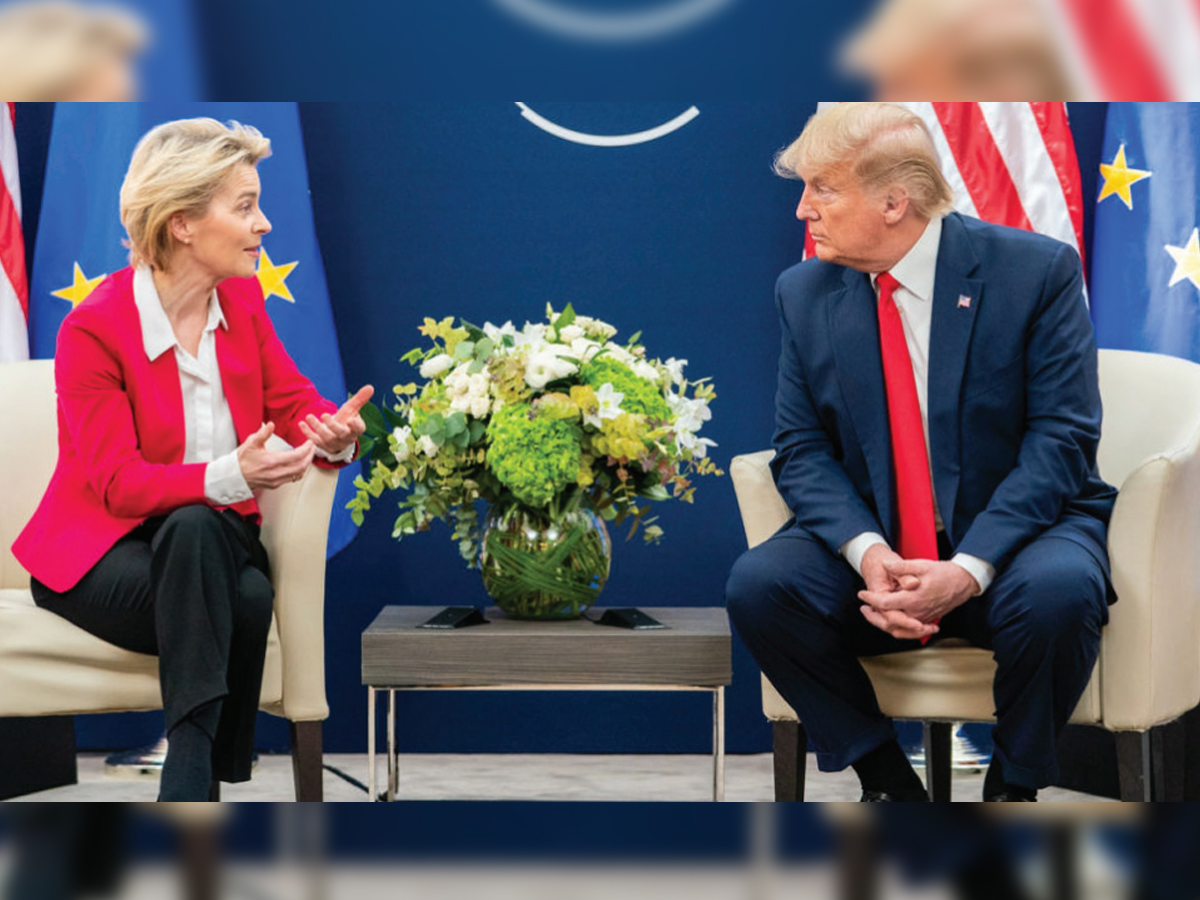
The European Union, led by Ursula von der Leyen, President of the European Commission, reminded the White House that “a deal is a deal,” promising a coordinated response to the 10% import taxes threatened against eight European nations.
These are not leaks, or background briefings, they are public statement.
For years, such language for Washington has come from adversaries. China has for years condemned American pressure as hegemonic while Russia as mocked U.S. diplomacy as coercive and transactional.
Now things are changing rapidly.
What is changing is not merely policy disagreement, but collective perception against Trump administration. This moment resembles the Emperor’s New Clothes. People in Washington knows what the U.S President is doing is damaging U.S bilateral and multilateral at multiple levels but they are keeping silent.
The Greenland episode has crystallized the break, but the military strike in Venezuela has solidified the resistance.
Claudia Sheinbaum, President of Mexico, vigorously condemned the strike as a “clear violation of Article 2 of the UN Charter,” establishing a public red line against U.S. military operations in the region.
Gabriel Boric, President of Chile, and Gustavo Petro, President of Colombia, joined her, describing the operation as an “assault on sovereignty.”
The expectation was compliance. Instead, Denmark refused. Greenland’s Premier, Múte Bourup Egede, rejected the premise outright. Smaller states have chosen public resistance over silent accommodation.
Even partners known for caution are holding back. India, long invested in strategic autonomy, has not offered full-throated support. In this climate, absence is not neutrality. It is distance. What sharpens this moment further is that the criticism is now coming from within.
Gavin Newsom, Governor of California, took to the world stage in Davos to urge leaders to “have a backbone,” calling their previous caution “pathetic.” More significantly, the Republican “firewall” has begun to crack. Mitch McConnell, United States Senate Minority Leader, warned that the pursuit of Greenland would be “more disastrous for the president’s legacy than the withdrawal from Afghanistan,” accusing the administration of “incinerating the hard-won trust of loyal allies.” Lisa Murkowski, United States Senator from Alaska, insisted that Greenland must be treated as an ally, not an asset, while Rand Paul, United States Senator from Kentucky, vowed to force a vote on a War Powers Act to prevent military intervention in the Arctic.
The United States remains powerful. That is not in dispute. What is now in doubt is whether power exercised in this manner still produces alignment. Recent events suggest it does not. Countries are no longer staying silen, allies partners and NATO members are making their resistance explicit.
As Mark Carney, former Governor of the Bank of England, warned at the World Economic Forum, we are witnessing a “rupture” in the global system. The rules-based order is being replaced by a transactional imperialism that treats sovereign nations as assets and international law as a suggestion.
The question is no longer whether the world will resist, but whether the American political system can self-correct before these alliances are permanently severed. Once long-built relationships fracture in public, they are not easily repaired in private.