India is heading towards Viksit Bharat by 2047, with on average GDP growth of 6.5 per cent. The goal of Viksit Bharat can be achieved if the country’s annual growth rate exceeds 7 per cent in the coming years. It can be achieved through the cooperation and contributions of all States and Union Territories (UTs), where political, socially, geographically, and demographically, advantages and disadvantages exist among them. All states and UTs need to harness resources to maintain GSDP growth above 7 per cent per annum. Moreover, across the world, geopolitical tensions are surging, disrupting the smooth flow of supply chains and affecting the fair flow of imports and exports of goods and services. In this context, it is necessary to be self-sufficient, self-sustainable, and self-reliant to avoid disturbances and to become a developed nation by 2045, as emphasised by the Honourable Prime Minister.
Since gaining independence, we have prioritised both a restricted trade policy and an import substitution strategy. Moreover, the export of manufacturing and industrial goods and services has received little attention from policymakers. Instead, the economy focused on primary product exports, which are less valuable than machinery and other necessary inputs imported. Furthermore, relying only on the importation of defence products while ignoring their production. As a result, the nation has faced balance-of-payments issues and trade deficits over the years.
The WTO was established in 1995 to monitor rule-based trade policies and promote smooth, fair, free, and predictable trade practices. In recent times, due to geopolitical tensions, some countries have shifted from free trade to restricted trade policies. The basic rules and regulations of the WTO are violated by some countries.
SILENT STRUCTURAL REFORMS TO STRENGTHEN THE ECONOMY
Since 2014, India has shifted its economic strategy from a “top to bottom” to a “bottom to top” approach. The policymakers and the Government of India recognised the bottlenecks in the economy and the factors impeding its growth. In this row, the economy was more informal than formal before the 2014 economy. Primarily, economic reforms began with financial inclusion through Jan Dhan accounts and the demonetisation of currency. As a result, as per CBDT information, income tax returns filed increased from 4.04 crore in FY 20215 to 9.19 crore in FY2024-25. The number of persons filing Income tax returns increased 143.95 per cent from 3.51 crore in FY 20215 to 8.56 crore in FY2024-25. Net Direct Tax collections increased 239.97 per cent (from 6,95,792 crores to 22,26,375 crores) between FY 2014-15 and FY 2024-25. During the same period, the direct tax -GDP ratio increased from 5.62 % to 6.73 %. The data shows that the Indian economy is getting more formalised. In addition, incentives for domestic MSMEs are provided through Start-up India, Make in India, and digitalisation of the economy.
STRONG FISCAL REFORMS FOR STABILISING THE ECONOMY
The Government of India collect the taxes from the people in the name of Central taxes (Direct and Indirect). Some indirect taxes the state government collect in the form of Cess, excise duties, etc. All these taxes are the primary source of revenue for all the states and union territories. The Government of India introduced indirect tax reforms, including the GST in 2017, to achieve tax uniformity, avoid cascading taxation, and increase tax revenue. In addition, the 2025 Next-Gen GST reforms had a significant impact on the economy, from the demand side and the supply side, to stabilise the economy in the long run and make the country Viksit Bharat @2047.
FREE TRADE AGREEMENTS WITH THE EU COUNTRIES
A long-lasting negotiation between India and the EU countries on the Free Trade Agreement (FTA) finally came to fruition after 18 years. India will gain a comparative advantage through the FTA with the EU, after the next-gen GST reforms rejuvenate its economy. As per the PIB, free trade between these two groups accounts for 33.35 per cent of world trade and 25 per cent of global GDP. For India, the EU is the second-largest trading partner, accounting for 11.5% of India’s trade in goods after China. This part is a massive scaling for heritage craftsmanship, artisanal skills and MSMEs. There will be strong demand for India’s labour-intensive products in EU countries.
As a consequence, the immense job creation, skill development and inclusive economic growth will take place in India. Under this FTA, 9,435 tariff lines were eliminated, and Indian goods were cleared. Moreover, the India-EU FTA supports India’s technological advancement and enables R&D collaboration and technology transfer. The FTA further strengthens agricultural and marine product exports and increases access to Indian agricultural processed foods, vegetables, and fruits in the EU. As a result, it helps double farmers’ income and improve their standard of living. It is time for all Indian states and UTs to capitalise on this opportunity and encourage the various sectors in line with the comparative advantage of the FTA with the EU.
PROACTIVE BUDGET (FY2026-27) FOR A STRONG ECONOMY
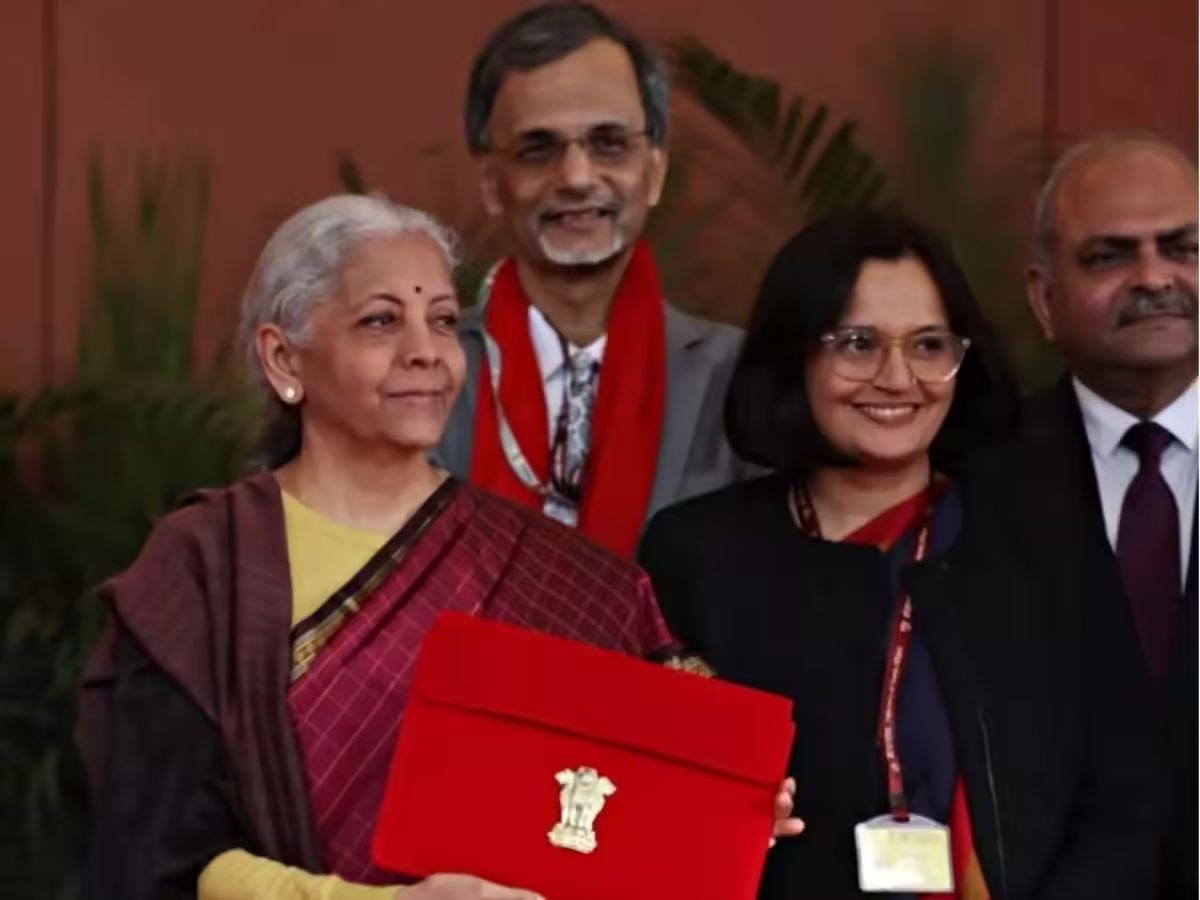
The Finance Minister Smt. Nirmala Sitharaman, in her budget speech, emphasised three objectives of the 2026-27 budget: accelerating and sustaining economic growth, fulfilling the aspirations of the people, building their capacity, and ensuring access to resources and amenities for all sections of society. The economic survey 2025-26 clearly showed that the Indian economic growth rate was 7.4 per cent (in the 1st advanced estimate) for the year 2025-26 and further projected a 6.8 to 7.2 per cent growth rate for the FY 2026-27. Through effective monetary and fiscal policies, headline CPI inflation fell from 6.7% in FY 2022-23 to 1.7% in FY 2025-26. The Government, through various reforms, achieved a reasonable and stable core inflation rate of 4.3 per cent. During FY 2025-26, positive growth was registered across all sectors of the economy.
To strengthen and stabilise its economy, the Government needs to focus on fiscal discipline and macroeconomic stability, and to enhance trade relations with countries to ensure uninterrupted flows of goods and services amid global uncertainty. The finance minister, in her speech, emphasised the Government’s commitment to Fiscal discipline by reducing the Fiscal deficit to 4.3% of GDP for FY 2026-27, as compared to 4.4% of GDP in RE 2025-26. Similarly, the debt-to-GDP ratio is estimated at 55.6% of GDP in 2026-27, as compared to 56.1% of GDP in RE 2025-26.
The Government focused on strengthening the defence sector (Modernisation of armed forces, Border area development, and nurturing defence R&D) by allocating 15% higher funds (such as 7.03 lakh crores) compared to the previous budget, after Operation Sindoor and terror threats, and in view of global geopolitical tensions. Moreover, in the budget, capital expenditure increased from 11.0 lakh crores to 12.2 lakh crores, a sign of the Government’s commitment to long-term economic growth through the advancement of infrastructure and skills.
In her budget speech, she emphasised the customs duty exemption extended to capital goods used in the manufacturing of lithium-ion cells for batteries, which will reduce production costs significantly, as well as the exemption of the basic custom duty on the import of sodium antimonate for use in the manufacture of solar glass. Basic customs duty exemptions on the import of capital goods required for the processing of critical minerals. Furthermore, to improve the ease of living, the tariff rates have been reduced from 20% to 10% on all dutiable goods imported for personal use. To reduce the cost of treatment and give relief for people who are suffering from cancer and other rare diseases, the customs duties were exempted on 17 drugs and medicines.
To achieve Viksit Bharat, every state should take the initiative to contribute to the national GDP with a healthy fiscal policy. Natural and revenue sources of each state and UT differ on various grounds. States whose economies depend mainly on technology produce capital-intensive goods. States whose economy depends on labour produce labour-intensive goods. Furthermore, some States’ economies depend on remittances from migrants. Some states’ economies depend on natural tourism and temple tourism. In this way, States’ revenue collections differ based on their physical, natural, and demographic resources. States and Union Territories should focus on responsible fiscal budget management. The states and UTs should take advantage of FTA with the EU and the Union Budget 2026-27.
Dr Karnati Kiran Kumar, Assistant Professor, Department of Economic Studies, Central University of Punjab