Every year on November 1, the people of Haryana celebrate Haryana Day, marking the historic formation of the state in 1966. What began as an assertion of cultural and linguistic identity has evolved into a story of remarkable progress one that blends agricultural excellence, industrial dynamism, and forward-looking governance.
From the Green Revolution to the Fourth Industrial Revolution, Haryana’s journey reflects the resilience and ambition of a people who transformed a newly carved state into one of India’s most prosperous regions.
The demand for a separate state arose from the Hindi-speaking population’s aspiration for recognition of its cultural and linguistic distinctiveness.
Prominent leaders of that time, including those associated with nationalist and Jana Sangh movements, strongly supported the cause, articulating a vision of governance rooted in efficiency, accountability, and pride in Haryana’s unique identity.
They emphasized Haryana’s distinct heritage from its Vedic roots and agrarian traditions to its central place in the Mahabharata’s Kurukshetra, symbolizing courage, righteousness, and self-determination.
The Punjab Reorganisation Act of 1966, enacted after the Shah Commission’s recommendations, formally created Haryana by separating the Hindi-speaking districts from Punjab. Though the new state began with limited infrastructure and resources, it possessed an indomitable spirit of purpose that became its greatest strength.
That determination soon transformed Haryana into a symbol of agricultural success. As one of the pioneers of India’s Green Revolution, the state adopted high-yielding seeds, advanced irrigation systems, and mechanized farming that propelled India toward food self-sufficiency.
Wheat production rose from 0.74 million tonnes in 1966 to over 12 million tonnes by the 2020s – a fifteen-fold increase. With just 1.34 percent of India’s land, Haryana contributes disproportionately to the nation’s food security, supplying millions of tonnes of wheat and rice annually to the central pool.
The transformation boosted rural incomes, encouraged agro-industries, and laid the foundation for educational and research institutions devoted to agricultural innovation.
From its agrarian base, Haryana has evolved into a diversified economic powerhouse. In 1966, agriculture contributed over 60 percent to the state’s economy; today, it accounts for just 16.2 percent, while industry and services together form more than 80 percent.
The state’s GSDP of ₹12.14 lakh crore (2024–25) and per capita income of ₹3.53 lakh, nearly 75 percent higher than the national average, position Haryana among India’s economic leaders.
The state is now a hub for automobile manufacturing – producing nearly 67 percent of India’s passenger cars – and a thriving IT and corporate center with Gurugram housing hundreds of multinational firms.
Under the Global Capability Center (GCC) Policy, Haryana is fast emerging as India’s GCC capital, attracting R&D and innovation hubs supporting multinational corporations in digital transformation and advanced analytics. This reflects the state’s seamless transition from manufacturing to high-value, technology-driven growth.
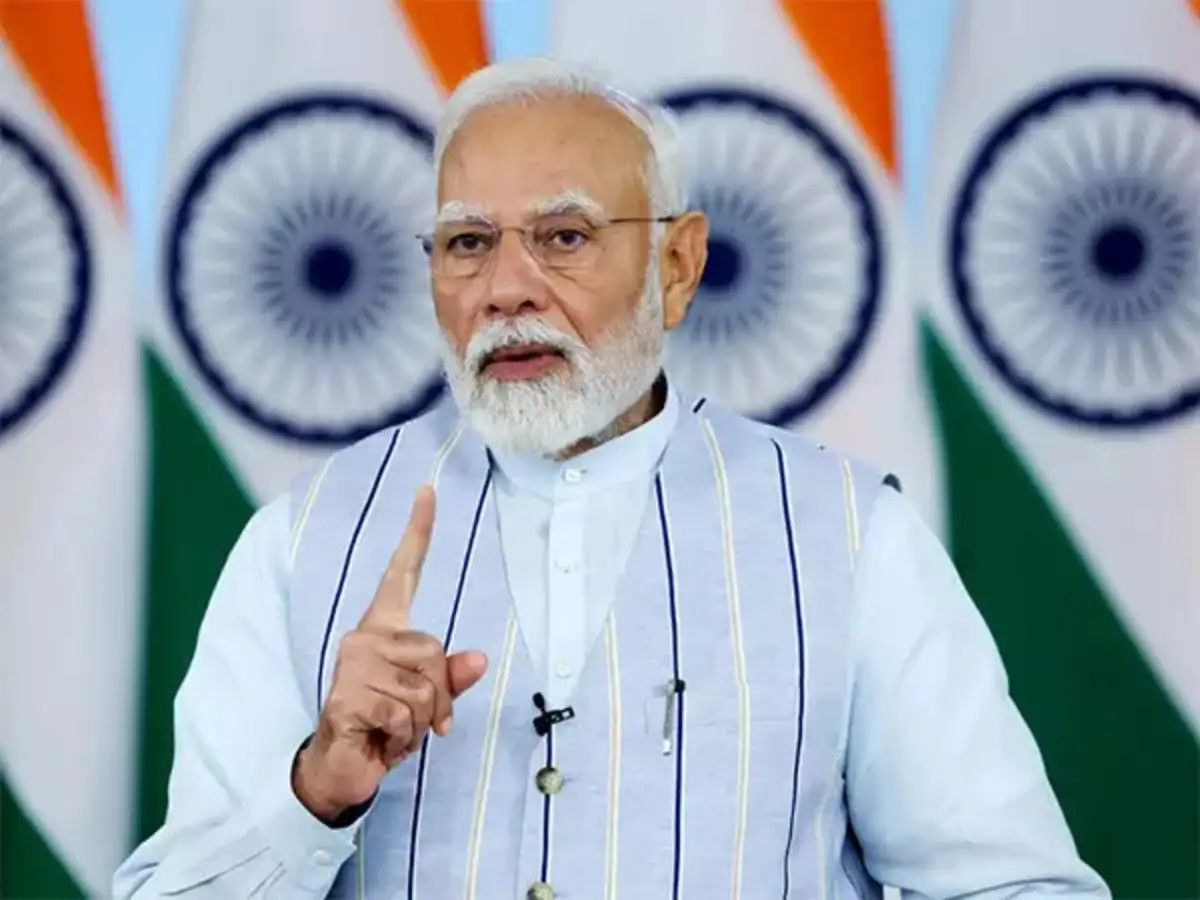
Haryana’s developmental trajectory has been guided by the visionary leadership of Prime Minister Narendra Modi, whose “Sabka Saath, Sabka Vikas, Sabka Vishwas” philosophy has fostered inclusive, transparent, and innovation-led growth.
Since 2014, under the Bharatiya Janata Party (BJP), the state has witnessed a paradigm shift toward merit-based governance and equitable development.
The tenure of former Chief Minister Manohar Lal Khattar replaced patronage systems with digital governance and data-backed decision-making, while Chief Minister Nayab Singh Saini continues to expand this vision with a renewed focus on welfare, youth, and enterprise.
The Parivar Pehchan Patra (Family ID) initiative remains among Haryana’s most pathbreaking governance models – creating a unified household database that automatically identifies beneficiaries for pensions, scholarships, and healthcare.
Similarly, the Ayushman Bharat–Chirayu Haryana health framework extends free health insurance of up to ₹5 lakh annually, benefiting nearly 20 lakh families.
Haryana also became the first Indian state to procure 24 crops at Minimum Support Prices, securing farmers against market volatility and reinforcing agricultural resilience.
The state’s transformation is not only economic but also cultural and human. Haryana, once known for its skewed gender ratio, has made impressive strides through the Beti Bachao Beti Padhao movement, launched by Prime Minister Modi in Panipat in 2015.
The child sex ratio has improved from 871 in 2014 to 932, while schemes such as Apki Beti Hamari Beti have provided financial and educational support to over 4.6 lakh girls. Initiatives like Mahri Laado Radio have normalized conversations on gender equality, reflecting a profound shift in social attitudes.
In sports, Haryana is rightly celebrated as India’s sporting powerhouse. Despite comprising just 2 percent of India’s population, its athletes have won nearly 30 percent of the nation’s individual Olympic medals.
Icons like Neeraj Chopra, Manu Bhaker, and others exemplify Haryana’s enduring spirit of discipline and excellence. The state’s progressive sports policy ensures financial rewards, world-class training, and employment opportunities for athletes.
Haryana’s proactive support system – transferring cash awards immediately after international achievements – has set national benchmarks for athlete welfare.
Healthcare and education have seen parallel revolutions. New medical colleges in nearly every district, upgraded civil hospitals, and enhanced diagnostic access – including CT, MRI, and dialysis at district hospitals have expanded public healthcare reach.
In education, Haryana has distributed 5.5 lakh tablets to school students, aligned its curriculum with the National Education Policy 2020, and improved digital learning infrastructure. These investments in human capital have positioned Haryana as a state ready for the knowledge economy.
Strategically located within India’s industrial heartland, Haryana anchors key national infrastructure corridors. Nearly 66 percent of the state falls under the Delhi-Mumbai Industrial Corridor (DMIC), making it central to India’s logistics and manufacturing ambitions.
The Integrated Multi-Modal Logistics Hub at Nangal Chaudhary, along with new Industrial Model Townships and the Rewari Bypass under the Bharatmala project, enhance regional and global connectivity.
Haryana is also leading the charge in renewable energy under the Haryana Solar Power Policy 2023, which targets 6,000 MW of solar capacity by 2030, including solarized irrigation for sustainable agriculture.
The GOBARdhan plant in Yamunanagar, converting waste to clean energy, is another innovative step toward sustainability.
Looking ahead, Haryana’s Vision 2047 sets an ambitious goal – to become a trillion-dollar economy and create 50 lakh new jobs through innovation, entrepreneurship, and technological advancement.
The vision emphasizes Artificial Intelligence (AI), DeepTech, Quantum Computing, Advanced Manufacturing, and Clean Energy as growth pillars.
The establishment of dedicated departments for emerging technologies reflects Haryana’s resolve to be at the forefront of India’s innovation revolution.
Projects like the Global City Gurugram along the Dwarka Expressway exemplify this forward-thinking vision – a sustainable, technology-enabled urban ecosystem expected to create 1.5 lakh jobs while showcasing smart infrastructure, green mobility, and data-driven governance.
The Haryana GCC Policy continues to attract global R&D and design centers, strengthening the state’s role as a hub for future technologies.
Aligned with Prime Minister Modi’s “Viksit Bharat 2047” vision, Haryana’s roadmap integrates economic growth with social equity, technological advancement with sustainability, and local empowerment with global competitiveness.
The emphasis on renewable energy, digital governance, and skill development ensures that Haryana’s growth remains inclusive and resilient in an era of global change.
As Haryana celebrates its 59th Foundation Day, it stands as a beacon of India’s progress – where tradition meets technology, agriculture meets innovation, and local ambition fuels global achievement.
From the fields of Karnal to the skylines of Gurugram, Haryana’s journey mirrors the rise of a confident, capable, and future-ready India. With its eyes set on Vision 2047, Haryana is poised not only to sustain its leadership in agriculture, industry, and sports but also to drive the nation’s transformation in the age of artificial intelligence and deep technology.
Haryana’s story rooted in growth, grit, and greatness – continues to inspire, proving that with visionary leadership, cultural pride, and relentless innovation, a state born of determination can shape the destiny of a nation.
Kartikeya Sharma is an Independent Member of Parliament (Rajya Sabha).